
👋 Hey, Sahil here — Welcome back to Venture Curator, where we explore how top investors think, how real founders build, and the strategies shaping tomorrow’s companies. Today’s edition features even more carefully curated content.
Big idea + report of the week :
How winners win: the hidden patterns of breakout companies.
OpenAI’s M&A Activity.
MIT on the GenAI divide - GenAI Divide: Why Most Enterprise AI Fails.
Frameworks & insightful posts :
10 ideas for building a great culture for a distributed remote team.
Raising a seed round 101: Templates, Tips and Strategy to Raise.
Framework: North Star Metrics.
Andrew Chen: Startup pivots that rarely work (and what to do instead).
ESOP Value Calculator Template: How to communicate ESOP value to your team.
FROM OUR PARTNER - SEMRUSH
🚀 Boost Organic Traffic With Smart AI Content.
Creating content that ranks and resonates is tough. Semrush makes it simple.

With the Content Toolkit, you can discover trending topics in your niche, generate SEO-ready briefs, and polish your articles with real-time AI suggestions.
Whether you’re a founder, marketer, or agency, you’ll save time, grow organic traffic, and focus on results.
Trusted by 10M+ marketers, it’s your shortcut to smarter content.
🤝 PARTNERSHIP WITH US
Get your product in front of over 95,000+ audience - Our newsletter is read by thousands of tech professionals, founders, investors and managers worldwide. Get in touch today.
START WITH
🧠 Big idea + report of the week
How winners win: the hidden patterns of breakout companies.
Some companies don’t just beat expectations — they shatter them. a16z calls these companies modelbusters: breakout businesses that grow faster, compound longer, and expand further than any model could predict.
There are two main forms:
Bigger-than-expected TAM
Apple’s iPhone was dismissed as a niche gadget in 2007. Within 15 months, it was the #3 phone worldwide. The market wasn’t just executives—it was everyone with a pocket.
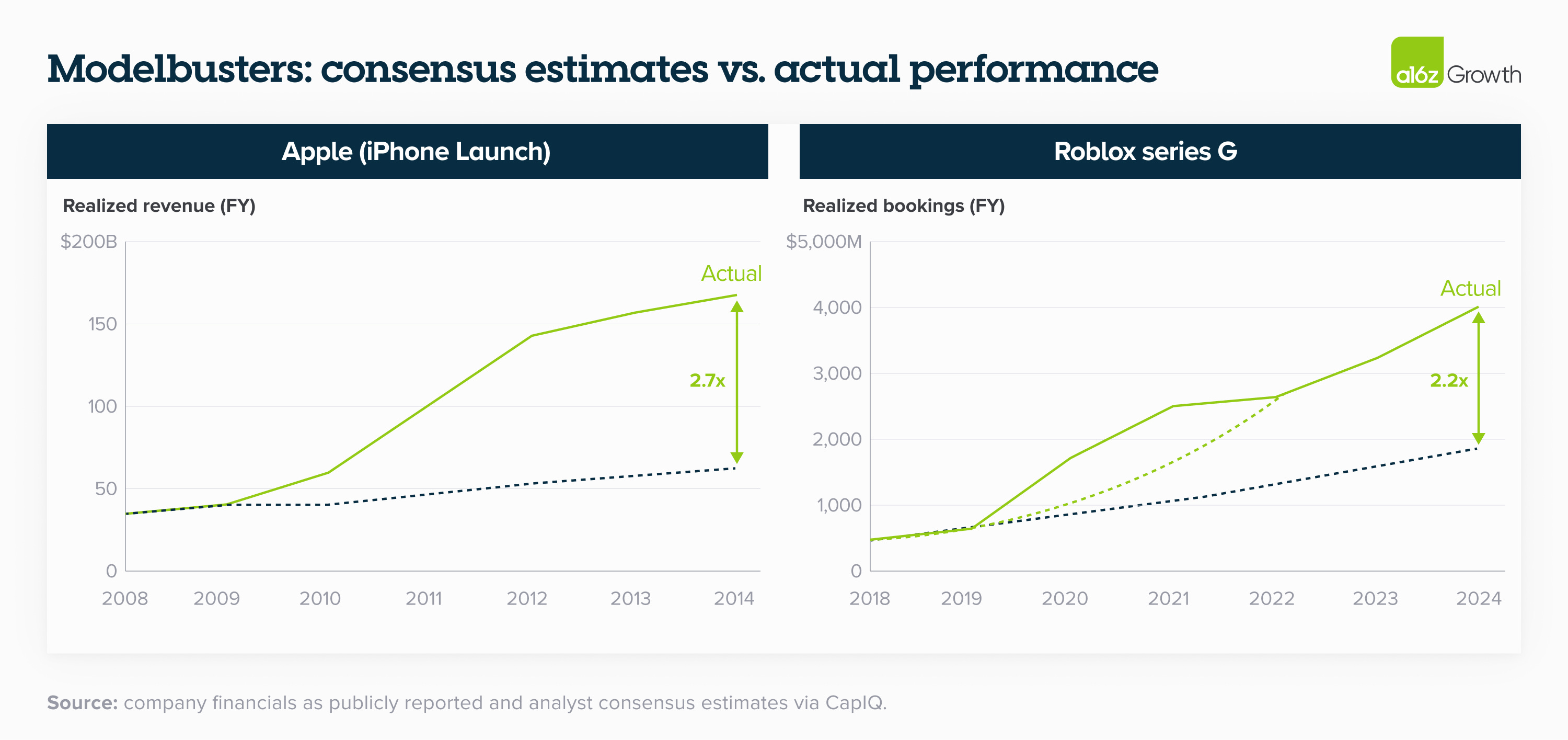
Roblox looked like a kids’ game, but Dave Baszucki built a cloud-native developer platform with its own economy. That unlocked older cohorts, leading to 61M+ daily actives and a fast-growing over-13 audience.
New products that unlock adjacencies
CrowdStrike started as a cloud-native AV replacement but built 29 modules on the same architecture. 48% of customers now run 6+ modules, driving $500M+ of net-new ARR annually.
Anduril flipped the defence model: building first, then selling to the DoD. Its cloud-native Lattice OS lets them cross-sell across artillery, ISR, and more — tapping into a $3T budget.
How to know if you’re building a modelbuster:
Focus on “what” products, not just “how” products. Reimagine categories, don’t just change distribution.
Look for pull, not push — is the market demanding more of your product?
Build or harness network effects. If not, aim for strong brand + GTM leadership.
Prioritise compounded growth. Every point of growth is worth ~2x a point of margin in the long run.
AI is setting the stage for the next wave of modelbusters. Just like the iPhone or Roblox in their eras, companies that ride this platform shift with new products, new business models, and true pull from users will massively outpace the models. - Read the full report here.
OpenAI’s M&A Activity.
On Tuesday, OpenAI announced it will acquire product development platform Statsig for $1.1B in stock. Statsig’s CEO Vijaye Raji will become OpenAI’s CTO of Applications, reporting to former Instacart CEO Fidji Simo.
This caps a two-year streak of acquisitions that show where OpenAI is building:
Statsig (Sep 2025) — product experimentation ($1.1B)
Crossing Minds (Jun 2025) — AI recommendations (acqui-hire)
io (May 2025) — AI devices ($6.5B)
Context.ai (Apr 2025) — AI evaluation (acqui-hire)
Multi (Jun 2024) — remote collaboration (acqui-hire)
Rockset (Jun 2024) — data retrieval
Global Illumination (Aug 2023) — AI design studio
The pattern is clear: OpenAI isn’t just focused on models—it’s buying capabilities across applications, retrieval, experimentation, and evaluation. That combination signals a push to own not just the foundation models but the end-to-end ecosystem for consumer and enterprise AI products. - Read the full report here.

MIT on the GenAI divide- GenAI Divide: Why Most Enterprise AI Fails.
Despite $30–40B invested, 95% of enterprise AI projects deliver zero ROI. The problem isn’t model quality or regulation; it’s a divide between adaptive systems that learn and static tools that don’t.
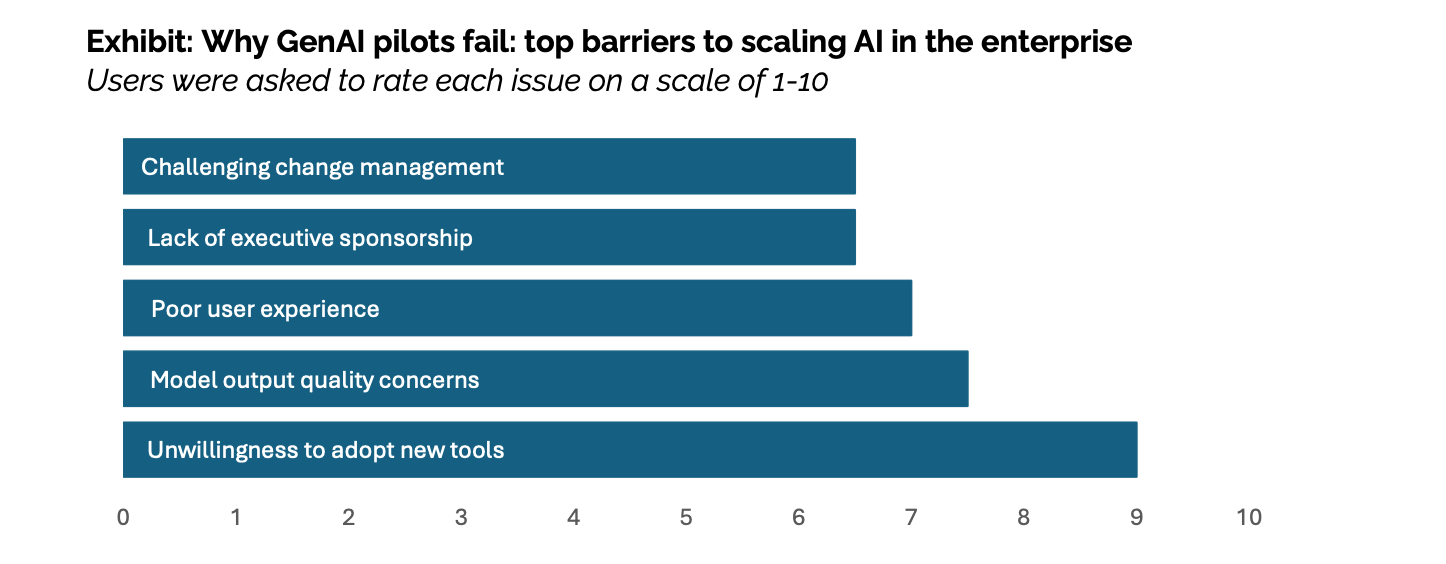
Here’s what the MIT report shows:
The learning gap
ChatGPT is loved for ad-hoc tasks, but abandoned for real work because it forgets context and repeats mistakes.
Employees want tools that remember, adapt to workflows, and improve from feedback.
Why most enterprise AI stalls
90% of employees use shadow AI tools, while only 5% of enterprise AI systems make it into production.
Companies overengineer rigid systems, chase flashy demos, and concentrate budgets on front-office use cases.
Where the real ROI is
50% of budgets flow to sales/marketing, but the biggest wins are in back-office automation.
Companies crossing the divide report $2–10M annual savings by cutting BPO contracts, a 30% reduction in agency fees, and $1M+ saved on outsourced processes.
What winning orgs do differently
Buy adaptive systems instead of building static internal tools.
Empower frontline managers, not just central IT labs.
Treat AI vendors like partners, not software providers.
Measure business outcomes (savings, efficiency), not benchmarks.
The urgency
Vendor relationships are being locked in now, with compounding switching costs.
The next 18 months will determine who builds a durable advantage.
FROM OUR PARTNER - EQUIDAM
🚀 Startup Valuation, Built for Outliers.

Startups don’t just need capital, they need investors who share their view of the future. Equidam helps founders translate novel ideas and technologies into valuations that allow both sides to understand the underlying assumptions.
By grounding the fundraising conversation in fundamentals, Equidam helps founders and investors align expectations, build conviction in the company’s trajectory, and address the most important challenges in bits or atoms.
Successful startups are outliers that can’t be priced strictly by comparison.
Get started on your valuation today, with 10% off →
SOMETHING MORE
🧩 Frameworks & insightful posts
10 ideas for building a great culture for a distributed remote team.
Nathan Barry (ConvertKit founder) shared 10 practical ways to strengthen culture on a distributed team. ConvertKit have built an 85-person remote team that’s driving $42+ million in annual revenue.
These go far beyond perks and focus on trust, connection, and shared meaning.
Create a private team stories podcast.
Everyone has the same get to know you conversations starting from zero. Instead, interview them about their life story for a private internal podcast.
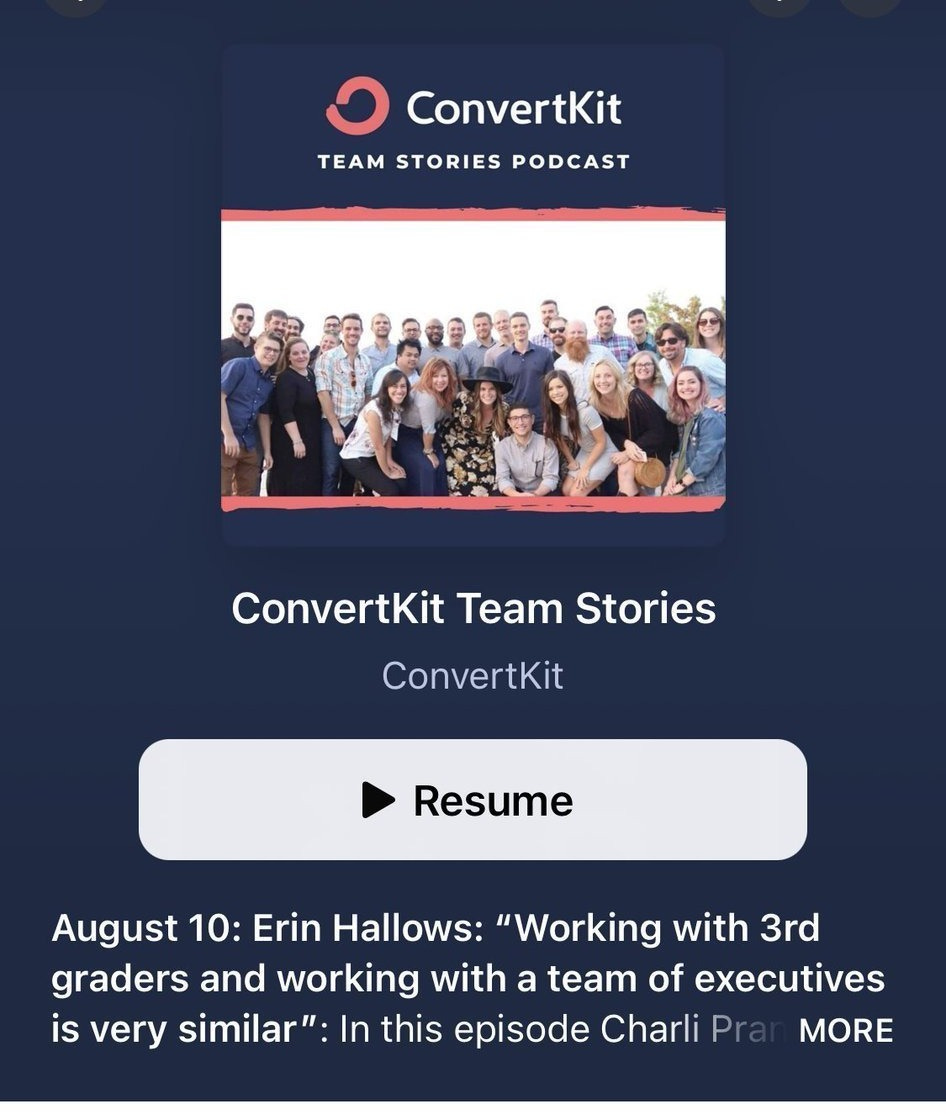
The whole team can listen and get a head start on building relationships.
Build a culture of written, asynchronous communication: This will save so many meetings, avoid people feeling left out if they weren't in the meeting, and protect focused work. Your team will also be forced to clearly articulate and refine their ideas.
Shared “no meeting” days: Everyone has the same day for focused work each week. Team members can have days that they don’t need to get camera-ready (e.g. hair, make-up, etc) if they don’t want to.
Ask What did you get into this weekend? Every Monday morning, we have a bot that posts to Slack asking people to share a photo (or a few) from the weekend. It's a great way to get to know co-workers on a personal level and see their families, interests, and lives.
Create an automated email sequence for new team members. Explain how you work, where to find important things (like the joke Slack channels), fun facts about team members, explain inside jokes, & more.
Host unsolicited feedback sessions: This is where a small team (usually 4-8 people) gathers to talk about someone in the hot seat as if they aren't there for 10 min. When it's your turn all you can do is sit & take notes, then you get 5 min to respond. Here are the prompts:
What does this person do that you find remarkable? What do you brag about them to other people?
If they were up for the promotion of their career in 6 months, what would you tell them now to give them the best chance of getting it?
Assume you're working with this person for the next 10 years. What behaviour isn't a big deal now but will get really annoying or frustrating over time?
This results in the best compliments, the most constructive feedback, and a culture of direct, candid conversations.
Mandatory fun days: With teams feeling burnt out, they force everyone to take the same day off. That means you don't have to come back to a mountain of Slack messages and emails. Come back & share a photo.
Host retreats 2x a year: Regularly gathering your team in person is one of the most important things you can do. 2x a year ended up being the perfect cadence for us. We split our time: 1/3 work & strategy, 1/3 personal connection, and 1/3 downtime & fun.
Donate money together: At a team retreat, we divided our team into groups of 4 with one goal: give away $10,000 in $100 at a time. With 50 people on the team, that meant each group had to find about 12 charities to support. Then we regrouped to share who we donated to & why.
What followed were the best stories that made for connection points: Someone donated to education grants because they were the first in their family to go to college. Cancer research because they'd lost a loved one. Pet rescue because that's where they'd found a best friend....and so many more.
$100 isn't that much, so it would be fair to argue that the money would be better donated to a single charity, but our main goal was life stories and points of connection. Give it a try with your team. You'll all get a peek into what your coworkers value & why.
Don't let anyone tell you company culture is defined by free lunches and ping pong tables. It's a culture of trust, clear feedback, focused work, meaningful connection, and a shared mission.
Raising a seed round 101: Templates, Tips and Strategy to Raise.
Founders often ask: how much should I raise, what do I need to prove, and how do I actually close a great seed round? Here’s a practical playbook you can use:
Figure out how much to raise
Model for a 24–36 month runway. Median time from seed to Series A is ~23 months (Carta data).
Add a 25% buffer. Unexpected things always happen.
Example: If your burn is $60k/month → $1.8M for 30 months → round up to ~$2.25M with buffer.
Simple spreadsheet - how does this model work out?
Prove the basics before you pitch
Proof of commitment: quit your job, show you’re all in.
Proof of work: talk to 30+ SMB buyers or 100+ consumers. Listen for 40%+ saying “wow, when can I get this?”
Proof of insight: either a working prototype with early users or a clear memo/deck that explains your unique thesis.
Run a compressed fundraising process
Block 2–3 weeks on your calendar. Speak to as many investors as possible in that window.
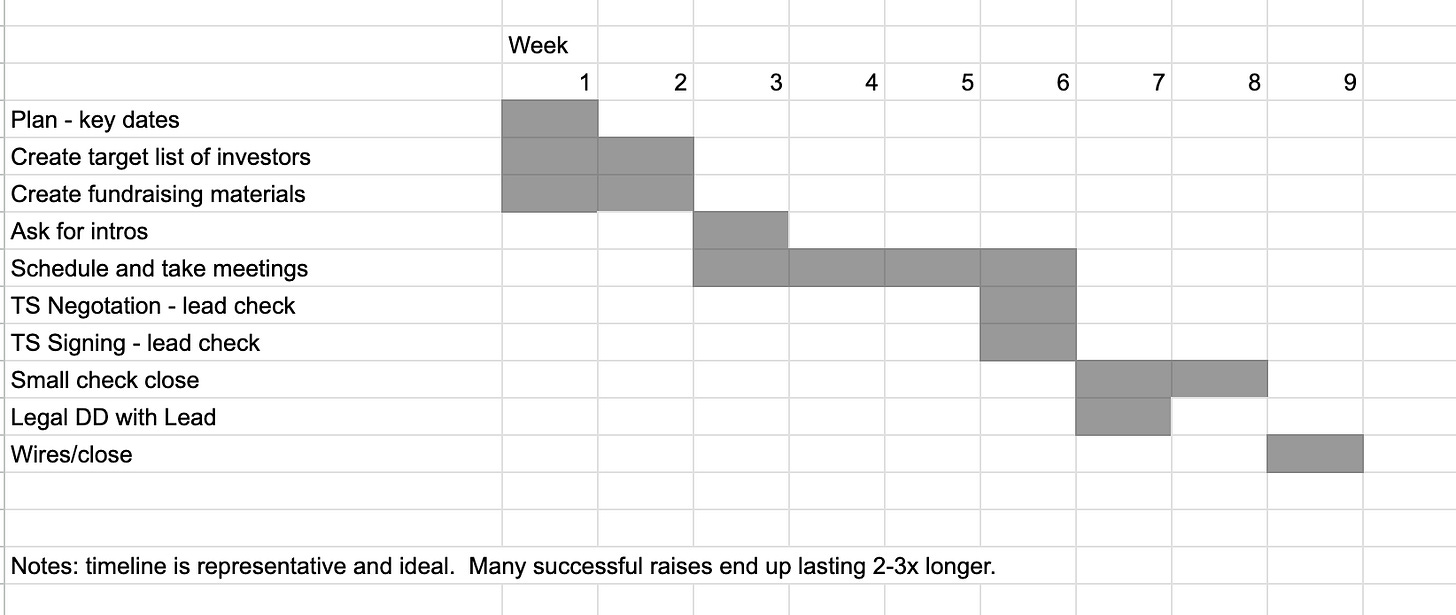
The compression creates FOMO and scarcity, which pushes decisions.
Do your homework on investors
Build a target list with check size, sectors, whether they lead, and reputation with other founders.
Use Crunchbase, LinkedIn, and backchannel references to prep. Or you can download the investors’ contact database here.
Polish your materials
Keep it minimal: a clear deck or memo, a budget, and a simple model.
Make it visually sharp — good design = signal of quality.
Line up strong intros
Best: portfolio founders of the VC, respected operators, or other active investors.
Avoid: intros from lawyers/service providers or investors not investing in your round.
If you don’t have an intro, send a crisp cold email — low hit rate, but worth trying.
Practice your pitch
Write a memo, even if you don’t share it. It sharpens your story.
Rehearse with “B-list” investors first. Iterate before you hit your top targets.
Expect investor questions to carry more weight than your slides. Prepare FAQs.
Use angels to build momentum
Open a SAFE and let smaller checks come in early.
This creates social proof that makes bigger VCs move faster.
Manage the close carefully
Don’t reveal names of other investors — just describe in general terms.
A round isn’t closed until funds are wired. Push for quick close dates.
Treat verbal commitments as meaningless until you see a signed SAFE/term sheet.
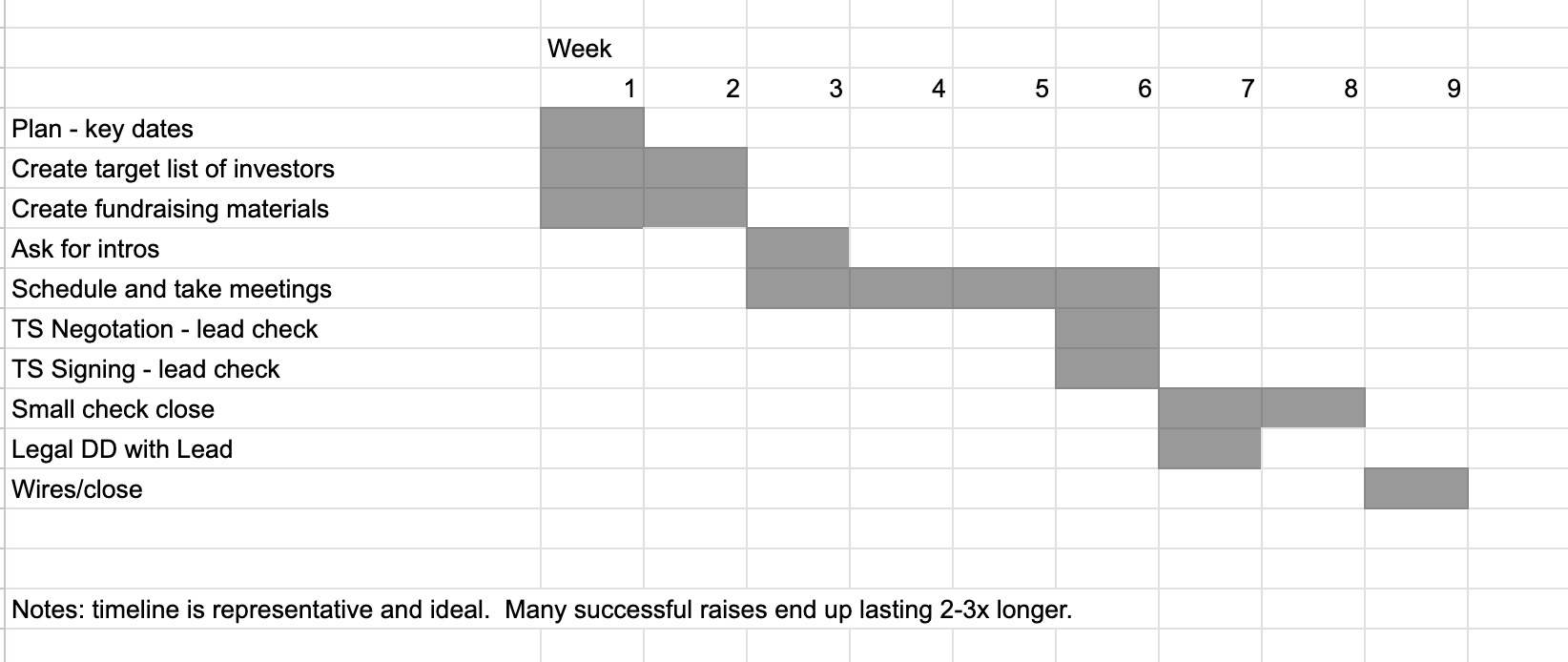

If you take away one thing: seed rounds are less about a perfect business and more about running a tight, well-planned process that creates momentum and scarcity.
Framework: North Star Metrics
You’ve probably heard of North Star metrics.
It’s the single metric you orient your company around, above all else.
Having one promotes alignment, focus, and a shared goal across the company.
But it’s important to make sure your north star meets a few criteria:
It isn’t more than one metric — you’d be surprised how often companies will say that different parts of their business have different north stars. This defeats the purpose.
It’s not an OKR. A north star doesn’t have a “key result” attached to it.
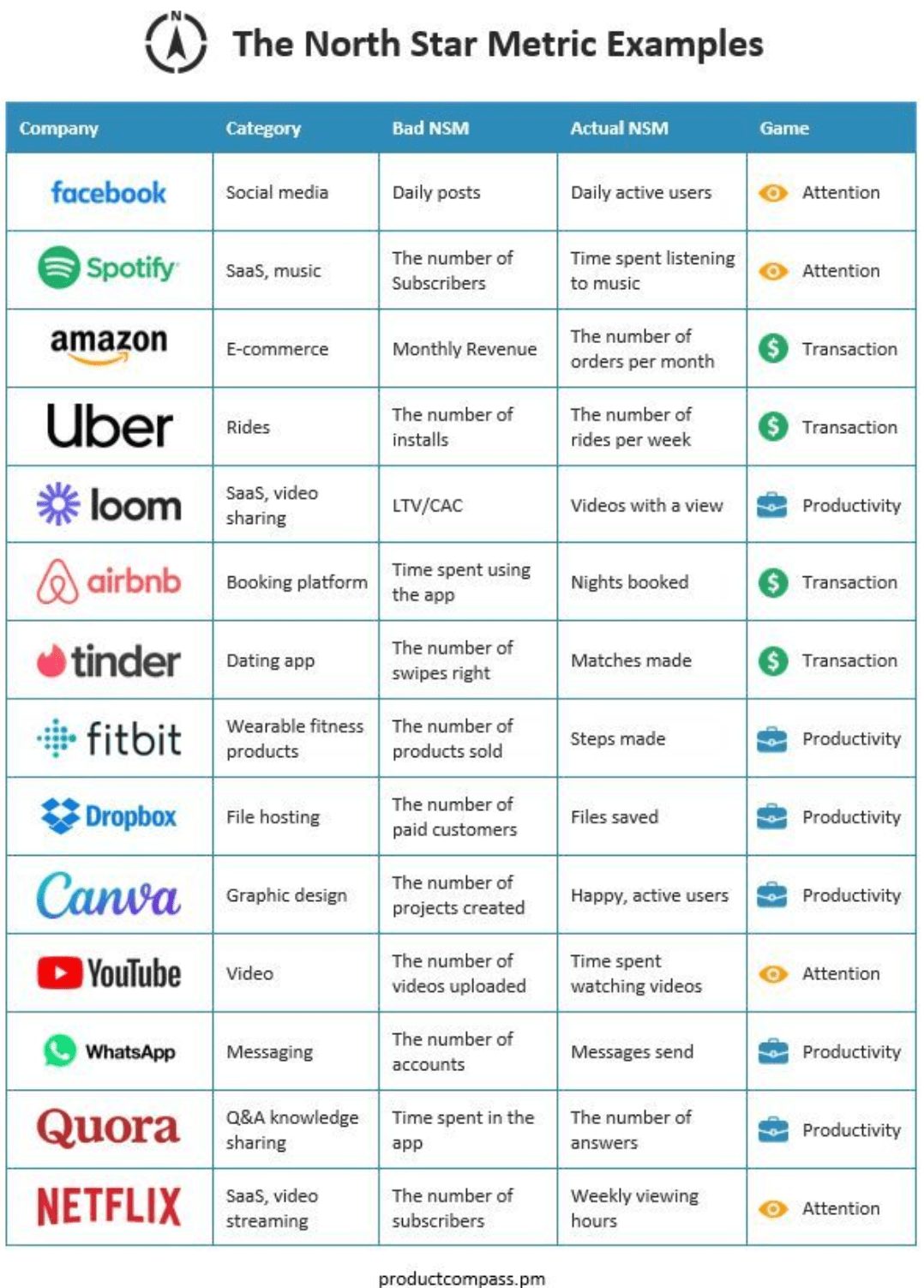
It’s directly related to customer adoption. The way you measure this can be based on attention, transactions, or productivity, but in all cases, the focus is on building your customers’ love for the product.
Here are some north stars and what a bad version would have been, instead:
Andrew Chen: Startup pivots that rarely work (and what to do instead).
Not all pivots are created equal. After working with dozens of early-stage startups at SPEEDRUN, here are some of the most common bad pivots founders make, shared by a16z partner:
B2B → consumer
Teams with enterprise DNA often underestimate consumer distribution. The reverse (consumer → B2B) tends to work better.Adding social/notifications to fix retention
If your core experience leaks, layering features like chat or sharing won’t save you. Low retention = no product love.Chasing trendy tech (AI, web3, etc.)
Bolting on new tech doesn’t fix a weak core product. Users and investors can tell when it’s native vs. gimmick.Premature platforms
Failing with one niche? Zooming out to “serve everyone” rarely works. Broad apps usually succeed by zooming in, not out.Paid → free
If users don’t care when it’s paid, they won’t care when it’s free. Indifference kills, even at zero price.
So what does work?
Zooming in: double down on your most engaged users.
Pivoting into nearby categories that customers already understand.
Starting fresh based on the “secret” you’ve learned.
Fast-following a successful competitor but inverting one key feature.
Pivots aren’t a silver bullet, but if you’re going to make one, make sure it’s grounded in real user insight, not desperation.
ESOP Value Calculator Template: How to communicate ESOP value to your team.
Most employees undervalue their ESOP because no one explains it well. Founders often say things like “you’re getting x% of the company” or “this is worth $40K”, but that sets false expectations and creates more confusion than clarity.
Here’s how to fix it:
Start early: explain ESOP terms clearly during the offer and onboarding, exercise price, vesting schedule, and exit conditions
Don’t frame equity in dollar terms; instead, give a basic scenario model showing what outcomes might look like at different exit values
Run ESOP explainer sessions for the full team: what it is, why it exists, how it works
Use forecasting tools to show employees how equity compounds over time
Update regularly on valuation changes, exit planning, and how that affects the value of their shares
Share the actual plan rules, total shares, option pool size, cliff period, and what happens when they leave
The goal isn’t to hype up equity, it’s to make it understandable. When employees get it, they start thinking like owners. (Read full post here)
Also, you can check out the Airtree VC ESOP Value calculator:

EXPLORE MORE
💡 Reports, Articles and a few interesting stuffs
Ilya Strebulaev on which angels have backed the most unicorns (Link)
How I raised $500k, hit #1 on the App Store… and still failed - a lesson to learn. (Link)
Natia Kurdadze on lazy content marketing for startup founders (Link)
The 80/20 of successful SaaS SEO. (Link)
A 20k-word guide on personal finance for startup founders (Link)
10 things this failed founder wishes they would’ve done differently (Link)
The playbook to grow consumer mobile apps (Link)
Blake Scholl on everything we’ve been taught about burnout is wrong (Link)
A literary history of fake texts in Apple's marketing materials. (Link)
Why your product idea sounds too complicated and how to simplify it (Link)
NEWS RECAP
🗞️ This week in startups & VC
New In VC
Atlas Venture, a Cambridge, MA-based venture capital firm investing in biotech, closed its third Opportunity Fund at $400m. (Read)
White Star Capital, a global multi-stage technology investment firm, held a first close of $25m for its new North American Seed Fund. (Read)
Impact VC firm Eagle Venture Fund announced the launch the the second fund. Eagle Freedom Fund II, which will target $50M. (Read)
New Startup Deals
Recall.ai, a San Francisco, CA-based provider of an infrastructure layer service for conversation data, raised $38M in Series B funding. (Read)
Sierra, a San Francisco–based AI startup founded by ex-Salesforce co-CEO Bret Taylor and Google alum Clay Bavor, has raised $350 million. (Read)
Throxy, a London, UK-based outbound growth partner for companies selling into traditional industries, raised $6.2m in seed funding round. (Read)
Exa, a San Francisco, CA-based AI search infrastructure startup, raised $85M in Series B at a $700M valuation. (Read)
Aurelius Systems, a San Francisco, CA-based defense technology company, raised $10M in Seed funding. (Read)
HappyRobot, a San Francisco, CA-based provider of an enterprise-grade platform to build, deploy, and manage an AI workforce, raised $44M in Series B funding. (Read)
TODAY’S JOB OPPORTUNITIES
💼 Venture capital & startup jobs
All-In-One VC Interview Preparation Guide: With a leading investor group, we have created an all-in-one VC interview preparation guide for aspiring VCs. Don’t miss this. (Access Here)
Portfolio Associate - W Health Venture | India - Apply Here
Investor Relations Analyst - Techstar | USA - Apply Here
Associate Telescope Partner | USA - Apply Here
Operations & Finance Analyst - Faraday Venture Partner | Spain - Apply Here
Healthcare Analyst - General Investment Management | UK - Apply Here
Investor (AI) - Samsung next | USA - Apply Here
Partner 20 - a16z | USA - Apply Here
VP - Marketing & Communications - Transition VC | India - Apply Here
Investment Analyst - Miras Investment | Dubai - Apply Here
Program Manager - Tenity | UK - Apply Here
Investor Relations Analyst - Griffin Gaming Partner | USA - Apply Here
Associate - OMERSE Venture | USA - Apply Here
Investment Analyst - Caanan | USA - Apply Here
Investor, SF Launch - Entrepreneur First | USA - Apply Here
Events and Operations Intern - Plug and Play Tech Centre | UK - Apply Here
Partner 16 - a16z | USA - Apply Here
PARTNERSHIP WITH US
Get your product in front of over 95,000+ audience - Our newsletter is read by thousands of tech professionals, founders, investors and managers worldwide. Get in touch today.
🔴 Share Venture Curator
You currently have 0 referrals, only 5 away from receiving a 🎁 gift that includes 20 different investors’ contact database lists - Venture Curator