


👋 Hey, Sahil here — Welcome back to Venture Curator, where we explore how top investors think, how real founders build, and the strategies shaping tomorrow’s companies.
How to build user-generated distribution loops.
Is Y Combinator quietly telling us where AI value really shifts next?
Are you busy… or just distracted? : Founder productivity framework.
FROM OUR PARTNER - INTERCOM
🤖 Intercom’s AI agent replaces your first support hire (free)

Intercom is an AI customer service company. Startups receive a 100% discount on Intercom’s AI-first customer service suite, including Fin—the #1 AI agent in customer service—free for a full year with 300 monthly resolutions. That’s equivalent to having a full-time human support agent at no cost.
Apply here and select Venture Curator as the referring partner →
VENTURE CURATORS’ FINDING
📬 My favourite finds
Media Posts:
Building ai agent for financial services. (Link)
Less Funds, More Money - The VC Industry Concentration. (Link)
Don’t confuse market share with winning. (Link)
The “Great SaaS Meltdown“ appears to be upon us (if Chamath is to be believed). He could well be right… (Link)
Reports/Articles:
Nano Banana Complete master Class and 200 Prompts. (Link)
25 AI prompts for SaaS founders to move faster. (Link)
Google prompt guide for small businesses. (Link)
2026 this agi. (Link)
What investors ask and how to answer : A practical Q&A prep kit for founders. (Link)
PARTNERSHIP WITH US
🤝 Get your startup in front of over 103,000+ audience.
Our newsletter is read by 103,000+ tech professionals, founders, executives, investors (VCs / Angel Investors) and managers around the world. Get in touch today.
📜 DEEP DIVE
How to build user-generated distribution loops.
Some of the fastest-growing products in the world didn’t scale because of big ad budgets. They grew because their users created content that attracted more users.
Notion pages, Canva designs, Duolingo streaks, and Figma files all turned ordinary usage into free distribution. This is user-generated distribution (UGD): a growth loop where every action a user takes can bring in the next one.
Why it works
Self-reinforcing: users create → others see → new users join → they create more.
Trustworthy: People trust peer content more than brand ads.
Cost-efficient: lowers CAC and compounds over time.
Now let’s break down how different companies designed these loops and how you can, too.
Notion: templates as a flywheel
Problem solved: new users froze at a blank page.
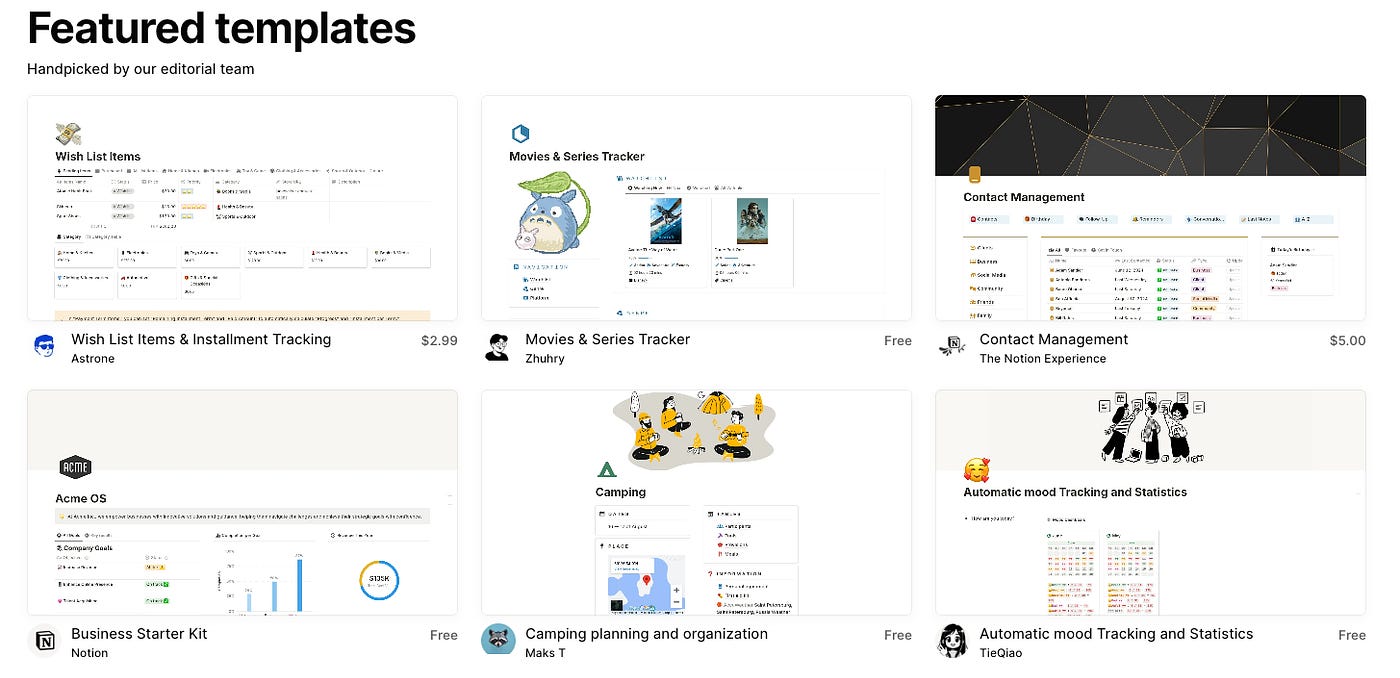
Solution: starter templates + an open template gallery. Every public page could be shared and duplicated in one click.
Community: Ambassadors and template creators were spotlighted and allowed to monetise.
Result: Notion grew from 1M → 100M users mostly via organic sharing.
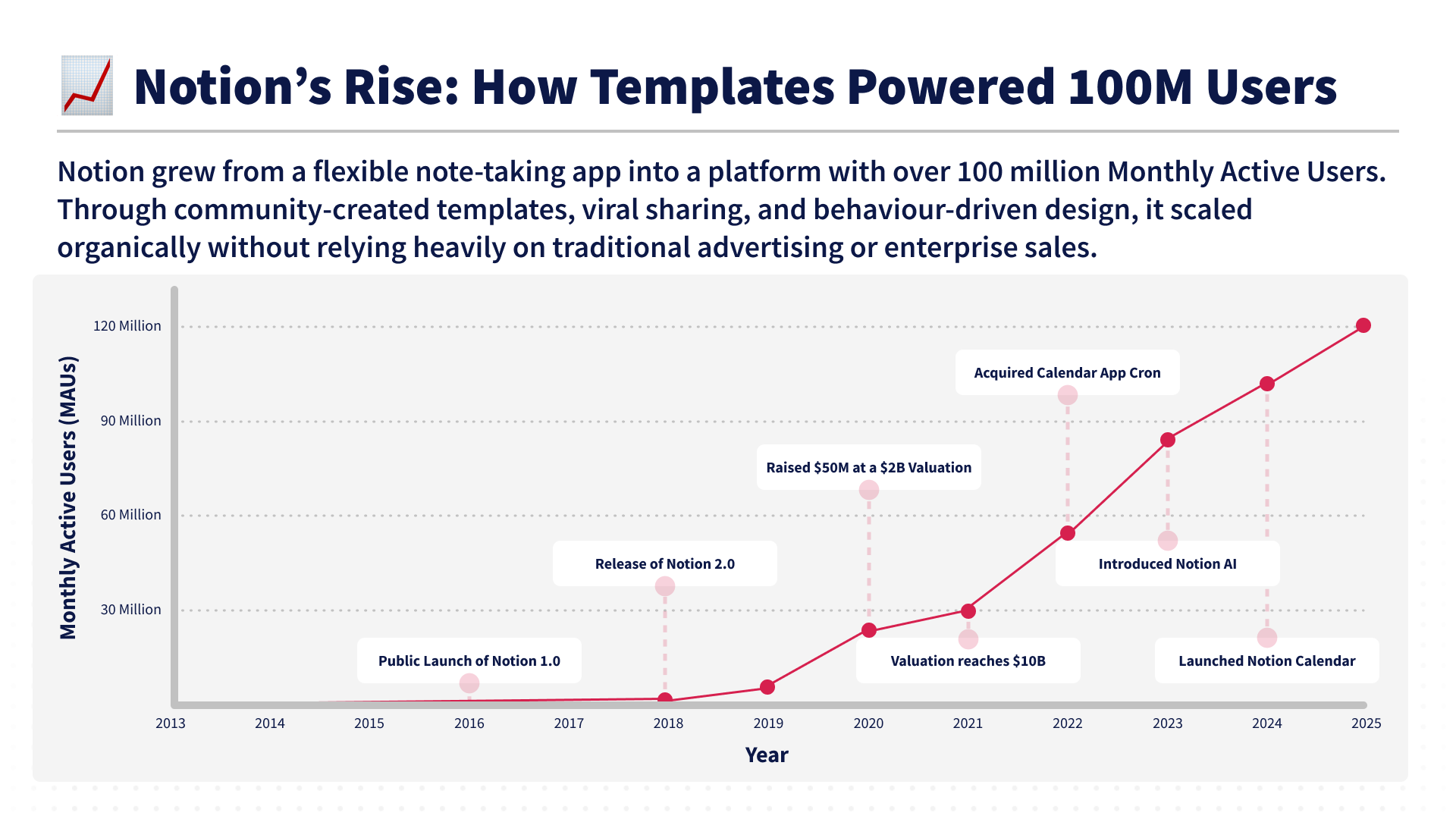
Seed initial content yourself, then let your community build on it. Templates don’t just activate users; they advertise your product.
Duolingo: volunteers built the product
Problem solved: too many languages to build in-house.
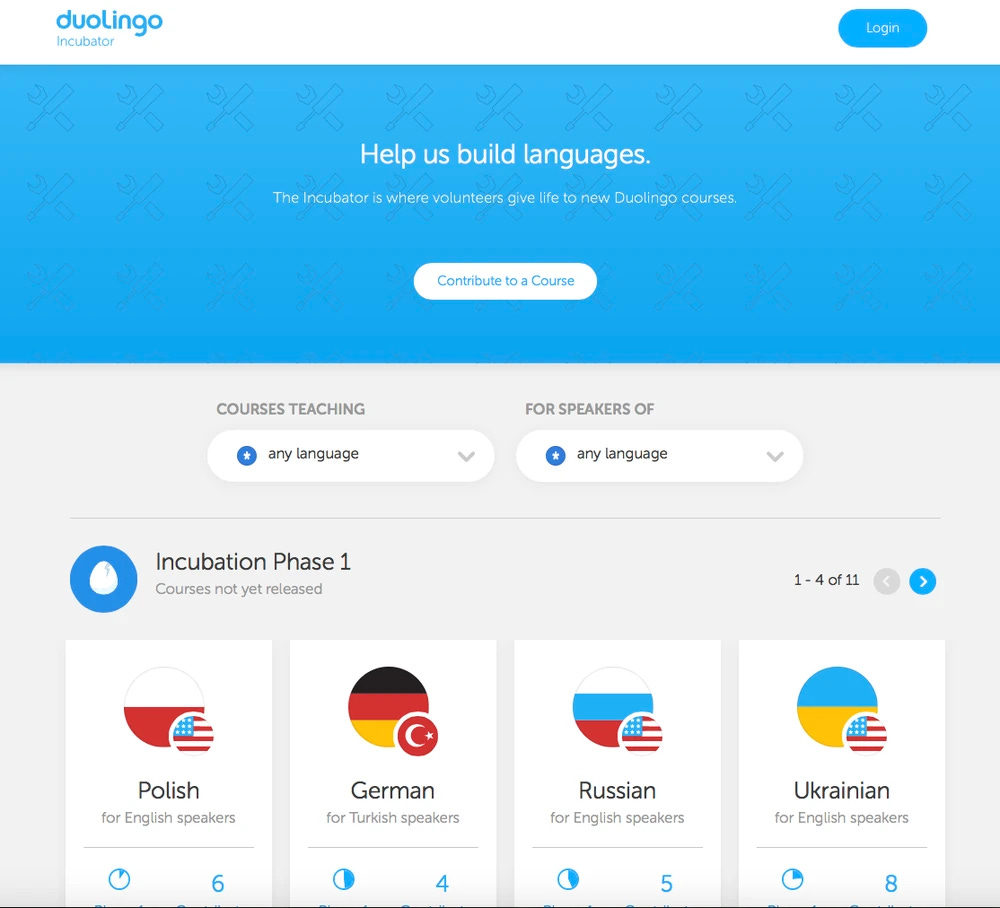
Solution: The Incubator lets bilingual volunteers create entire courses.
Quality control: 200k+ daily lesson reports from learners, triaged by community + AI.
Engagement: streaks, leaderboards, and shareable achievements kept learners hooked (and bragging).
Passionate users will build for you if you give them tools, recognition, and feedback loops.
Canva: designs that spread themselves
Problem solved: non-designers needed inspiration.
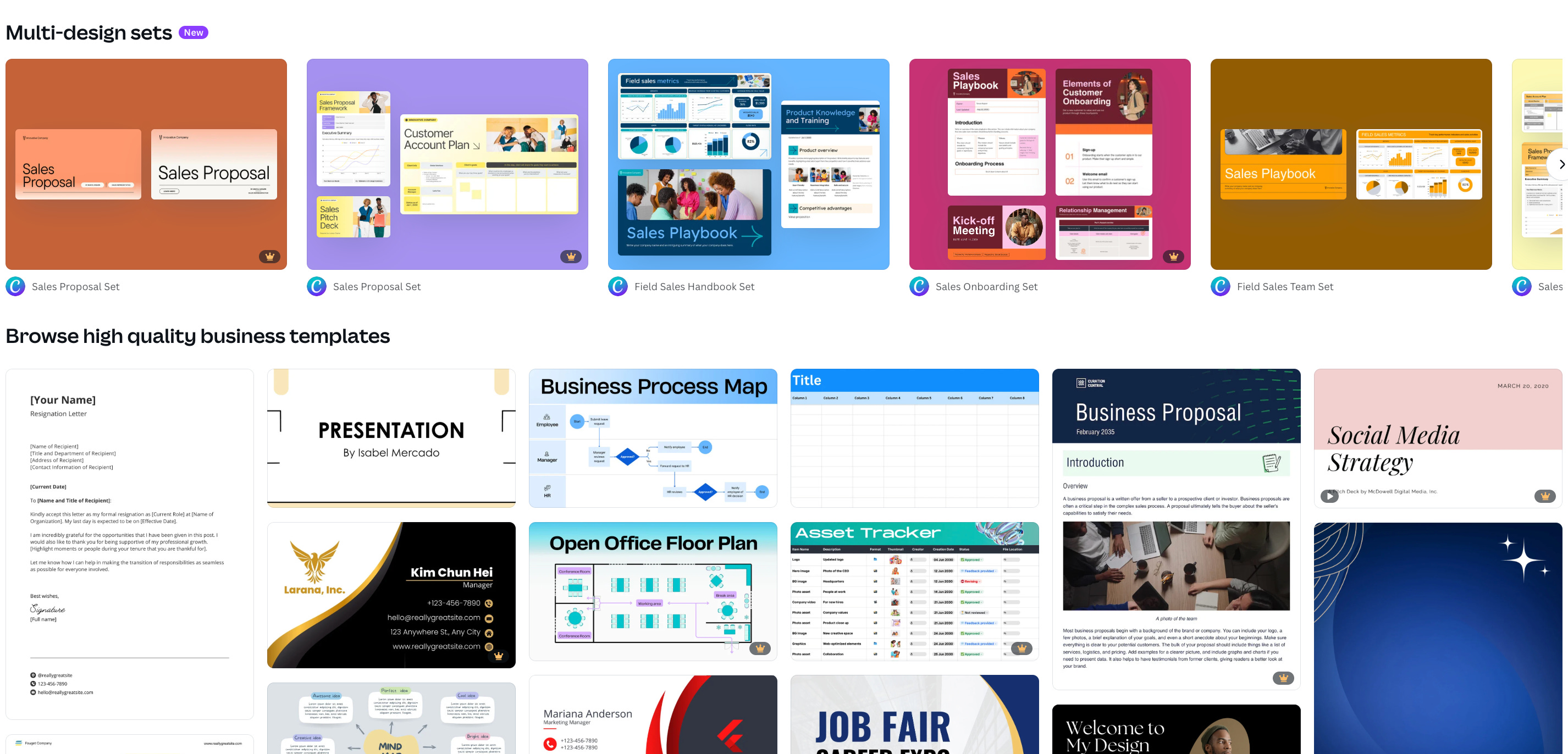
Solution: template marketplace (90% user-created). Creators earn 35% royalties, fueling constant content.
Distribution: one-click exports to socials, “Made with Canva” attribution, and hashtag contests.
Result: 13B+ designs created → millions shared → endless organic exposure.
Design your product so that what users make is naturally social + proudly branded.
Figma: collaboration = growth
Problem solved: design files stuck on desktops.
Solution: multiplayer browser design → every file invite brought in new users.
Community: launched Figma Community, where users publish UI kits, icon sets, and templates for one-click remix.
If your product can be collaborative, usage itself is distribution. If not, make outputs easy to remix and reshare.
Marketplaces: content as acquisition
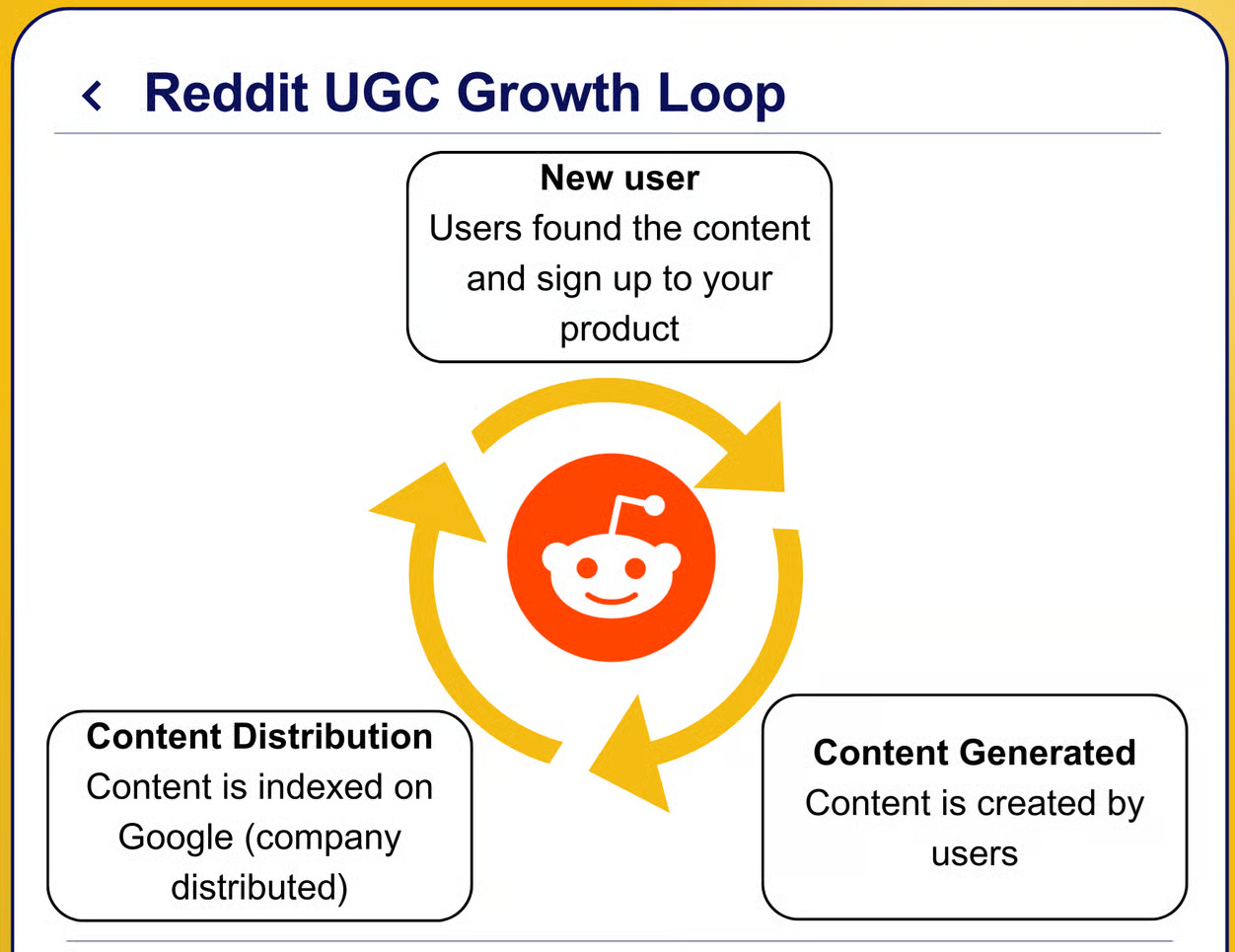
Reddit/Quora/Stack Overflow: every post = SEO fuel → brings in new users searching → they post more.
TripAdvisor/Yelp: reviews created a content moat that no competitor could replicate with ads.
Airbnb/Etsy: each host or seller listing doubled as an ad, often shared across other networks.
Every listing, review, or answer should serve both utility and distribution.
Across these examples, the pattern is consistent – users create value that begets more users.
Whether it’s templates, answers, reviews, or listings, empowering users to contribute content turns your customer base into a self-expanding marketing force.
So, how can you design and build a successful UGD loop for your startup?
1. Seed the loop (solve the empty room problem)
Don’t launch with a blank slate. Create starter templates, examples, or listings yourself.
Recruit early power users (designers, writers, hosts) to contribute first content. Pay or spotlight them if needed.
Provide single-player value: Pinterest worked even if no one else was on it. Same with Instagram filters.
2. Incentivise & curate quality (not just quantity)
Intrinsic rewards: badges, leaderboards, recognition in the community.
Extrinsic rewards: monetisation, revenue share, premium perks. Canva pays royalties. Notion allowed template sellers to earn.
Curation: actively feature the best user content (template galleries, “featured” boards) so new users see quality, not junk.
3. Build compounding mechanics (so each use spreads you)
Make every output public and portable: SEO-indexed pages, embeddable widgets, or social-share-ready exports.
Shorten time-to-value: one-click “Use this template” or “Remix this design” buttons make adoption frictionless.
Bake distribution into workflows: Calendly links, Typeform footers, Figma invites. Usage = marketing.
Add social bragging hooks: Duolingo streaks, Strava runs, Spotify Wrapped. Make achievements visually appealing and easily shareable.
4. Measure and iterate
Track share rate (what % of users share or invite).
Track conversion (do viewers become users?).
If loops don’t work, fix the landing experience, not just the share button.
Remember, any social sharing should feel like it benefits the user’s identity or needs (they want to show off, or help others, or document something) – if it’s purely to advertise your brand, users will see through it.
The goal is aligning the user’s desire to share for their own sake with your goal of distribution. Canva made designs shareable because users wanted to show their beautiful graphics. Duolingo made progress sharing fun because users wanted to celebrate their streak. Always ask, “would our users genuinely want to share this with their friends?” If yes, make it easy; if not, reconsider the approach.
User-generated distribution can be a game-changing growth driver, but it must be cultivated thoughtfully. Here are the major takeaways and common pitfalls:
Forcing virality where it doesn’t belong. Not every product is naturally social. If you shove referral prompts where they don’t fit, users feel spammed. Virality only works if what’s shared has intrinsic value to the recipient.
Incentives that backfire: Paying per referral or per post brings spam, fake accounts, and low-quality contributions. Align rewards with retention or quality: e.g. reward only if referred users are active for 30 days.
Ignoring moderation: User content without curation becomes noise. Early-stage? Curate manually. At scale? Build community guidelines, flagging tools, and algorithms to keep quality high.
Assuming loops run on autopilot: UGD loops need constant seeding, iteration, and community support. Empty forums or dead galleries are worse than none.
Forgetting product-market fit: UGD amplifies what exists. If the core product doesn’t solve a real problem, no loop will save it. Duolingo’s community loop worked because the app itself taught languages well.
Neglecting contributors: Your creators are partners, not free labour. If they feel unappreciated or exploited, they leave (YouTube creators know this well). Always make sure they win, too.
The best founders design products where every user action becomes marketing.
Users create → outputs attract others → new users join → they create more.
CURATED RESOURCES
📬 Fundraising curated resources for you -
When you’re building a startup, no one hands you the folder, one with all the stuff you need.
Investor lists that work.
Financial models that make sense.
Legal docs that don’t cost a fortune.
Templates that save hours.
So we built it ourselves with input from founders who’ve bootstrapped and those who’ve raised millions, plus VCs who know what they’re looking for.
Here’s everything we’ve created (and keep improving):
Investor Databases (Email + LinkedIn)
Fundraising Tools
Strategic Templates
The Founder’s Guide to Building in Public (With 20+ Real Examples)
Communication Tools
Investor Outreach Email Sequence Pack: 20+ Proven Templates Used & Approved by VCs
Legal & Operational
You can explore them all here..
📃 QUICK DIVES
Is Y Combinator quietly telling us where AI value really shifts next?
Every YC batch is a signal, but Fall 2025 is unusually clear. Almost everyone is “doing AI” now, 92% of the batch has AI baked into the core, which means AI itself is no longer the edge. The edge has moved elsewhere.
This analysis, shared by CB Insights, is less about shiny demos and more about where founders are running into friction once AI hits the real world and where they’re choosing to build as a result.

Here’s the part most people miss.
What YC Fall 2025 really shows is that the bottleneck has moved from intelligence to operations. Early AI pilots worked well enough to expose a deeper problem: getting agents, robots, and AI systems to actually run reliably inside companies, workflows, and physical environments is much harder than making them smart.
That’s why a noticeable chunk of the batch isn’t building “agents,” but the plumbing underneath them.
On the software side, AI agent pilots are breaking once they leave demos. Memory fails. Integrations get messy. Observability disappears. Payments and permissions become fragile.
YC-backed founders are responding by building the missing production stack — memory systems, agent orchestration layers, monitoring, and infrastructure platforms that sit beneath agents. The quiet bet here is consolidation: enterprises won’t stitch together ten tools to run agents. They’ll converge on fewer, unified platforms.
In physical AI and robotics, the insight is even sharper. Intelligence isn’t the hard part; training is. Robots don’t have the luxury of infinite text data.
Real-world data is scarce, expensive, and unforgiving. As a result, value is shifting toward simulation, reinforcement learning, and training infrastructure. The companies winning here don’t just build robots — they control how robots learn, adapt, and recover when things go wrong. That’s a much stickier layer than hardware alone.
Fintech is showing a different kind of evolution. AI agents are no longer just “helpers.” Several YC companies are giving agents full workflow ownership, handling diligence, invoicing, reconciliation, and private-market processes end to end. This is a meaningful shift: once an agent owns the workflow, humans become supervisors, not operators. That’s where real cost and speed advantages show up.
Even AI coding is fragmenting in a telling way. General code generation has consolidated around a few big players, so new startups are going narrow instead of broad. Rather than “write code,” they’re attacking specific stages of the development lifecycle - specs, browser-based tooling, game building, or design-to-code handoffs. The insight here is simple: horizontal AI tools saturate fast; workflow-specific tools age better.
The bigger takeaway for founders and operators is this: AI’s next phase isn’t about smarter models. It’s about owning the boring, painful, operational layers that appear once AI is forced into production.
If you’re building in AI and asking “where’s the moat?” - YC Fall 2025 suggests a clear answer:
infrastructure beats features
training beats inference
Workflow ownership beats assistance
And specificity beats generality
That’s where real, durable value is quietly accumulating next.
Are you busy… or just distracted? : Founder productivity framework.
Most founders don’t have a prioritisation problem. They have an attention problem.
Everything feels urgent. Slack pings, customer messages, investor emails, internal asks — all screaming for “now.” The Eisenhower Matrix keeps resurfacing because it forces a brutally simple question: is this actually important, or just loud?
This framework comes from Dwight D. Eisenhower, later popularised by Stephen Covey, but what makes it timeless is not the grid; it’s the trade-offs it forces.
Here’s the real insight most people miss.
The matrix isn’t about doing urgent work better. It’s about protecting important work from becoming urgent.
Once you internalise that, the four quadrants start to behave very differently.
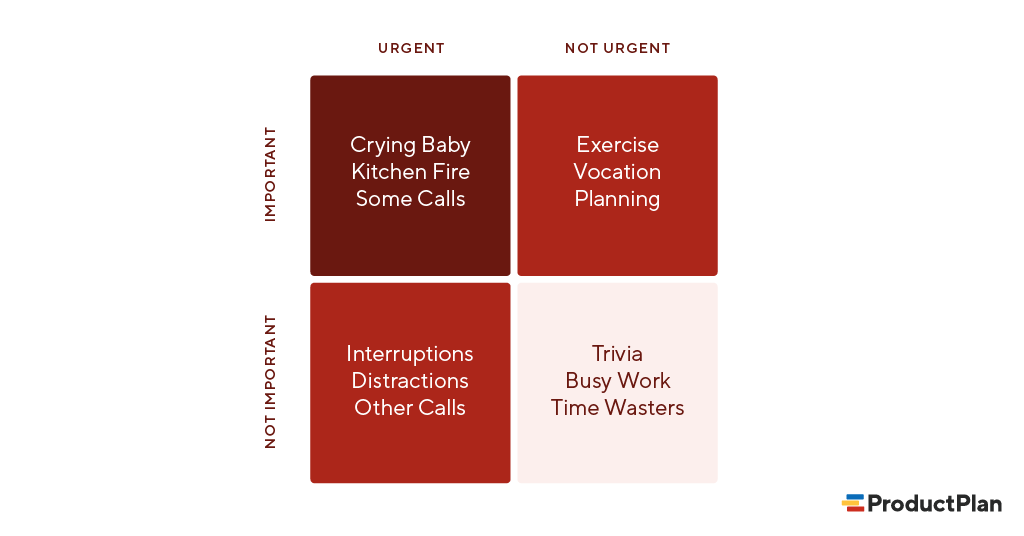
Quadrant 1: Urgent + Important. These are fires. You don’t optimise these, you survive them.
Production outages
Angry customers with deadlines
Decisions that block the team today
If most of your week lives here, it’s not heroism, it’s a signal your system is broken.
Quadrant 2: Important, not urgent This is where companies are actually built.
Strategy, planning, hiring
Product thinking, deep work, learning
Health, reflection, long-term bets
This quadrant feels optional in the moment, which is why it’s constantly sacrificed. Ironically, neglecting it is what creates more Quadrant 1 chaos later.
Quadrant 3: Urgent, not important. This is the sneakiest trap.
“Quick” calls
Reactive emails
Meetings that feel mandatory but change nothing
These tasks borrow urgency from someone else’s priorities. The correct move here is not efficiency; it’s delegation or refusal.
Quadrant 4: Not urgent, not important. These aren’t just distractions. They’re energy leaks.
Doom scrolling
Busywork that looks productive
Endless context switching
Deleting these doesn’t make you more productive; it gives you mental oxygen.
So,
If your calendar is full but your roadmap isn’t moving, you’re stuck in Quadrant 3
If everything feels urgent, you’ve underinvested in Quadrant 2
If you’re constantly firefighting, the problem isn’t speed; it’s prevention
A simple weekly habit that actually works:
Write down last week’s tasks
Tag each into one quadrant
Ask one uncomfortable question: “Why did this end up here?”
The goal isn’t balance across quadrants. The goal is spending as much time as possible in Quadrant 2, so Quadrant 1 stops owning you.
TODAY’S JOB OPPORTUNITIES
💼 Venture Capital & Startup Jobs
All-In-One VC Interview Preparation Guide: With a leading investor group, we have created an all-in-one VC interview preparation guide for aspiring VCs. Don’t miss this. (Access Here)
Associate, Corporate Venturing - NRG Venture Fund | USA - Apply Here
VC Analyst Intern Wind | France - Apply Here
Investment Associate - Opmistic Venture | USA - Apply Here
Summer Fellowship 2026 - Coastanova Venture | USA - Apply Here
Portfolio Management Intern - LVL1 Accelerator | India - Apply Here
Associate, Growth Equity - Adam Street Partner | USA - Apply Here
Venture Relations Associate - Angellist | USA - Apply Here
Due Diligence Fellow - Velocity Digital | USA - Apply Here
Finance Manager - NLC | USA - Apply Here
VC Associate - Toyota Research | USA - Apply Here
MBA Intern - Greycroft Opportunities Fund | USA - Apply Here
Venture Capital Associate - Pacific Channel | USA - Apply Here
Accounting Manager VC Firm - Rembrandt Venture Partners | USA - Apply Here
WHEN YOU’RE READY, HERE’S HOW I CAN HELP:
💁 You might need our help!
Reach 103,000+ Founders & Investors: Partner with our newsletter to reach a highly engaged audience.
Build Your Pitch Deck: We write, design and model your pitch deck into a storyteller book within 4-5 days.
🔴 Share Venture Curator
You currently have 0 referrals, only 5 away from receiving a 🎁 gift that includes 20 different investors’ contact database lists - Venture Curator