


👋 Hey, Sahil here — Welcome back to Venture Curator, where we explore how top investors think, how real founders build, and the strategies shaping tomorrow’s companies.
How to design a seed pitch deck investors actually read (analysis of 50+ Y-Combinator decks that raised $450M+).
The uncomfortable truth about OpenAI’s moat.
The marketing framework ClickUp used to scale to a $4B company.
FROM OUR PARTNER - LONG ANGLE
🤝 After financial success, the decisions get harder

Long Angle is a private community for founders and executives who’ve reached real financial scale and want better inputs for what comes next.
Members discuss private market allocations, portfolio construction, tax strategy, and lifestyle tradeoffs with peers who’ve navigated similar transitions.
Private. Peer-led. No solicitation.
VENTURE CURATORS’ FINDING
📬 My Favourite Finds
Media Posts:
Startup legal document pack – essential legal Docs for founders. (Link)
Churn and retention in the era of AI. (Link)
Lessons from building financial agents for financial services (Link)
When to raise vc. (Link)
The $495B AI opportunity most founders are completely missing (Mark Cuban’s thesis). (Link)
Reports/Articles:
AI is destroying open source. (Link)
Nobody knows what programming will look like in two years. (Link)
The Human-in-the-loop is tired. (Link)
How Americans view Elon Musk and Mark Zuckerberg. (Link)
Applied intuition’s path to product-market fit, The $15B founder’s formula for a winning company. (Link)
How today’s founders make friends and influence people. (Link)
🤝 PARTNERSHIP WITH US
Get your product in front of over 115,000+ audience - Our newsletter is read by thousands of tech professionals, founders, investors and managers worldwide. Get in touch today.
📜 DEEP DIVE
How to design a seed pitch deck investors actually read (analysis of 50+ Y-Combinator decks that raised $450M+)
Building a pitch deck for your seed round is a crucial step in your startup journey. It’s not just about putting slides together; it’s about crafting a story that resonates with investors and gets them genuinely excited about your vision.
While there are plenty of guides online about building pitch decks, most of them fall short of offering clear, actionable advice. That’s why I’ve taken the time to dive deep into Y Combinator’s resources, watch hours of their videos, and analyse detailed articles to create this comprehensive and practical guide for you.
Why a Great Pitch Deck Matters
Your pitch deck should achieve two things:
clearly convey the most critical points about your startup and
make it easy for investors to understand and remember your story.
For seed-stage startups, this often means focusing on simplicity and narrative clarity. Remember, at this stage, most startups don’t have extensive data or years of history to share—and that’s perfectly fine. Your goal is to make your story as compelling and concise as possible.
Structuring Your Seed Round Pitch Deck
Creating a pitch deck doesn’t have to be overly complicated. It’s all about telling a clear, concise, and compelling story that investors can follow easily. Here’s how you can structure your deck:
Title Slide
Start strong with a title slide that sets the tone for your pitch. It should include:
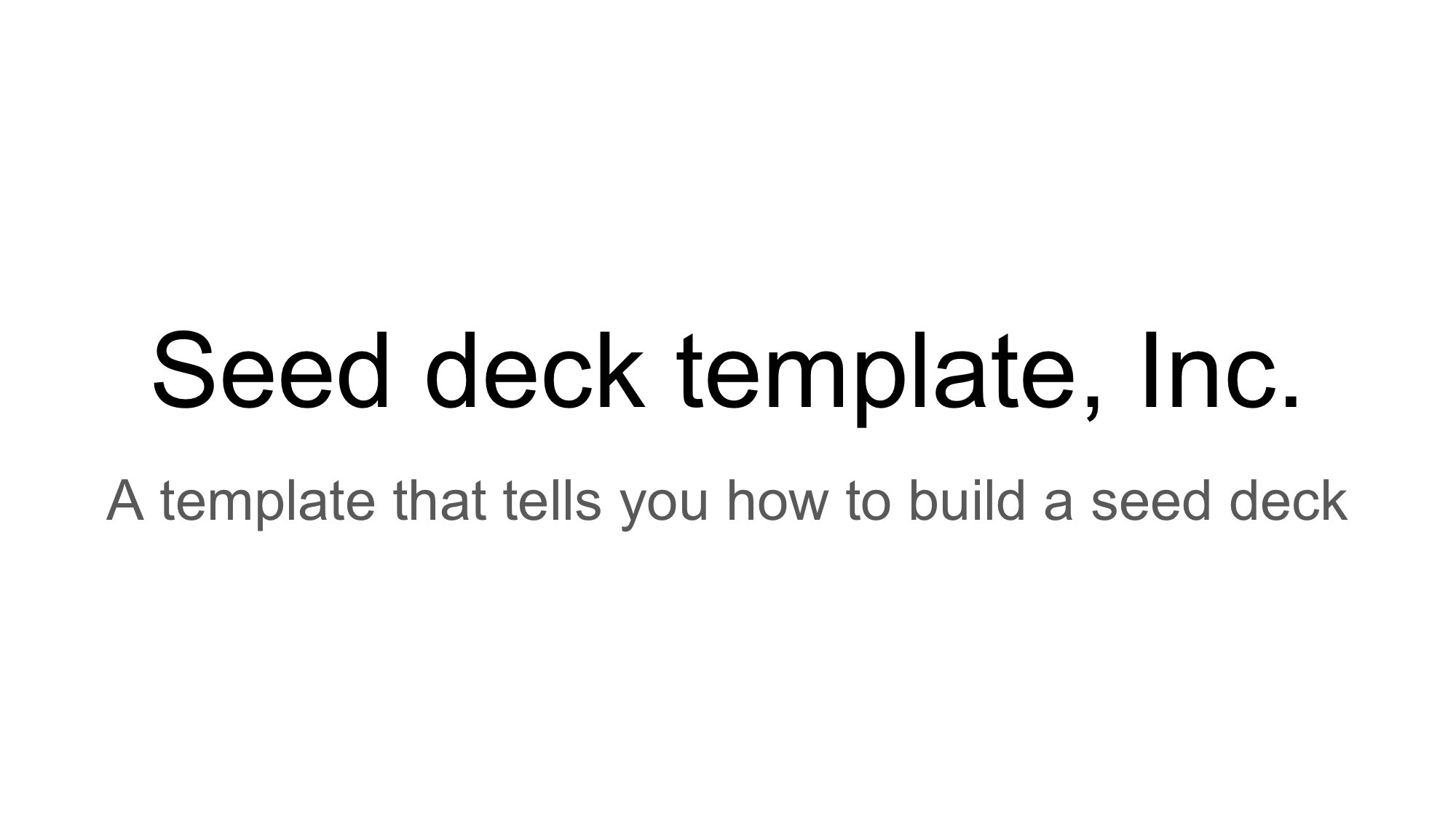
The name of your company.
A one-line description of what you do.
Keep it simple and professional. This is your first impression, so make it count.
The Problem
This is where you lay out the real-world issue your startup is solving. A well-defined problem statement is crucial for connecting with your audience.
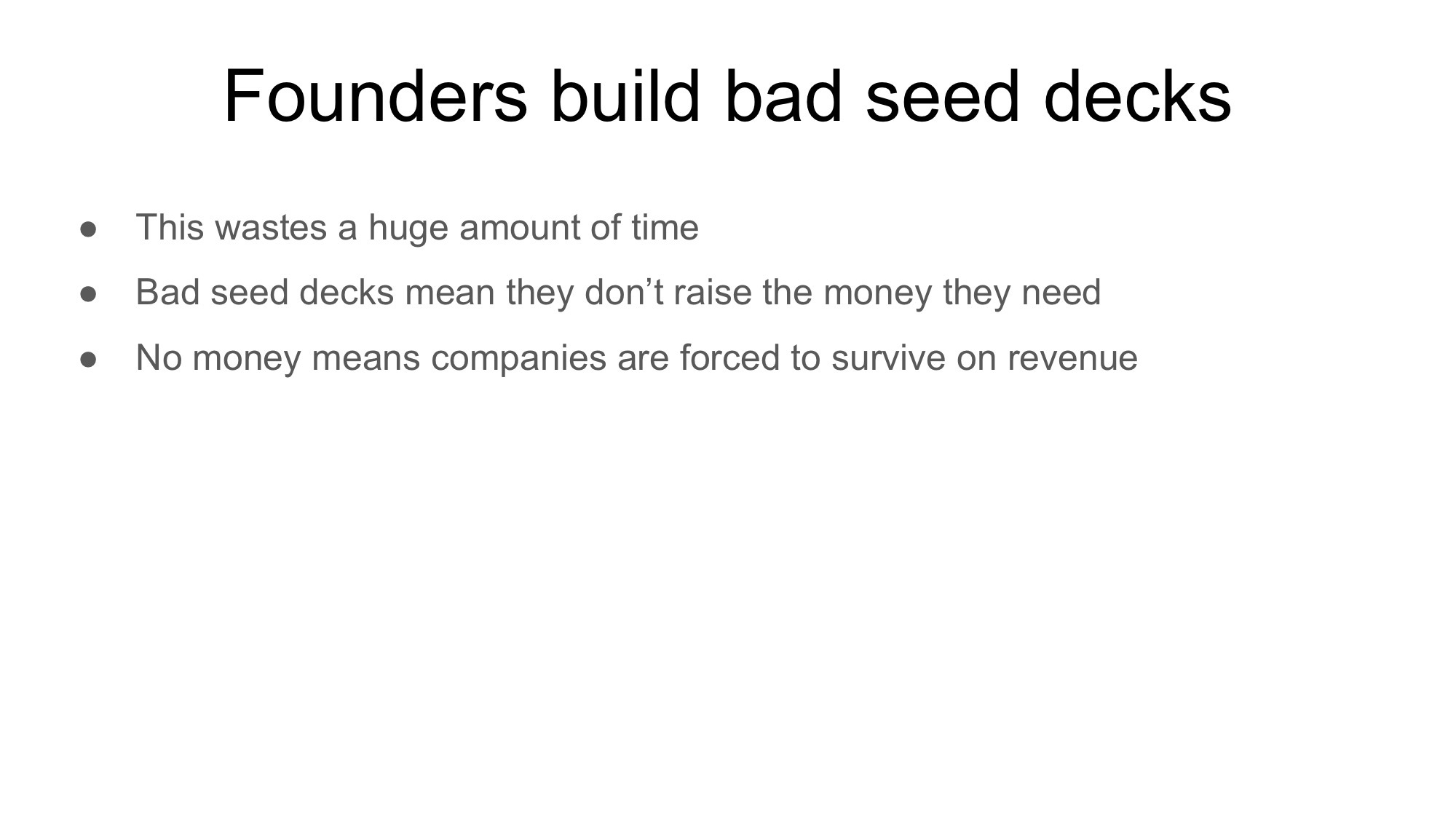
Focus on the impact of the problem on real people or businesses.
Use a statistic, example, or story to make it relatable.
Avoid overloading this slide with too much text or technical jargon. The problem should be clear and easy to understand.
The Solution
Next, explain how your product or service solves the problem you’ve just described. This is your chance to show why your approach is unique and valuable.
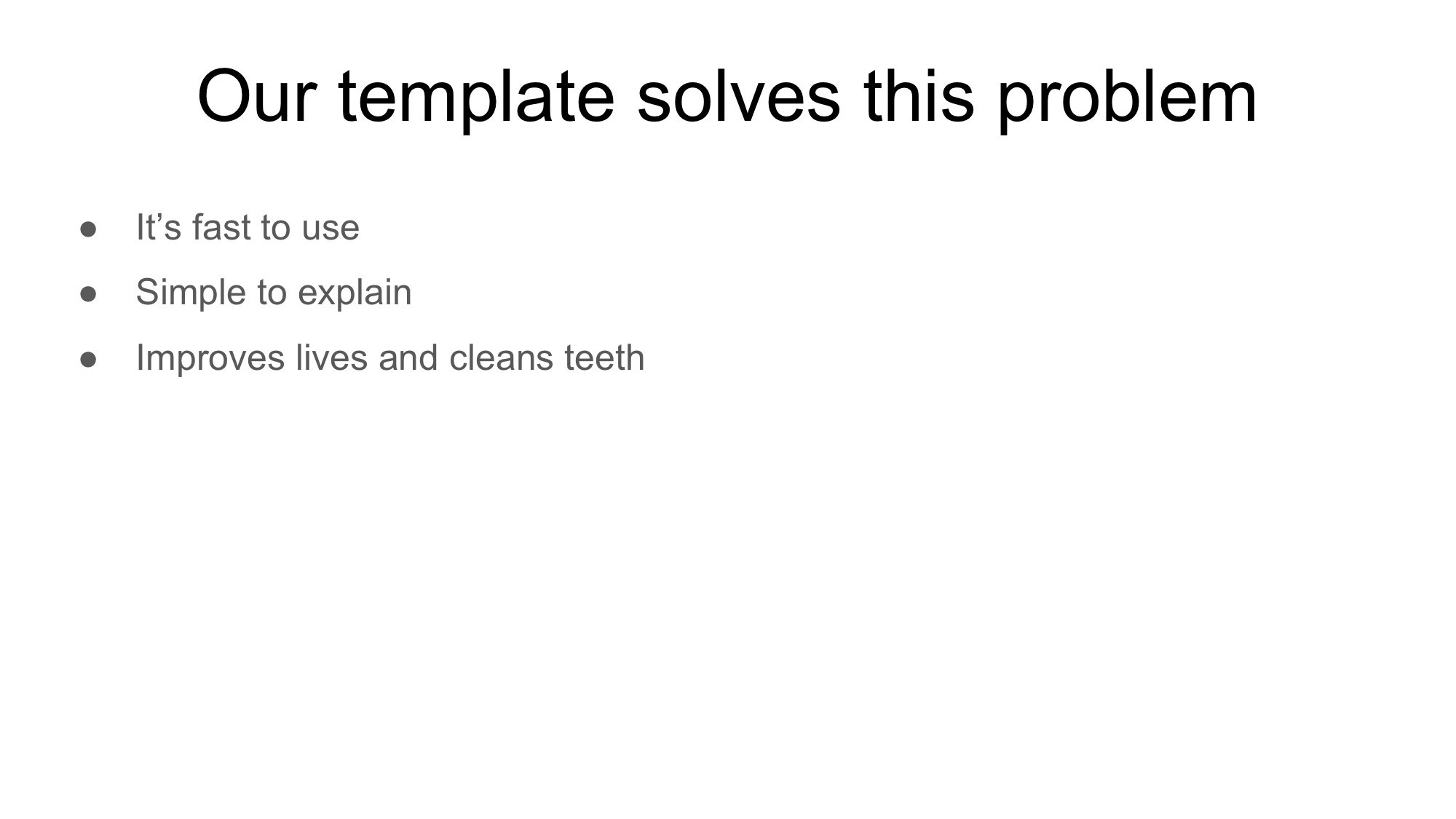
Keep your explanation brief and to the point.
Highlight the concrete benefits of your solution.
If needed, use visuals or diagrams, but avoid cluttering the slide.
Traction
Investors love to see traction—it’s proof that your startup is making progress. Even if your numbers are early, show them off in a way that’s easy to understand.
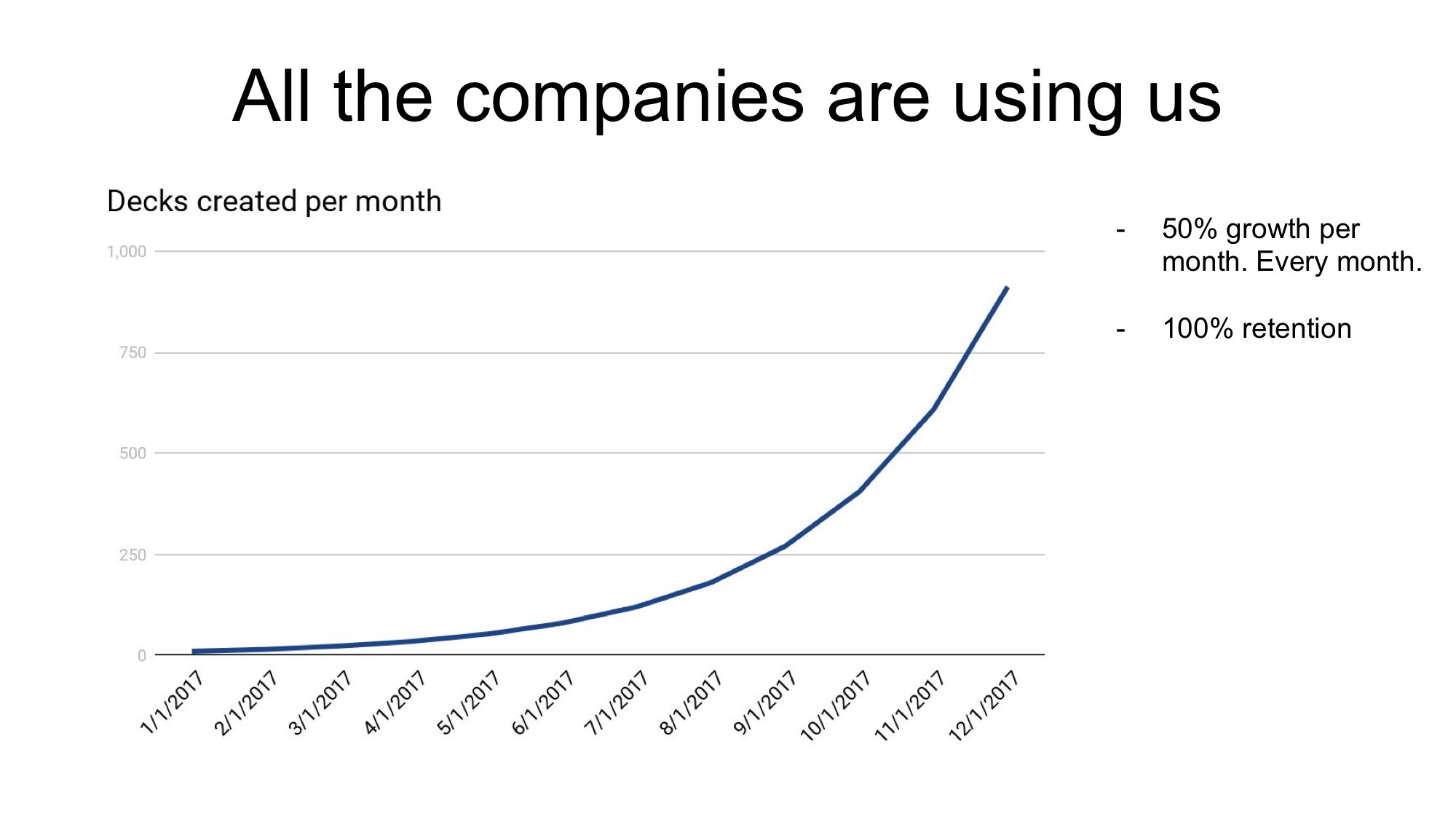
Use a chart or graph to showcase key metrics like revenue or user growth.
Add context to explain why these metrics are important.
Keep it honest and straightforward. Smooth growth curves are rare, and that’s okay.
Your Unique Advantage
What makes your startup special? Use this slide to highlight what sets you apart from competitors.
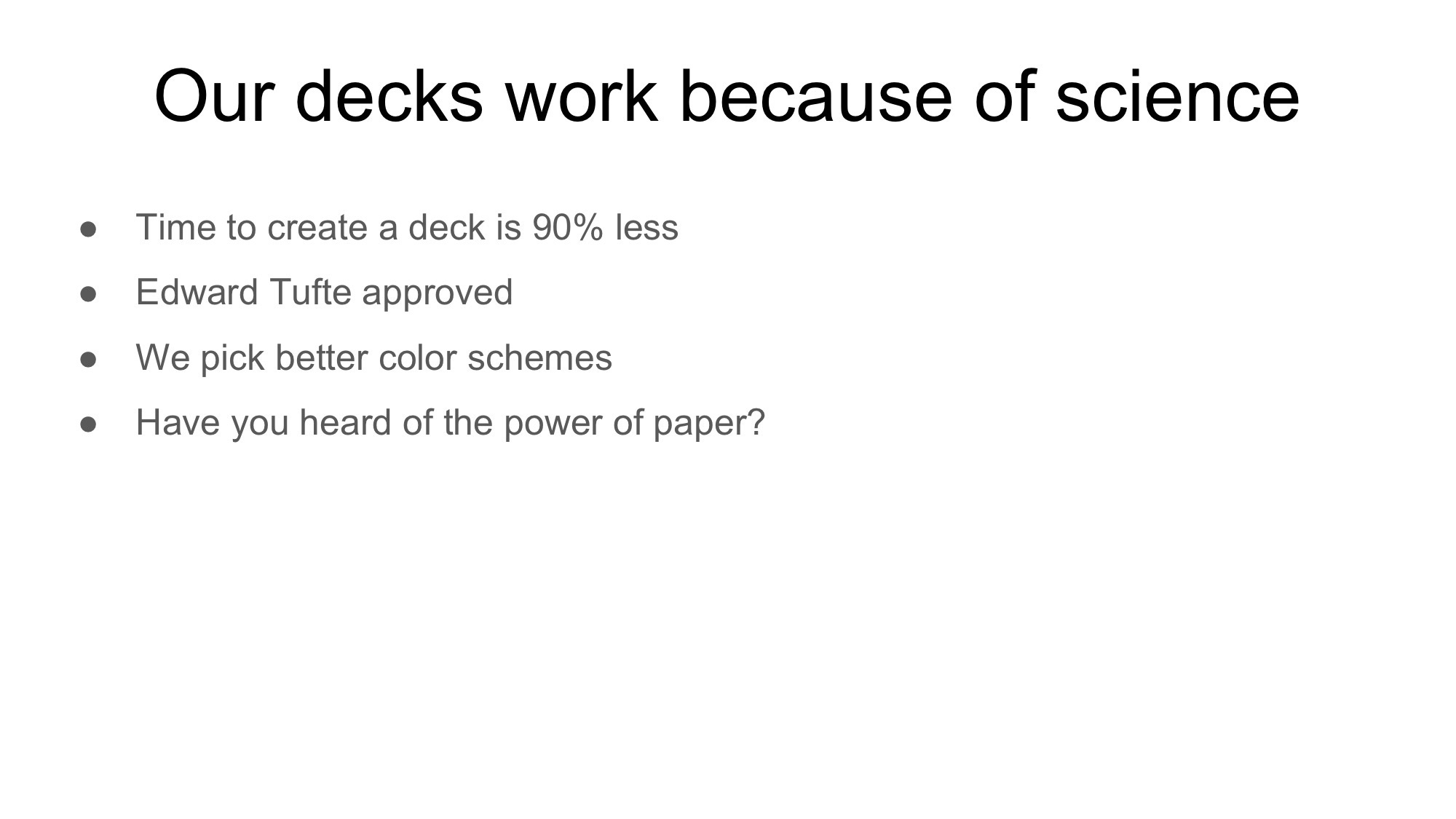
Focus on your unique insights, technology, or approach.
Keep it concise and avoid unnecessary technical details.
Business Model
Your business model is all about showing how you make money. While it doesn’t have to be perfect, it should be clear enough for investors to understand.
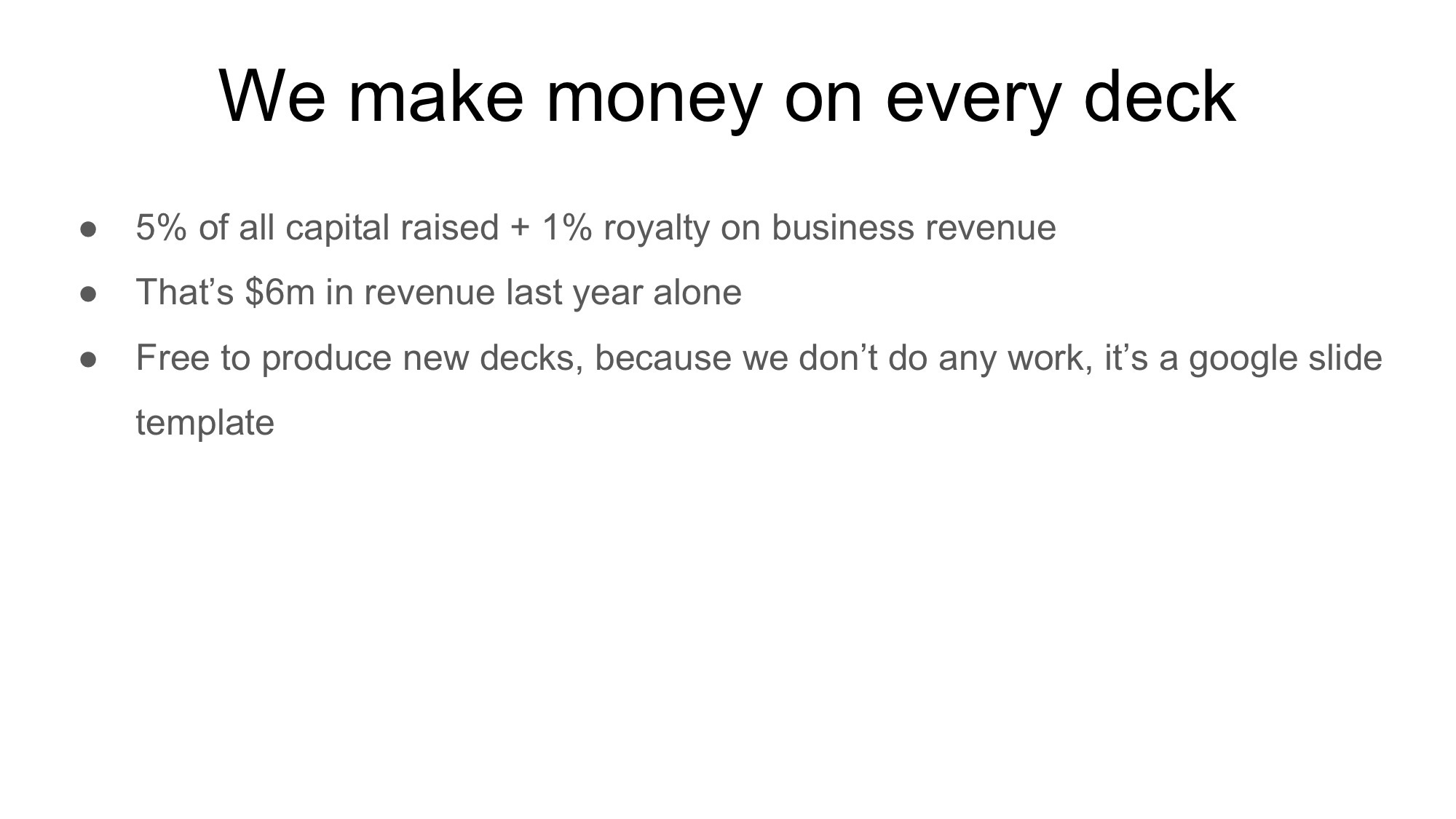
Explain your revenue streams and pricing strategy.
If you have any early results, include them here.
Break complex models into simpler components if needed.
Market Opportunity
Investors need to see the potential for scale. Use this slide to showcase the size of your market and the opportunity you’re addressing.
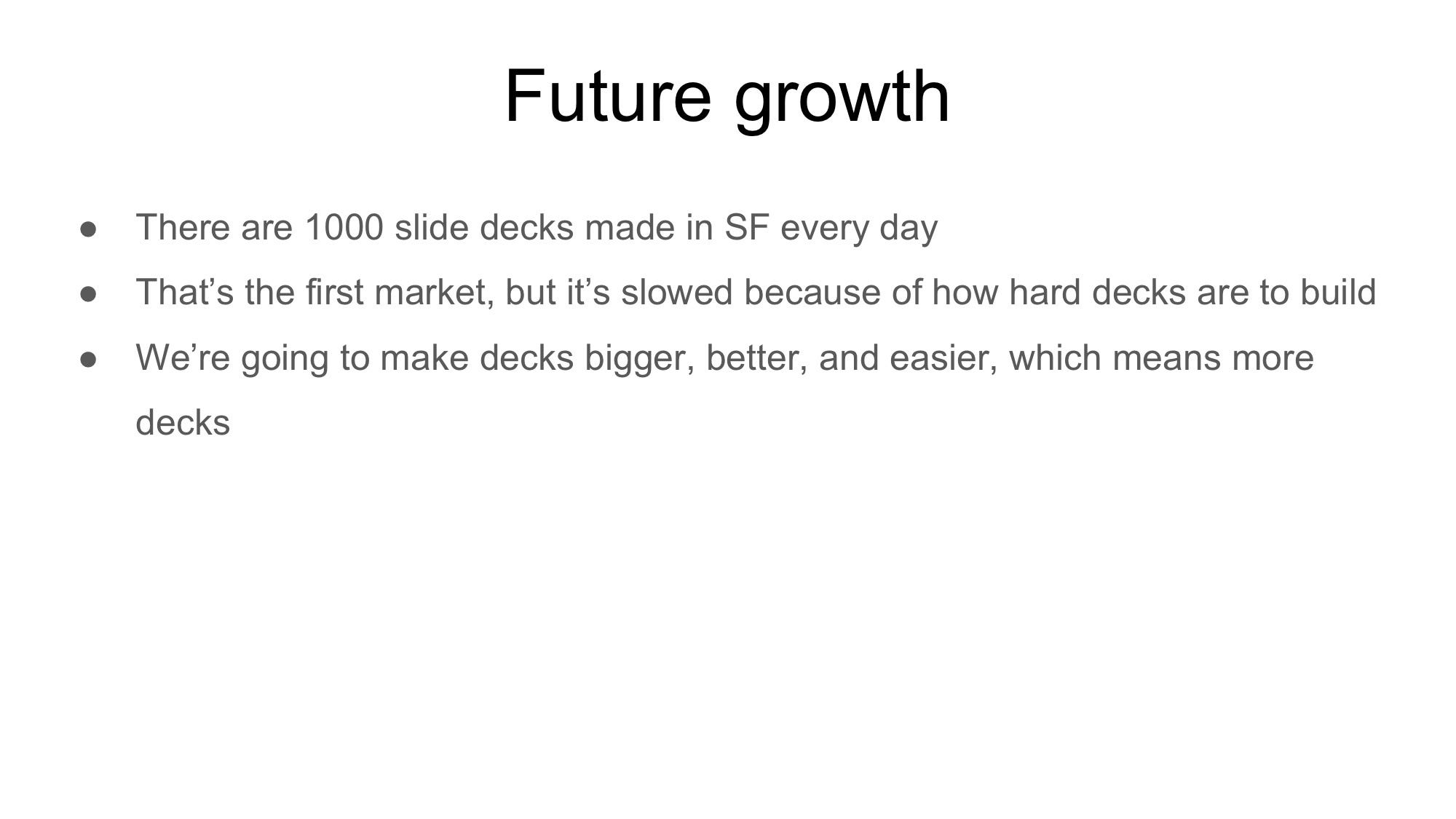
Provide a high-level overview of your Total Addressable Market (TAM).
Use a clean, visual representation to convey scale.
A compelling market opportunity slide gives investors confidence in your startup’s long-term potential.
Team
Your team is one of the most critical factors for early-stage investors. Use this slide to show why your team is uniquely qualified to solve the problem.
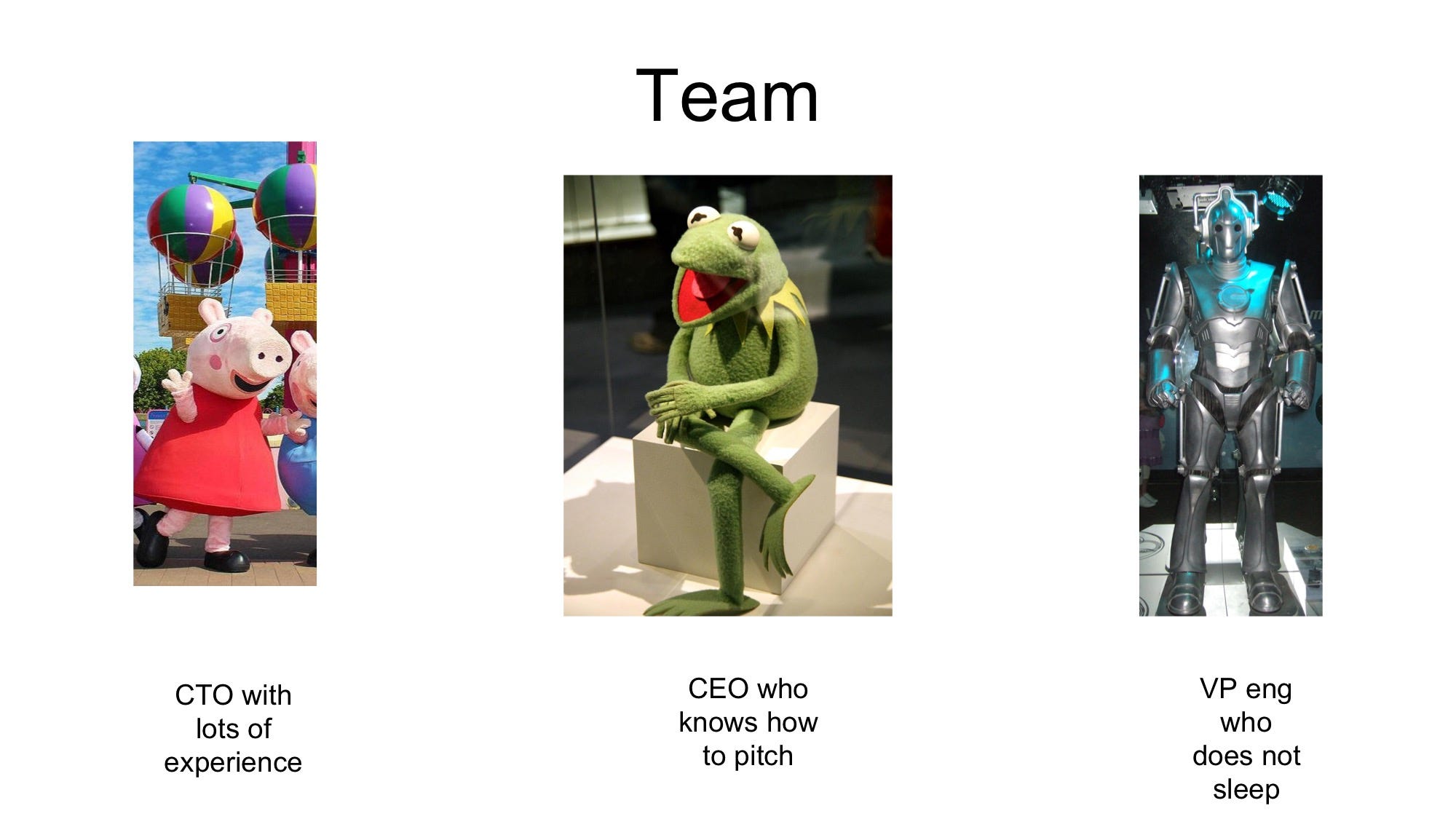
Highlight the key strengths and relevant experiences of the founders.
Keep the focus on the people leading the company rather than advisors or extended team members.
The Ask
Wrap up your pitch with a clear “ask.” Be specific about what you need and what investors can expect in return.
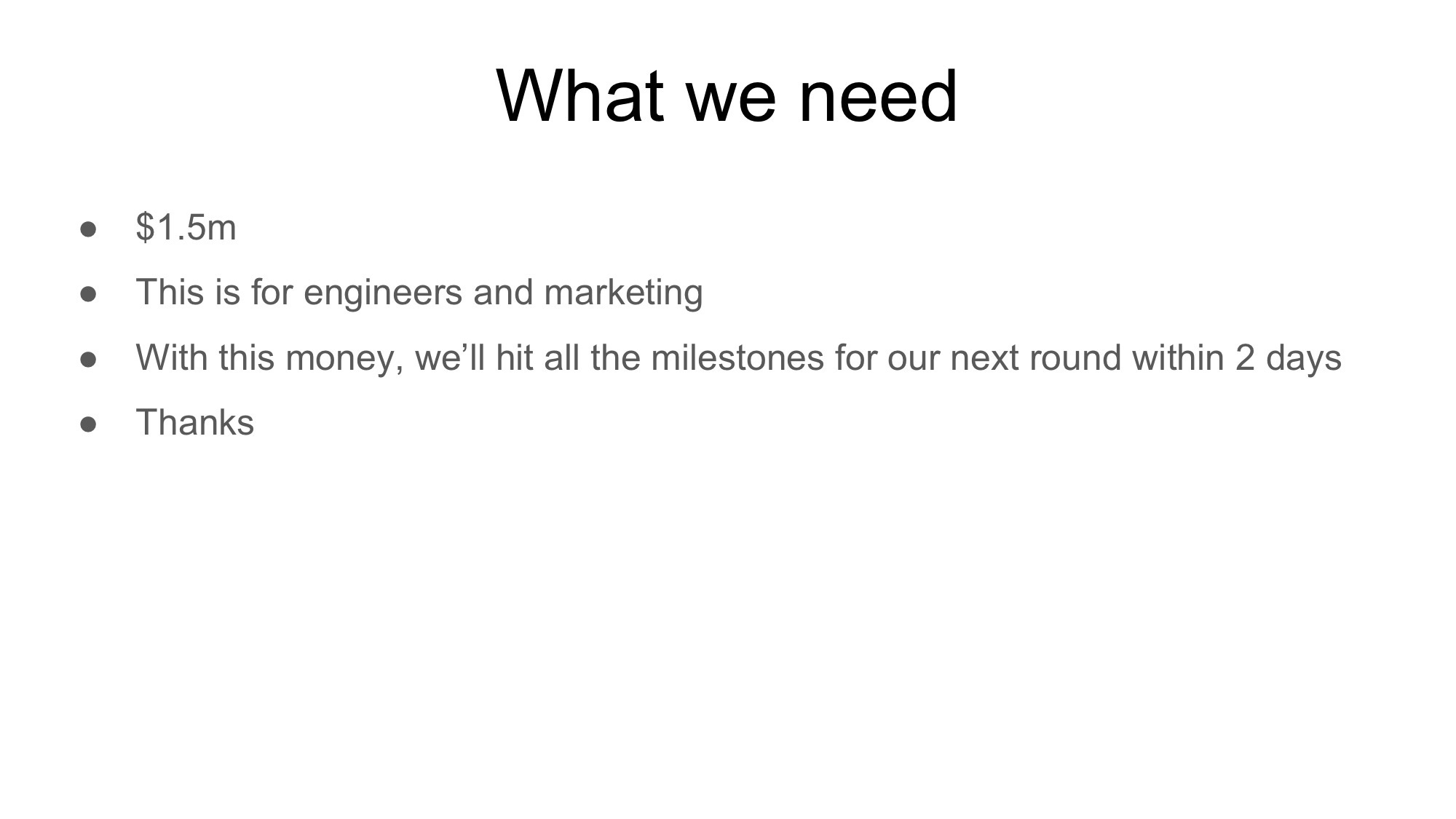
State the amount you’re raising.
Explain how the funds will be used (e.g., product development, hiring, marketing).
Outline where you expect to be within a year and how this funding helps you get there.
Remember - even the best content can fall flat if your slides aren’t designed effectively. According to YC, a great pitch deck follows three fundamental principles: Legibility, Simplicity, and Obviousness.

Legibility

Use large, bold fonts with high contrast.
Avoid clutter; each slide should be easy to read, even from the back of a room.
Place key text at the top for better visibility.
Simplicity
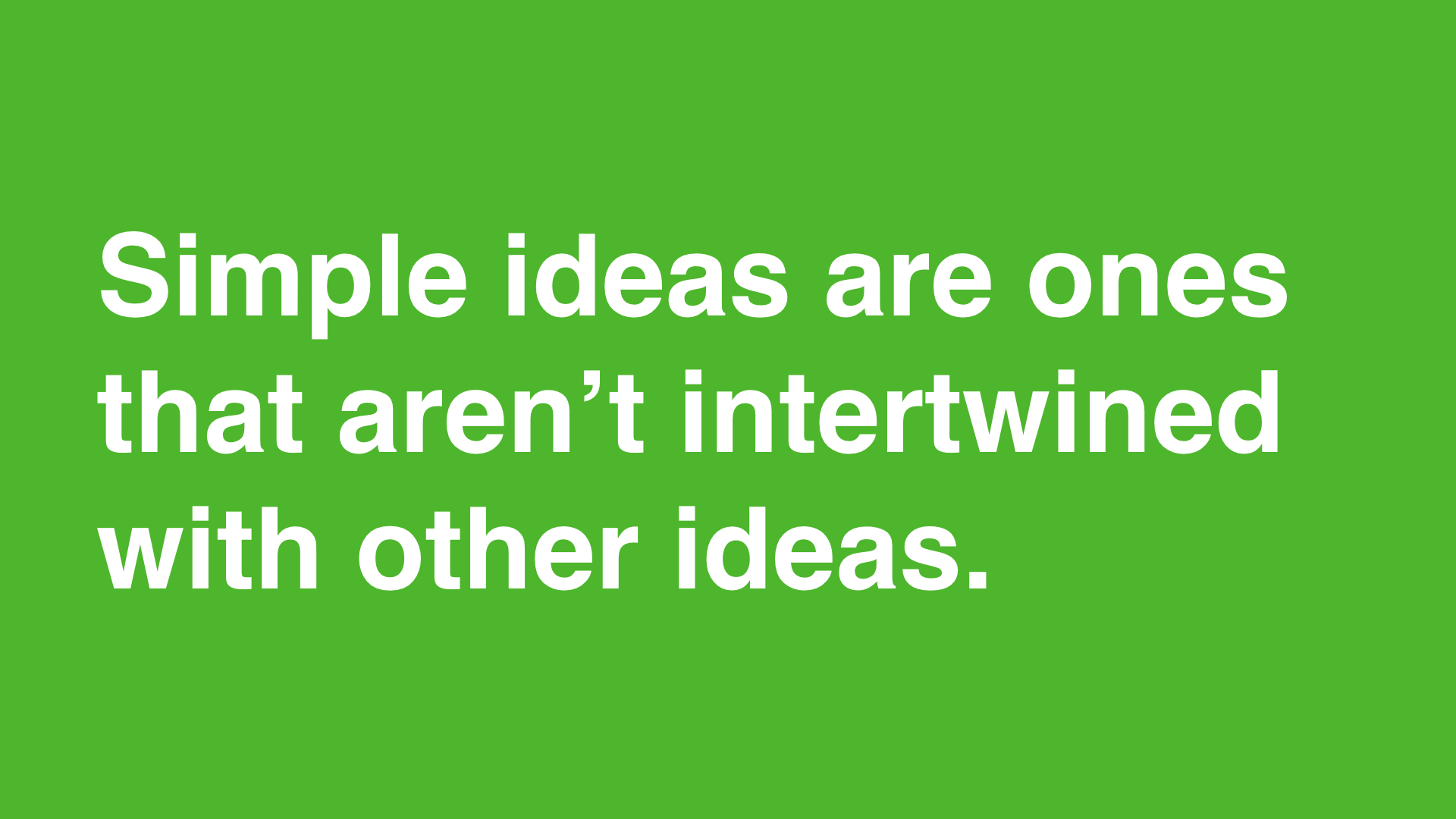
Stick to one idea per slide.
Avoid excessive text, diagrams, or branding.
Use visuals sparingly and only when they add value.
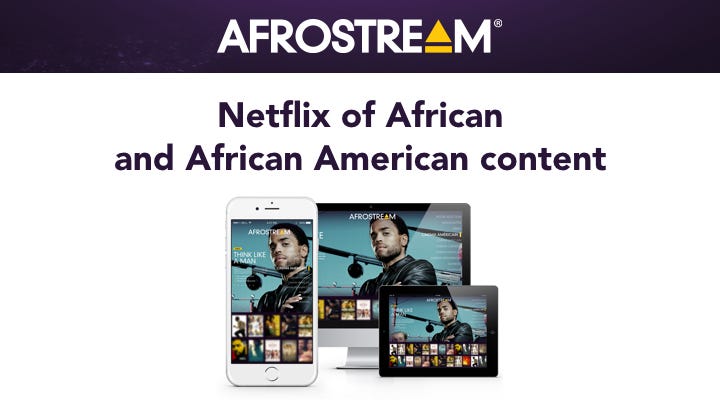
Example slide:
Obviousness

Test your slides on someone unfamiliar with your startup. If they can’t understand a slide in seconds, simplify it.
Use captions and labels to make data and visuals explicit.
Avoid distractions like animations or memes.
Avoiding Common Mistakes
To make your deck truly stand out, steer clear of these common pitfalls:
Overloading slides with information: Keep your slides clean and focused.
Using illegible screenshots: Replace them with simplified visuals or bullet points.
Skipping key slides: Ensure you address the problem, solution, and team clearly.
Forgetting the big picture: Focus on the opportunity and how your startup fits into it.
By following these guidelines, you’ll create a pitch deck that’s not only visually appealing but also tells a compelling story. Remember: clarity, simplicity, and obviousness are your best friends. Focus on making your key points memorable, and you’ll stand out to investors.
You can also find Y-Combinator startups’ pitch decks here that have collectively raised over $450M.

You can find pitch decks here.
📃 QUICK DIVES
The uncomfortable truth about OpenAI’s moat.
There’s a quiet but fundamental question hanging over OpenAI in 2026: After starting the AI wave, how does it actually win it?
This analysis originally explored OpenAI’s competitive position in depth, and the core argument is simple but uncomfortable: OpenAI has extraordinary technology and scale — but not yet a structural advantage.
The models are strong.
The user base is massive.
The capital ambition is historic.
But none of those, by themselves, create power.
Let’s unpack why.
Frontier models are converging — not diverging
At the model layer, competition is tighter than most people admit.
Today, roughly half a dozen organisations are shipping competitive frontier models. They leapfrog each other every few weeks. Benchmarks vary, but the pattern remains consistent: capabilities are clustered closely.
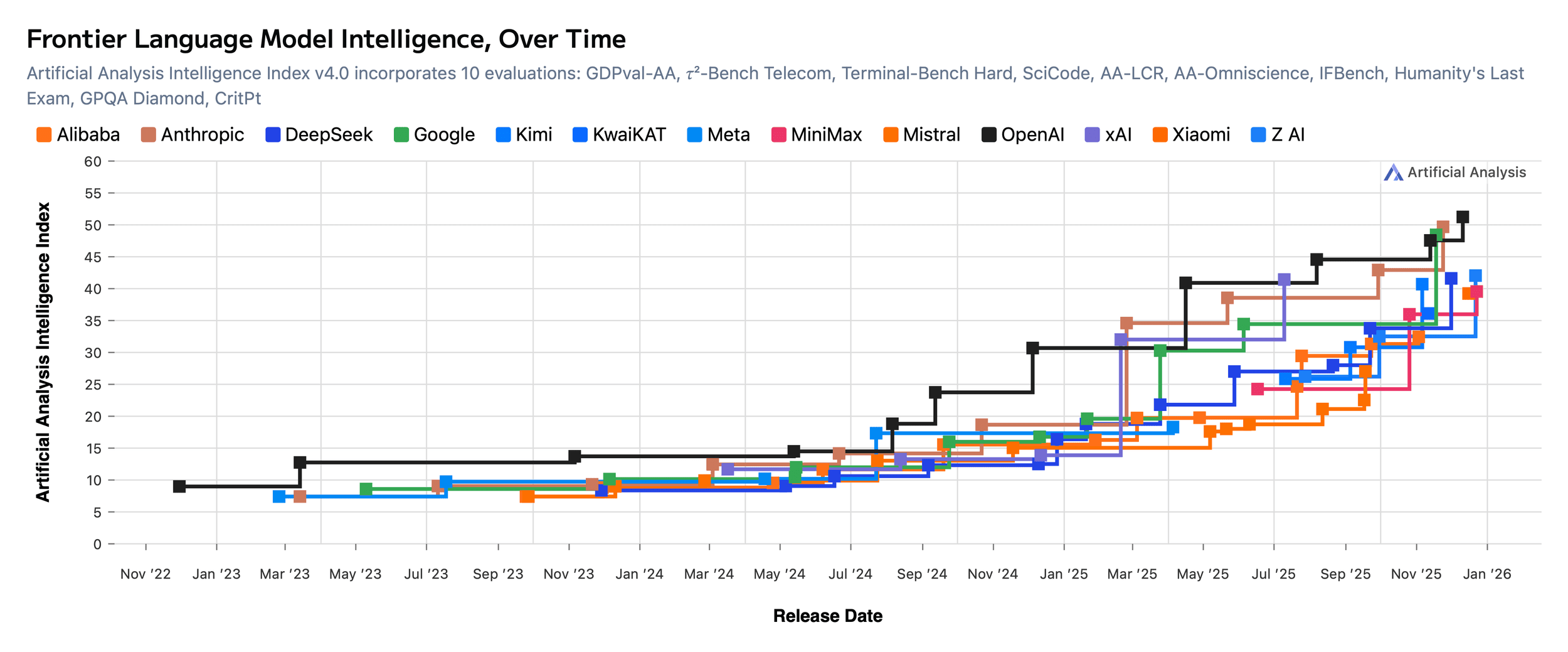
What’s missing is a known mechanism for one player to build an unmatchable lead.
Historically, tech dominance has come from structural advantages:
Windows had developer lock-in.
Google Search had data network effects.
iOS had ecosystem reinforcement.
Instagram had social graph gravity.
Foundation models, at least today, do not display those properties. They are capital-intensive and technically complex, but not self-reinforcing in the same way.
If the core layer becomes commodity infrastructure sold at marginal cost, differentiation must come from somewhere else.
The 900 million user paradox
OpenAI’s clearest advantage is scale: 800-900 million users.
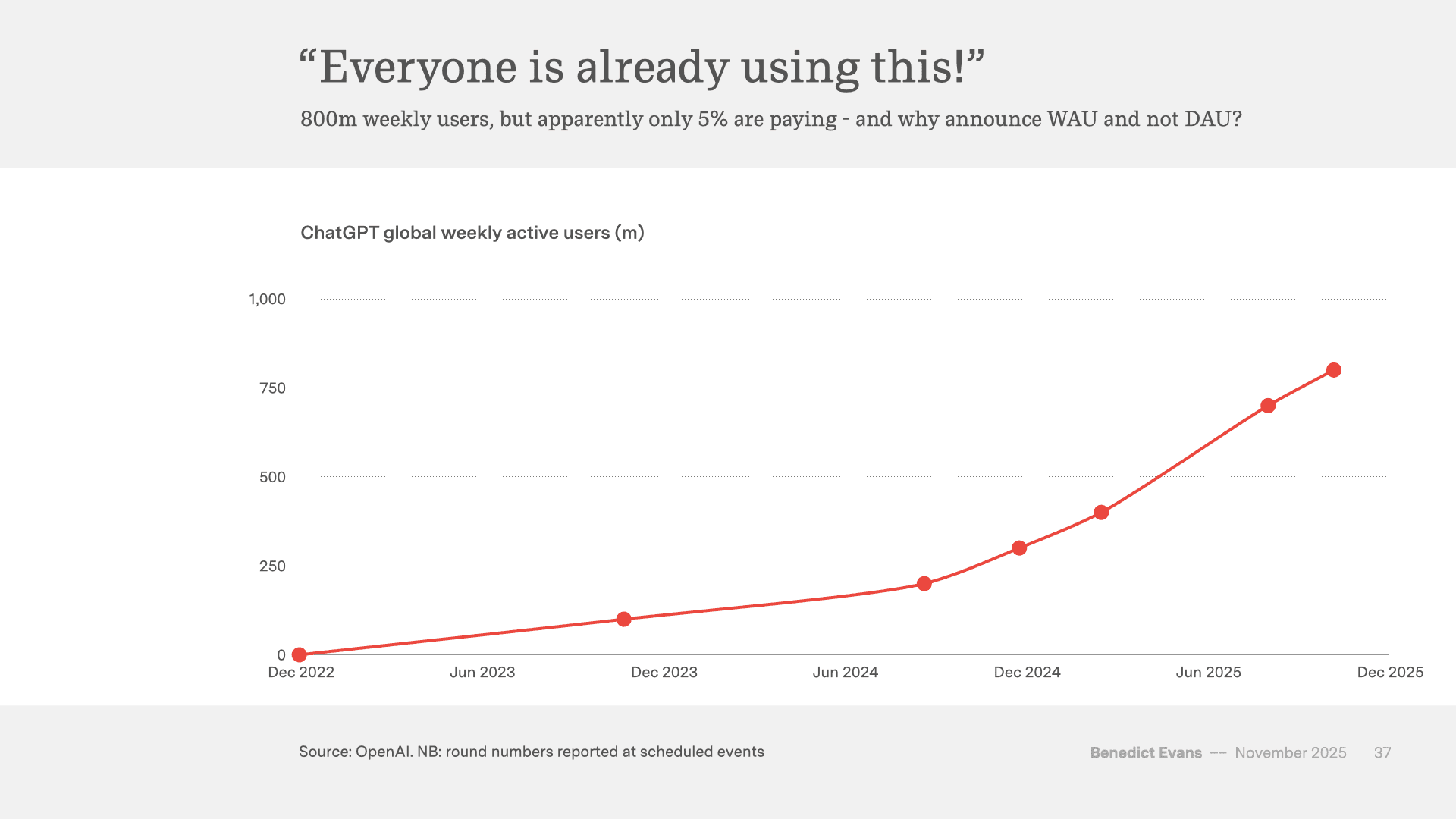
On the surface, that sounds like inevitability. But engagement tells a more nuanced story.
Only about 5% of users pay.
Most are weekly active, not daily.
80% sent fewer than 1,000 messages in an entire year.
Even teens use it occasionally, not habitually.
This is broad awareness without deep integration.
That distinction matters. Transformational platforms typically embed into daily workflows. If most users can’t think of something to do with the product on a given day, then either the use-cases aren’t clear, or the experience hasn’t fully landed.
OpenAI calls this a “capability gap”, the gap between what the models can do and what people actually do with them.
From a product standpoint, that’s a sign that product-market fit is still evolving.
And in markets where products are hard to differentiate, early adoption rarely guarantees durable dominance. Competition shifts toward brand and distribution.
We’re already seeing that play out:
Gemini leverages Google’s distribution.
Meta AI rides on Meta’s installed base.
Anthropic competes on model quality but lacks consumer reach.
When products look similar to most users, distribution becomes the weapon.
The chatbot problem: thin interface, limited differentiation
There’s a strong analogy here to web browsers in the late 1990s.
A browser is fundamentally an input and output surface. You can improve performance and rendering, but the surface remains thin. Innovation becomes incremental.
Chatbots resemble that structure:
An input box.
An output stream.
A handful of added features.
You can improve the model beneath the surface, but how do you create durable product differentiation at the interface level?
History suggests that when the interface layer is thin, value capture shifts upward. Microsoft won early browser battles, but the enduring value of the web accrued to search engines, marketplaces, and social networks built on top.
If generative AI follows a similar arc, then the next wave of value may not sit in the model itself, but in entirely new experiences built above it.
And here lies the strategic dilemma:
Thousands of startups and every major tech incumbent are racing to invent that second layer. Why should OpenAI be the one to win it?
Capex: advantage or table stakes?
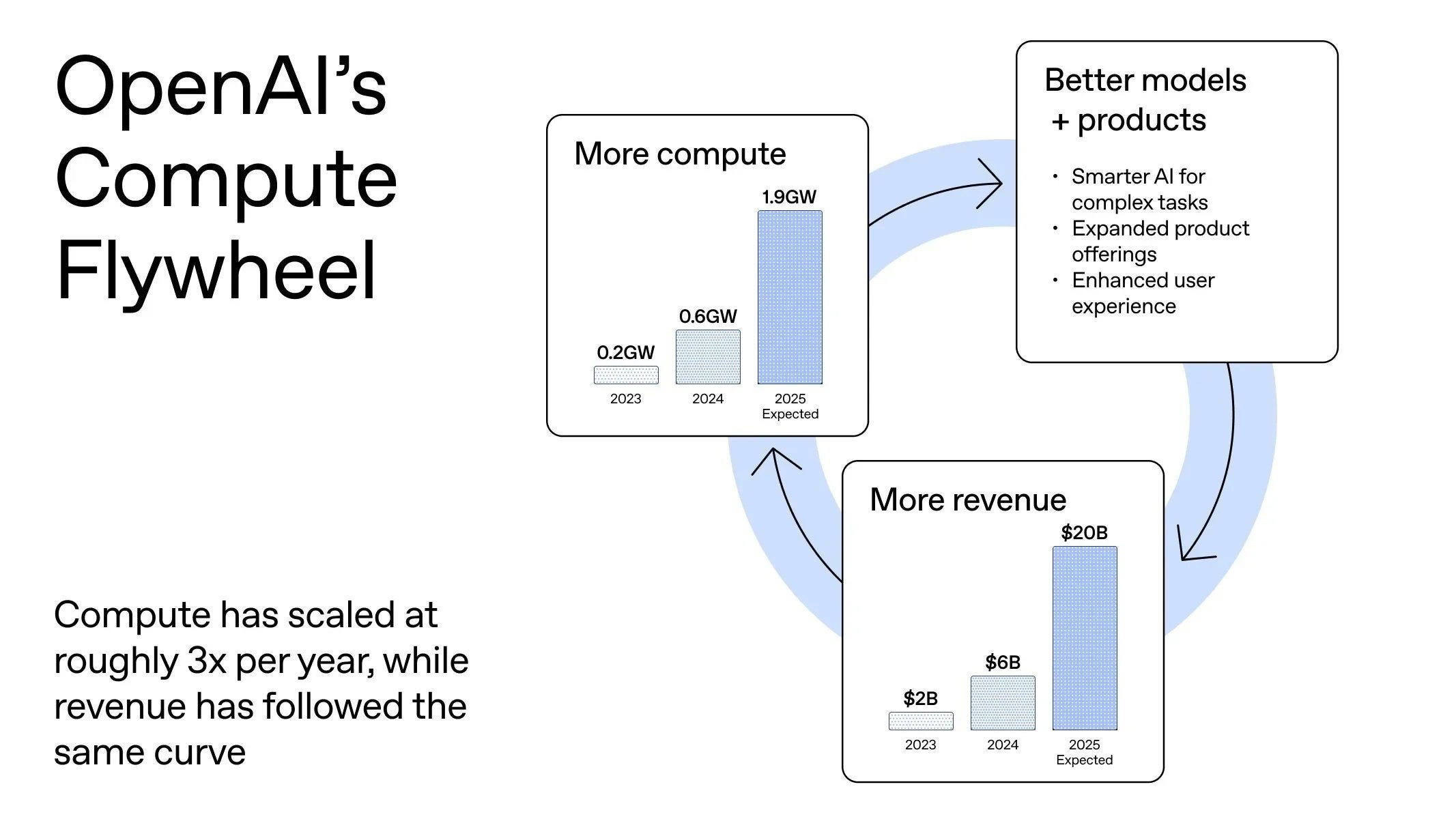
Part of OpenAI’s answer has been scale at the infrastructure layer.
Massive capital raises. Gigawatt-scale compute ambitions—aspirations measured in hundreds of billions.
There is logic here. If AI infrastructure behaves like semiconductor fabrication — where fixed costs rise, and only a handful of players can afford to stay at the frontier — then securing a seat at that table could be decisive.
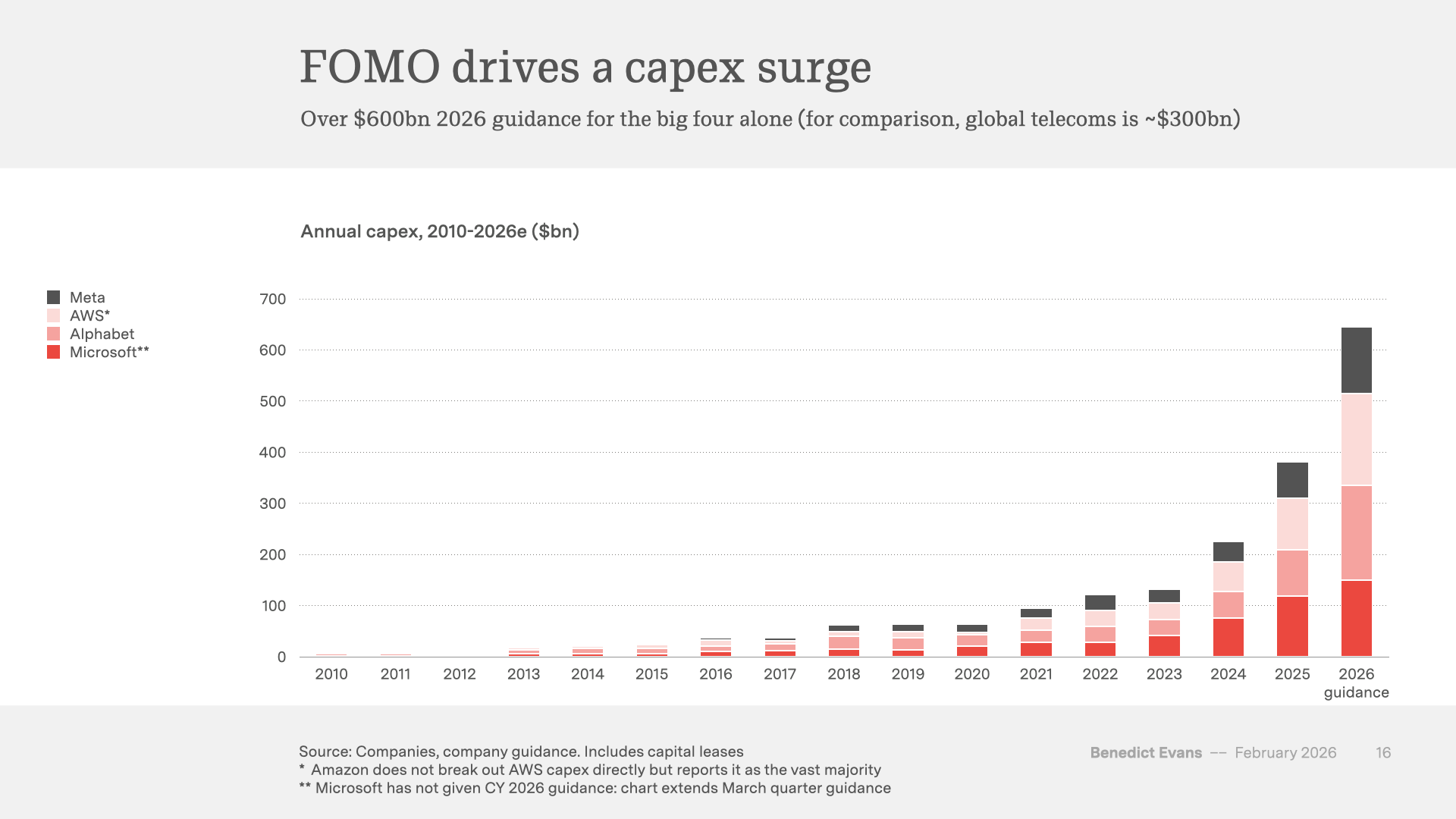
But infrastructure dominance does not automatically translate into ecosystem leverage.
Consider:
Developers don’t build “TSMC apps.”
End users don’t know which cloud hosts their SaaS tools.
API providers are often invisible to the final customer.
Owning the bottom of the stack does not guarantee control over the top.
So the question becomes: Does capex buy more than table stakes?
The platform's ambition and the real test
OpenAI has articulated a platform vision: build the full stack, from chips and compute to models, APIs, developer tooling, identity, and integrations. Enable others to create value on top. Become the glue.
That is a compelling story. But real platforms create structural dependency.
A true platform achieves:
Developers must build on it.
Users must participate in its ecosystem.
Switching carries a real cost.
Alternatives are structurally weaker.
Today, foundation models do not yet exhibit those characteristics. Developers can integrate multiple providers. Enterprises can switch APIs. Users rarely know or care which model powers a feature.
Without friction in switching and without strong network effects, the platform's claim remains aspirational.
Execution matters enormously. Speed matters. Talent matters. But execution is not, in itself, a moat.
What this means - practically
For founders and operators watching this unfold, there are several strategic lessons worth extracting:
Assume model parity spreads quickly. If you’re building on frontier models, your differentiation likely won’t come from the raw capability layer.
Distribution still wins in commoditised layers. When products look similar, incumbents with embedded channels have a structural edge.
The durable layer is usually above the infrastructure. Workflows, proprietary data loops, ecosystem integration, and switching costs create leverage.
The real question facing OpenAI is not whether it can build better models.
It is whether it can build structural reasons for developers, enterprises, and users to depend on its system, even when alternatives exist.
Leading a technological moment is one thing. Owning the ecosystem that follows is another. The difference between the two is power.
The marketing framework ClickUp used to scale to a $4B company.
Should you go all in on SEO? Launch a TikTok? Buy a billboard? Run a cold email campaign? The options are endless, but what works for one startup might not work for you. So how do you choose?
Hustle fund shared ClickUp’s (valued at $4B) marketing framework that they used to scale to $4B company. Here’s how he thinks about marketing.
The ClickUp Marketing Framework
On the X-axis, we have audience size. On the Y-axis, we have lifetime value (LTV). Where you fall on this model determines your marketing approach.

High LTV, Tiny Audience (e.g., Defense Tech, Enterprise SaaS)
Selling a $500M contract? Google Ads won’t cut it.
You need business development, a strong network, and a killer pitch deck.
Sales is 1:1, relationship-driven, and highly personalized.
Low LTV, Huge Audience (e.g., Keychains, Stickers, Fidget Spinners)
Paid ads don’t make sense here—ad costs eat up profits.
Growth comes from community, virality, and organic reach.
Strategies: Product Hunt, Reddit, TikTok, referral loops (think Dropbox, Boomerang).
Higher LTV, Large Audience (e.g., SaaS, Consumer Products, B2B Software)
With money in the bank, paid media (Facebook, Google Ads) can drive growth.
Early-stage startups often lack budget for this, so experiment wisely.
Sponsoring newsletters (like this one 😉) can work if done right.
Mid-Size Audience, Mid-High LTV (e.g., Niche SaaS, B2B Tools, DTC Brands)
Trade shows, outbound emails, investor intros, and live events become key.
If you’re selling to 100,000 buyers, scaling outreach matters.
The goal: personalized + scalable marketing efforts.
Low LTV, Small Audience? Bad business. Stay away.

How Would ClickUp Go-to-Market Today?
ClickUp is a collaboration + work planning tool valued at $4B. In 2022, they served 100,000+ customers, made $150M in revenue, and raised $400M.
From Clicksup growth manager - If I were starting ClickUp today:
Validate Product-Market Fit First
Talk to users. Why do they love the product?
Use that data to craft killer messaging.
Find Where Users Hang Out
Ask: “How did you hear about us?”
Identify their communities (Reddit, Facebook groups, LinkedIn, etc.)
Build your own engaged community.
Leverage Organic Growth
Launch on Product Hunt, Hacker News, and Reddit.
Invest in SEO—it takes time but pays off.
Scale Once the Foundation Is Strong
Trade shows, outbound emails, targeted ads come next.
Nail product/message fit first, then hit the gas.
It all boils down to:
What’s your LTV?
How big is your audience?
How much $ can you spend on marketing today?
Before throwing money at ads, focus on product-market fit, organic traction, and the right messaging. Once that’s in place—light the fire.
TODAY’S JOB OPPORTUNITIES
💼 Venture Capital & Startup Jobs
Most aspiring VCs struggle with interviews, unclear expectations, no structured prep, and generic advice that doesn’t actually help. So we partnered with a leading investor group to build an all-in-one VC Interview Preparation Guide that gives you real clarity and frameworks. (Access Here)
VC Analyst - Alstin Capital | Germany - Apply Here
Analyst - Infrastructure & Real Assets - Stepstone Group | Australia - Apply Here
Internship/Stage - VC Analyst - Sopra Steria | USA - Apply Here
Social Media Freelancer - Initialised Capital | USA - Apply Here
Analyst / Associate - Saints Capital | USA - Apply Here
Investment Analyst Intern - NAV Capital | Dubai - Apply Here
PE & VC Partner Manager - Dealhub | UK - Apply Here
VC Platform & Events Manager - 1001 VC | USA - Apply Here
MBA Venture Capital Intern - Cerity Partners | USA - Apply Here
MBA Venture Capital Intern - Cerity Partners | USA - Apply Here
Senior Analyst - Iconique Capital | USA - Apply Here
Partner - a16z | USA - Apply Here
Program Manager - gener8tor | USA - Apply Here
Visiting Associate - First Momentum Venture | Germany - Apply Here
🤝 Partnership With Us
Get your product in front of over 95,000+ audience - Our newsletter is read by thousands of tech professionals, founders, investors and managers worldwide. Get in touch today.
🔴 Share Venture Curator
You currently have 0 referrals, only 5 away from receiving a 🎁 gift that includes 20 different investors’ contact database lists - Venture Curator