


👋 Hey, Sahil here — Welcome back to Venture Curator, where we explore how top investors think, how real founders build, and the strategies shaping tomorrow’s companies.
How to Win in a Crowded Market (and Get VCs to Bet on You).
How investors value pre-revenue startups with an Excel sheet.
The “IKEA effect” (and what it means for founders and startups, and good products).
Don’t confuse product-market fit with subsidy-market fit: Cursor’s problem.
FROM OUR PARTNER - BYLDD
🤝 Jasie’s 0 to Acquired product story

Coding wasn’t Jasie’s thing—but she knew consumer debt inside-out. After just 2 months with Byldd, her platform was live, onboarding users, and generating revenue. Within 8 months, she was acquired by a larger fintech company.
Here’s why it worked: Byldd doesn’t just build what you ask for. Their product team helps you focus on features that convert.
You bring the insight. They bring the tech. Together, you build something people actually pay for.
Book a free, NDA-covered strategy call with Byldd today →
🤝 PARTNERSHIP WITH US
Get your product in front of over 95,000+ audience - Our newsletter is read by thousands of tech professionals, founders, investors and managers worldwide. Get in touch today.
RESOURCES FOR FOUNDERS
📬 Access Expertly Curated Resources
Most resources online are generic. We’ve built and curated the ones that actually matter — with input from leading VC firms and founders who’ve raised millions (and some who bootstrapped).
Here’s what’s new (and improved) in our resources:
💰 Fundraising Tools
📊 Strategic Templates
📩 Communication Tools
📄 Legal & Operational
📜 DEEP DIVE
How to Win in a Crowded Market (and Get VCs to Bet on You).
Here’s a well-known secret: VCs don’t love crowded spaces.
If a bunch of companies are chasing the same problem, it means brutal competition for customers, which usually means higher costs and slower growth. Not exactly what investors dream of.
But here’s the flip side—some companies do win in crowded markets. And when the market is big enough, VCs will still invest. The key? They need to believe they’re betting on the right startup.
So, if you’re a founder building in a competitive space, the real question is: how do you stand out?
That’s exactly what we’re diving into today.
To make this real, let’s talk about a space that’s super crowded: AI. (Agree??)
Specifically, AI-powered sales development representatives (SDRs)—tools that help sales teams find and qualify leads faster.
(From my VC friend: We see at least one AI SDR startup every week. There are plenty more out there raising money. So yeah, it’s competitive.)
That said, sales as an industry has a huge total addressable market (TAM), and AI is, well, everywhere right now. VCs want to invest in this space. But only if they believe a startup can return 100 their money. (Can your startup return VC funds?)
Which brings us to the challenge:
How do you prove you won’t stall after some early traction?
How do you avoid insanely high customer acquisition costs?
How do you convince VCs you’re the one to bet on?
The answer: find a market wedge.
The Market Wedge Strategy
A wedge is simply a strategy to win a large market by initially capturing (1) a tiny part of a larger market or (2) a large part of a small adjacent market.
So if you want to break into a crowded market, don’t try to be “just another AI sales tool.” Instead, specialize.
Example: Instead of being a generic AI SDR, you could be the AI SDR for veterinarians.

Why? Because focusing on a niche:
Gives you a clear target audience with a unique need.
Makes customer acquisition way easier.
Helps you stand out from the sea of generic competitors.
But VCs won’t just ask, “What’s your wedge?” They’ll ask, “How do you grow beyond it?”
Here’s where your expansion strategy comes in:
Vertical Expansion – Offer more services to your niche.
You start with AI-powered sales for vets.
Then add appointment scheduling, inventory management, etc.
Horizontal Expansion – Expand to similar industries.
What other businesses are similar to vet clinics?
Maybe dental offices? Physical therapy clinics?
The key is to show investors that you’re thinking beyond today’s niche and into tomorrow’s empire.
Getting Customers (Without Burning Cash)
A wedge is great. But without customers, it’s just a nice idea. VCs want to see that you can acquire customers efficiently.
If you already have industry connections—amazing. Maybe you:
Come from a family of veterinarians.
Worked in the industry and have built-in relationships.
But what if you don’t have these connections? That’s where partnerships can be a game-changer.
For example, if you’re targeting veterinarians, you could:
Partner with some Medical Association to tap into their network.
Work with private equity firms that acquire vet clinics (and need them to grow).
Get backing from VCs specializing in pet tech, who can open doors.
The goal is simple: show VCs you can acquire customers from day one—without breaking the bank.
Here’s another tip: VCs love learning.
If a founder teaches them something they didn’t know, it makes them way more likely to invest.
That means your job is to be the expert. You should know more about your niche than anyone in the room.
How do you prove that?
Challenge common assumptions: “Everyone thinks X about the veterinary industry, but actually, it’s Y.”
Drop surprising insights: “Did you know 73% of pet owners would pay more for AI-enhanced vet services?” (Okay, I made that up, but you get the idea.)
Offer a fresh perspective: Explain why your approach makes more sense than the status quo.
And don’t shy away from the competition. Yes, the market is crowded—but that’s because the opportunity is massive. If you can prove you understand the market better than anyone else, you position yourself as the founder VCs want to back.
So, if you’re in a crowded space and want to win investors over, here’s what you need to do:
Find your market wedge—a niche that gives you an entry point.
Show how you’ll expand beyond that wedge over time.
Prove you can acquire customers efficiently (without insane costs).
Know your market better than anyone else in the room.
In a crowded market, the loudest voices don’t win—the smartest, most strategic ones do.
So be different. Challenge assumptions. And make it impossible for investors to ignore you.
Who knows? Maybe your AI-powered vet sales tool is the next unicorn. Just don’t forget the little people when you make it big. 😉
📃 QUICK DIVES
How investors value pre-revenue startups with an Excel sheet.
Even with $0 in sales, your startup can have a strong valuation if you understand the levers investors pull. Valuation isn’t just about money coming in; it’s about perceived potential, team credibility, and the size of the opportunity.
Pre-revenue reality:
You don’t have revenue yet, but investors still see value in the story you’re building.
Early credibility builds trust with partners and makes it easier to attract top talent.
Market perception plays a big role; how you’re seen will influence deal terms and equity split.
The common methods investors use:
Berkus Method: Values five areas (idea, team, product, market, launch) at up to $500K each, capping most valuations at ~$2.5M.
Scorecard Method: Benchmarks your startup against similar ones, adjusting for strengths, weaknesses, and competitive landscape.
VC Method: Starts from a projected exit revenue, applies profit multiples, and works backwards to match investor ROI targets.
Risk Factor Method: Rates 12 risk categories from team quality to market size, adding or subtracting value based on each.
Boosting your valuation before revenue:
Build an MVP to prove you can deliver.
Showcase a strong, credible founding team with relevant track records.
Choose market comps that work in your favour.
Land early sales or pilots before fundraising to show momentum.
We’ve included a detailed breakdown of each method, plus an Excel valuation calculator for each method, in our full guide: Valuation Guide
The “IKEA effect” (and what it means for founders and startups, and good products).
Recently, Greg shared an interesting video on the IKEA effect and how founders can apply this in their startup:
People value things more when they’ve built part of it themselves; that’s the IKEA effect. Your customers can feel the same way about your product if you design it right.
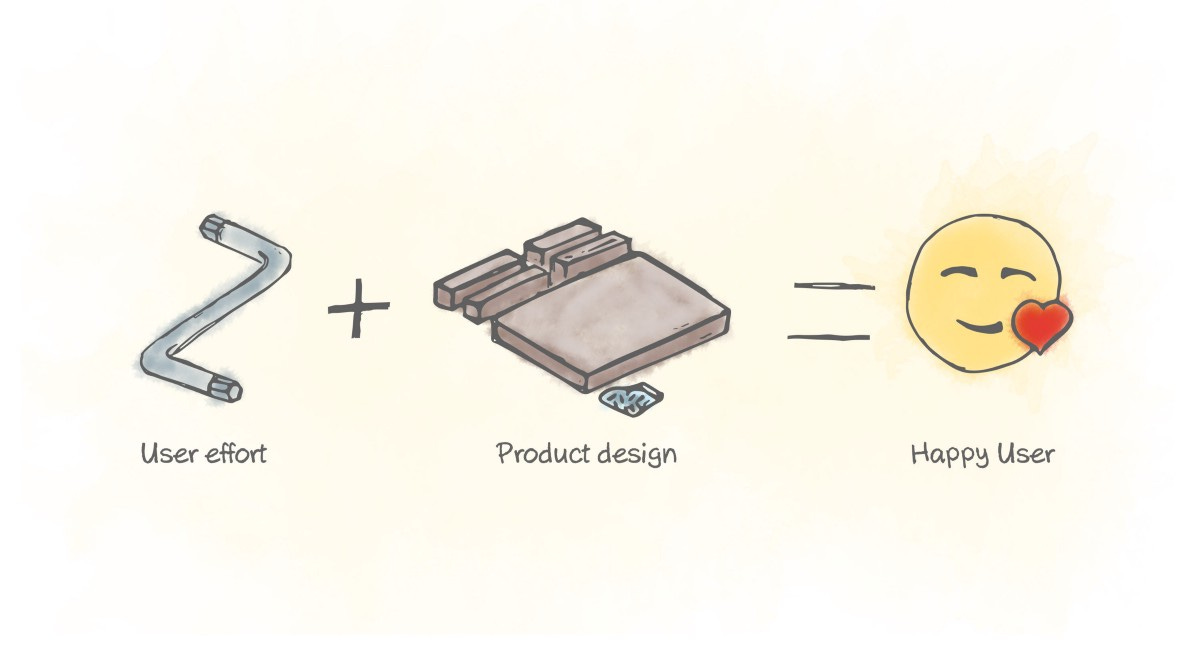
How to make it work (with examples):
Make onboarding hands-on.
Instead of everything pre-set, guide users to configure it themselves.
Example: Notion’s empty workspace prompts you to add your own pages and templates you feel like you built your system from scratch.
Let them shape the outcome.
Give customers building blocks they can arrange. Example: Canva lets you start with a template but modify colours, text, and layouts turning “their” design into “your” design.
Involve them early.
Invite beta users to give feedback before launch. Example: Figma grew a passionate community by running open betas and shipping features shaped directly by user requests.
Personalise over polish.
Offer flexibility rather than a one-size-fits-all solution. Example: Airtable’s product looks simple at first, but users quickly mould it into CRM systems, project trackers, or content calendars tailored to their workflow.
When users invest effort, they invest emotionally. That makes your product harder to leave and easier to love.
Don’t confuse product-market fit with subsidy-market fit: Cursor’s problem.
Many startups proudly declare they’ve found product–market fit (PMF). But there’s a quieter, equally critical test: business-model–product fit (BMPF), making sure the way you charge sustainably exceeds the cost to deliver.
Recently, Chris Paik shared an interesting article titled as Cursor’s problem. It shared - Cursor’s story is a cautionary tale.
They sold “unlimited” coding on top of expensive variable-cost AI models from OpenAI/Anthropic. That’s fixed revenue, rising costs, the same trap that buried MoviePass, Oyster, and “Unlimited” ClassPass.
The danger signs:
Cohort inversion: light, profitable users churn; heavy, unprofitable ones stay.
Topline masking rot: growth hides deteriorating margins.
Subsidies mistaken for product love: usage spikes when prices are artificially low, but demand collapses when costs are passed on.
Uber and DoorDash survived early subsidies because they had a path to operational efficiency (density, batching, utilisation) and future pricing power. Without that bridge, subsidies just burn cash.
For variable-cost businesses, especially in AI, the lesson is simple:
Price in proportion to usage costs.
Cap or segment high-cost users early.
Test demand at the true marginal cost before declaring PMF.
If customers disappear when the subsidy disappears, you don’t have PMF, you have subsidy–market fit.
TODAY’S JOB OPPORTUNITIES
💼 Venture Capital & Startup Jobs
Investment Analyst - Cornell University | USA - Apply Here
Associate - Venture Capital - Artha Venture Fund | India - Apply Here
Investment Team - WEH Venture | India - Apply Here
Venture Scout - First momentum Venture | Remote - Apply Here
Analyst / Associate - Core Innovation Capital | USA - Apply Here
Program Associate - Plug and Play tech Center | USA - Apply Here
Executive Assistant - AN Venture Partner | USA - Apply Here
Visiting Investment Analyst - Join Capital | USA - Apply Here
AI Tech Lead - Core Innovation Capital | USA - Apply Here
Investment Analyst - Caanan | USA - Apply Here
Venture capital Fellowship for PhDs - Contrarian Venture | USA - Apply Here
VC Associate UK - Breega | UK - Apply Here
Analyst - Investments - Blackhill Fund | India - Apply Here
Partner 16, Deal Operations - a16z | USA - Apply Here
🤝 Partnership With Us
Get your product in front of over 95,000+ audience - Our newsletter is read by thousands of tech professionals, founders, investors and managers worldwide. Get in touch today.
🔴 Share Venture Curator
You currently have 0 referrals, only 5 away from receiving a 🎁 gift that includes 20 different investors’ contact database lists - Venture Curator