
👋 Hey, Sahil here — Welcome back to Venture Curator, where we explore how top investors think, how real founders build, and the strategies shaping tomorrow’s companies. Today’s edition features even more carefully curated content.
Big idea + report of the week :
a16z Report: The state of Gen AI consumer apps (Top 100).
Should you hire an AI engineer?: Linktree’s surprising results.
VC valuations in Europe are climbing.
Frameworks & insightful posts :
A 3-step pay-or-pass idea validator framework.
The Racecar Growth Framework: Anatomy of high-converting landing pages.
A new framework for building on LLMs: CC/CD framework.
What makes $1M micro-SaaS ideas win?
Startup legal document templates – legal docs for founders.
FROM OUR PARTNER - EQUIDAM
🚀 Startup Valuation, Built for Outliers.

Startups don’t just need capital, they need investors who share their view of the future. Equidam helps founders translate novel ideas and technologies into valuations that allow both sides to understand the underlying assumptions.
By grounding the fundraising conversation in fundamentals, Equidam helps founders and investors align expectations, build conviction in the company’s trajectory, and address the most important challenges in bits or atoms.
Successful startups are outliers that can’t be priced strictly by comparison.
Get started on your valuation today, with 10% off →
🤝 PARTNERSHIP WITH US
Get your product in front of over 95,000+ audience - Our newsletter is read by thousands of tech professionals, founders, investors and managers worldwide. Get in touch today.
START WITH
🧠 Big idea + report of the week
a16z Report: The state of Gen AI consumer apps (Top 100).
Two and a half years into AI’s consumer wave, the market is stabilising. The latest Top 100 Gen AI Consumer Apps list shows where usage is shifting:
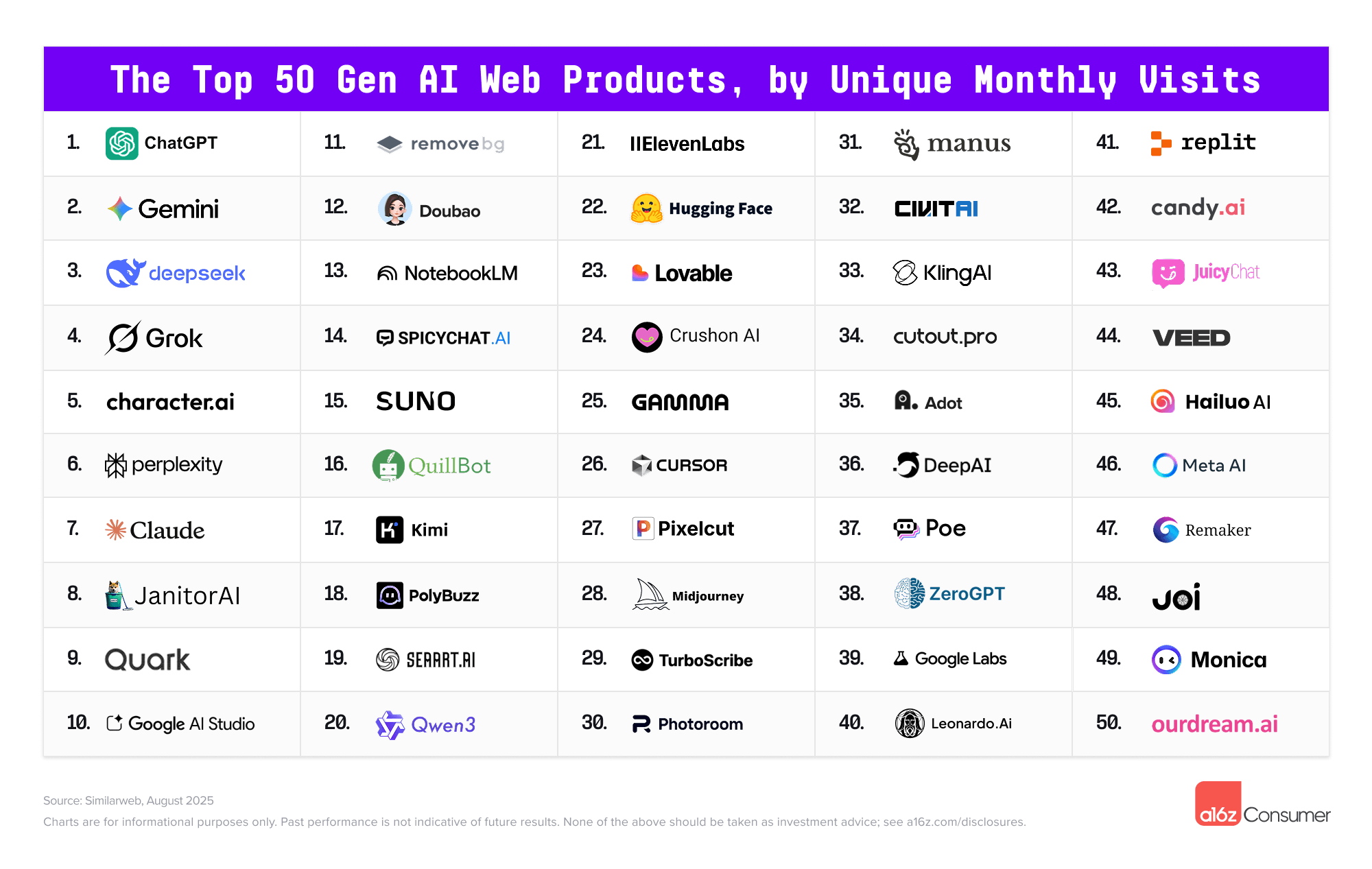
The big platforms are consolidating
ChatGPT still leads, but Google’s Gemini has surged to #2 (12% of ChatGPT’s web traffic, nearly half its MAUs on mobile).
Google added four new entries (AI Studio in the top 10, NotebookLM #13, Google Labs #39).
Grok (X) is growing fast: #4 on web and 20M+ MAUs on mobile after launching Grok 4 and companion avatars in July.
Meta AI debuted but is lagging, #46 on web, missed the mobile cut.
China’s ecosystem is strong
Quark (#9), Doubao (#12, #4 on mobile), and Kimi (#17) dominate locally due to restricted access to ChatGPT, Perplexity, and Claude.
Chinese-developed apps now make up nearly half of the mobile list, especially in video and photo editing (e.g., Meitu with 5 entries).
Vibe coding is sticking
Lovable (#22) and Replit entered the list, showing real user retention and spend.
Supabase and other “vibe coding stack” tools are riding this wave.
The “All Stars” are emerging
Fourteen companies have appeared on every list, including ChatGPT, Midjourney, Perplexity, Character AI, Leonardo, Photoroom, HuggingFace, and Eleven Labs.
Half run on their own models, the rest leverage APIs or open source.
The AI consumer market is no longer a free-for-all. General assistants (ChatGPT, Gemini, Grok, Claude), regional champions (China-first products), and niche verticals (image/video editing, vibe coding) are defining the landscape.
If you’re building in AI, the lesson is clear: find your durable edge, global reach, regional moat, or specialised use case and scale from there. (Read full report here)
Should you hire an AI engineer?: Linktree’s surprising results.
Most founders hit a point where shipping velocity slows, and the default reaction is: hire more engineers. However, adding headcount also introduces complexity — including culture shifts, coordination overhead, and increased burn. An alternative that’s starting to look real: treat AI agents like junior hires.
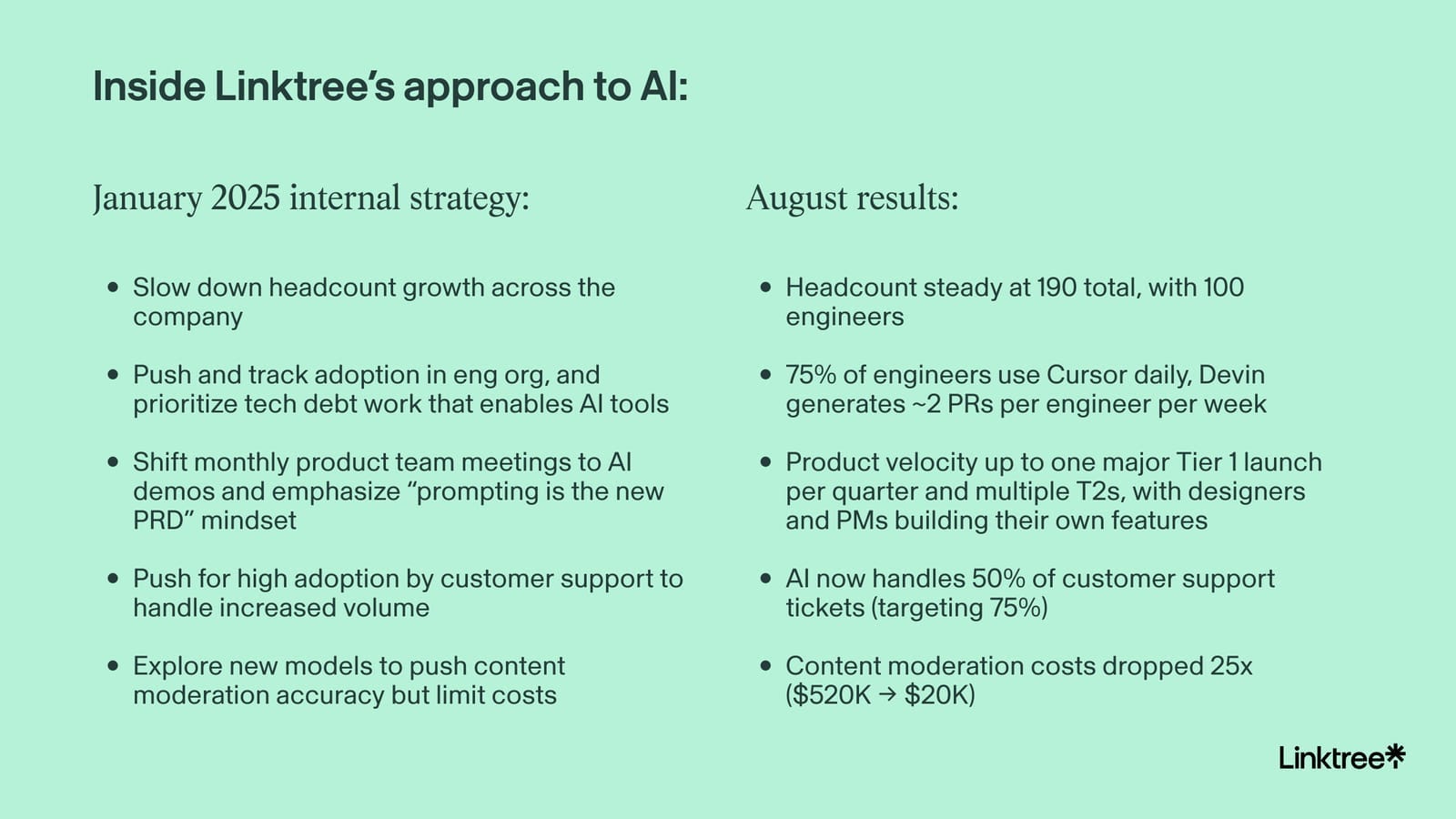
That’s exactly what Linktree did. Going into 2025 planning, they faced pressure to scale their engineering team beyond 100 people. Instead, they froze hiring at ~190 total employees and leaned hard into AI. Here’s what they found:
Where it delivered value
Repetitive engineering tasks: Their AI agent (Devin) now contributes ~2 PRs per engineer per week, especially for dependency upgrades, bug fixes, and debugging.
Faster prototyping: Engineers use it to quickly spike new features or test fixes — not production-ready, but good for grounding discussions and estimation.
Security scanning: AI helps detect and patch vulnerabilities across repos, saving the small security team countless hours.
Where it failed
Complex or messy systems: Inconsistent schemas and tech debt confused the AI, making outputs worse. The team had to clean up naming conventions, event schemas, and APIs first.
Over-ambitious projects: Attempts to auto-generate pixel-perfect pages failed. AI is powerful, but not a replacement for high-craft work.
The real cost
AI adoption didn’t “just happen.” The CTO tracked usage dashboards, nudged laggards, reframed AI as a junior teammate to manage, and created social pressure (AI demo meetings, “Wins and Whoopsies” Slack channel).
The takeaway: Hiring an AI agent is worth it — but only if you:
Point it at repetitive, low-leverage work.
Clean your tech debt so it has good patterns to learn from.
Actively drive adoption across the team.
For Linktree, the payoff was clear: more launches without more hires, 25x cheaper moderation, and customer support scaling 80% with AI. For most startups, that’s a strong case to at least experiment with “hiring” an AI teammate. (Read detailed report here)
VC valuations in Europe are climbing.
Despite a slower dealmaking environment, valuations in Europe are trending up. According to PitchBook’s Q2 2025 report:

Median pre-money hit a decade high: €8.6M (~$10M), up 15.6% YoY. Series E+ companies led the surge, with median valuations reaching €1.2B as investors backed profitable, stable-revenue businesses.
AI is driving the bump: Early-stage AI startups are seeing the biggest jumps. Median valuations in AI rose ~19% to €8.7M, signalling investor appetite for “AI-native” companies rather than incumbents bolting on AI features.
Bigger checks, fewer down rounds: Median deal size rose 23% to €2.5M. Only 15% of European deals were down rounds in H1 (one of the lowest shares this decade), though Q2 showed some uptick.
Examples to note:
Cato Networks hit $4.8B with a $359M Series G.
TravelPerk nearly doubled to $2.7B with a $200M raise.
Synthesia ($2.1B Series D) and Tines ($1.1B Series C) cemented AI/no-code momentum.
If you’re early-stage, especially in AI or fintech, valuations are trending higher, but investor selectivity is too. Big checks are flowing, but mainly into clear category leaders or tech with defensibility. If you’re raising, expect deeper scrutiny but better pricing if you stand out.
SOMETHING MORE
🧩 Frameworks & insightful posts
A 3-step pay-or-pass idea validator framework.
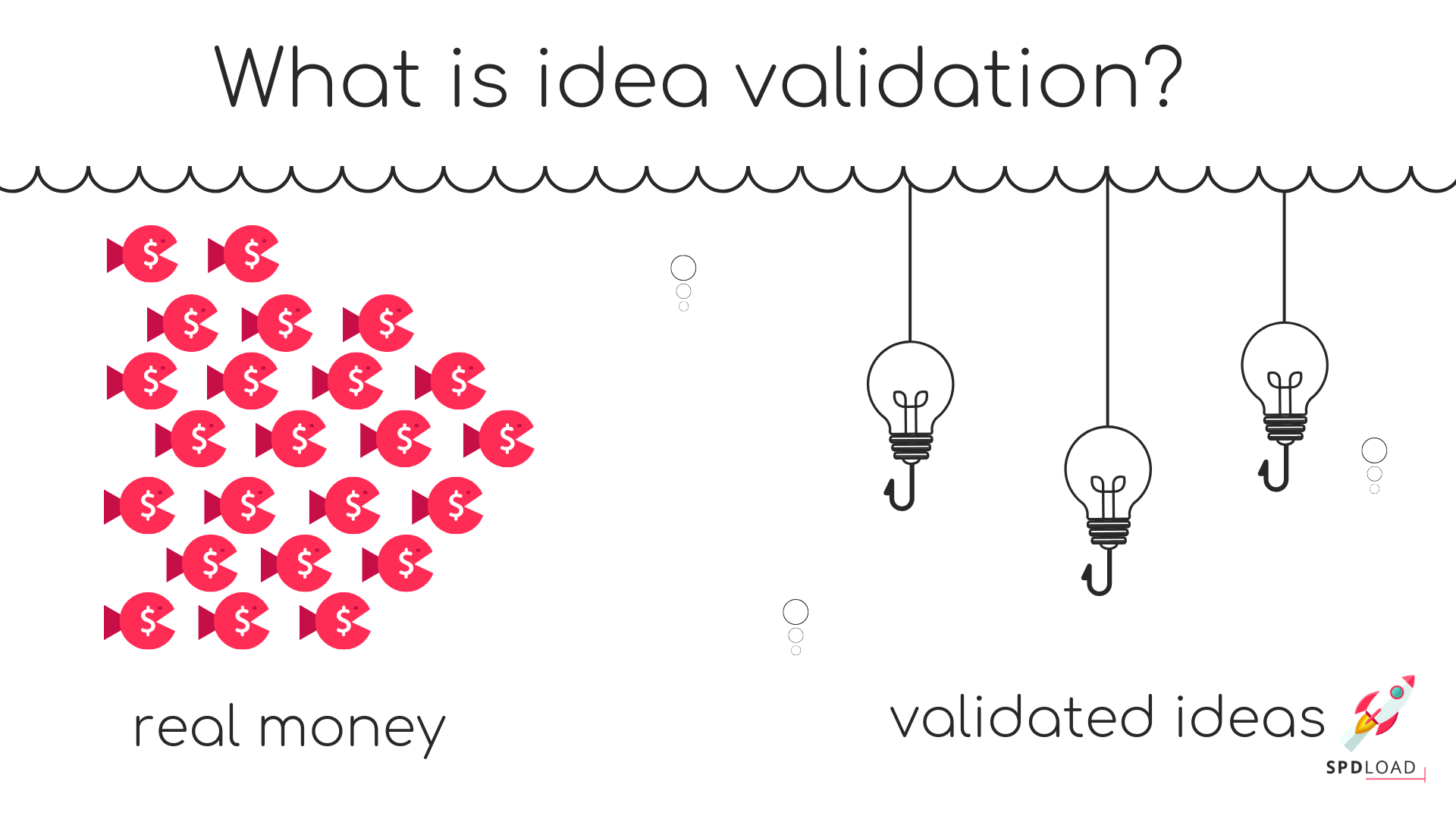
Most founders confuse surveys with validation. But real validation only happens when people pay. Tom’s simple 3-step framework helps you test demand before investing time or money:
Write a 1-sentence offer
Who it’s for
The promised outcome
Timeframe
Price
Guarantee (removes risk)
Example: “I help burned-out executives build $10K/month side businesses in 90 days or you don’t pay.”
Make it buyable within 24 hours
Simple checkout (Stripe link works)
10-line DM script → pitch outcome, price, guarantee, and share the link
Test with real money
Send 25–50 targeted DMs + 1 public post
Track clicks, replies, and payments
Rule: If people pay → build. If they don’t → change one thing and retest.
The Racecar Growth Framework
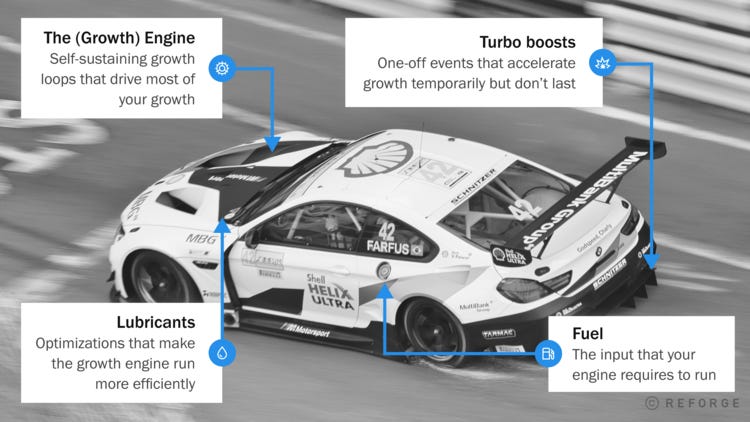
Every successful consumer business grows the same way: like a racecar. To move fast, you need the right engine, fuel, boosts, and lubrication. Here’s how the reforge breaks it down:
Growth engine
The self-sustaining loop that drives most of your growth. There are four core engines: performance marketing, virality, content, and sales.
Breakout companies usually rely heavily on just one engine at the start—Zoom grew through virality and sales, Airbnb through virality and performance marketing, Salesforce through sales. Over time, the biggest companies layer on multiple engines.
Turbo boosts
Short-term accelerators like PR, brand campaigns, and events. They can kickstart growth, but don’t sustain it. Many early startups lean on these to spark traction, but the mistake is mistaking a one-off boost for a repeatable engine.
Lubricants
Optimisations that make your growth engine run more efficiently—conversion improvements, smoother onboarding, and better retention. Retention is the most important because if customers keep coming back, every other investment in growth compounds.
Fuel
What your engine needs to run. Paid engines need capital to fund ads or sales teams. Content engines need a steady flow of new content. Viral engines need users who invite more users. Without the right fuel, even the best engine won’t run.
So identify your primary growth engine early, commit resources to it, and use boosts, lubricants, and fuel to make it faster and more durable. Most growth mistakes happen when teams optimise too early, confuse one-off boosts for engines, or fail to align everyone around the same model.
Anatomy of high-converting landing pages
A landing page isn’t just design — it’s a sales machine. Mark breaks down the must-have elements that turn visitors into paying users:
Hero section → Call out the core problem + short subheadline with solution + clear CTA (demo/signup).
Benefits section → Highlight 3 key benefits with icons or visuals for quick comprehension.
Target audience & use cases → Show who it’s for and how they use it (avatars + 1–2 lines each).
Social proof → Testimonials, logos, or metrics to build instant trust.
Pricing → Keep it transparent with differences highlighted + obvious CTA on each plan.
Tools & integrations → Display logos of platforms you work with (the bigger the partner, the stronger the trust).
FAQ → Answer 3–5 real objections directly, not fluff.
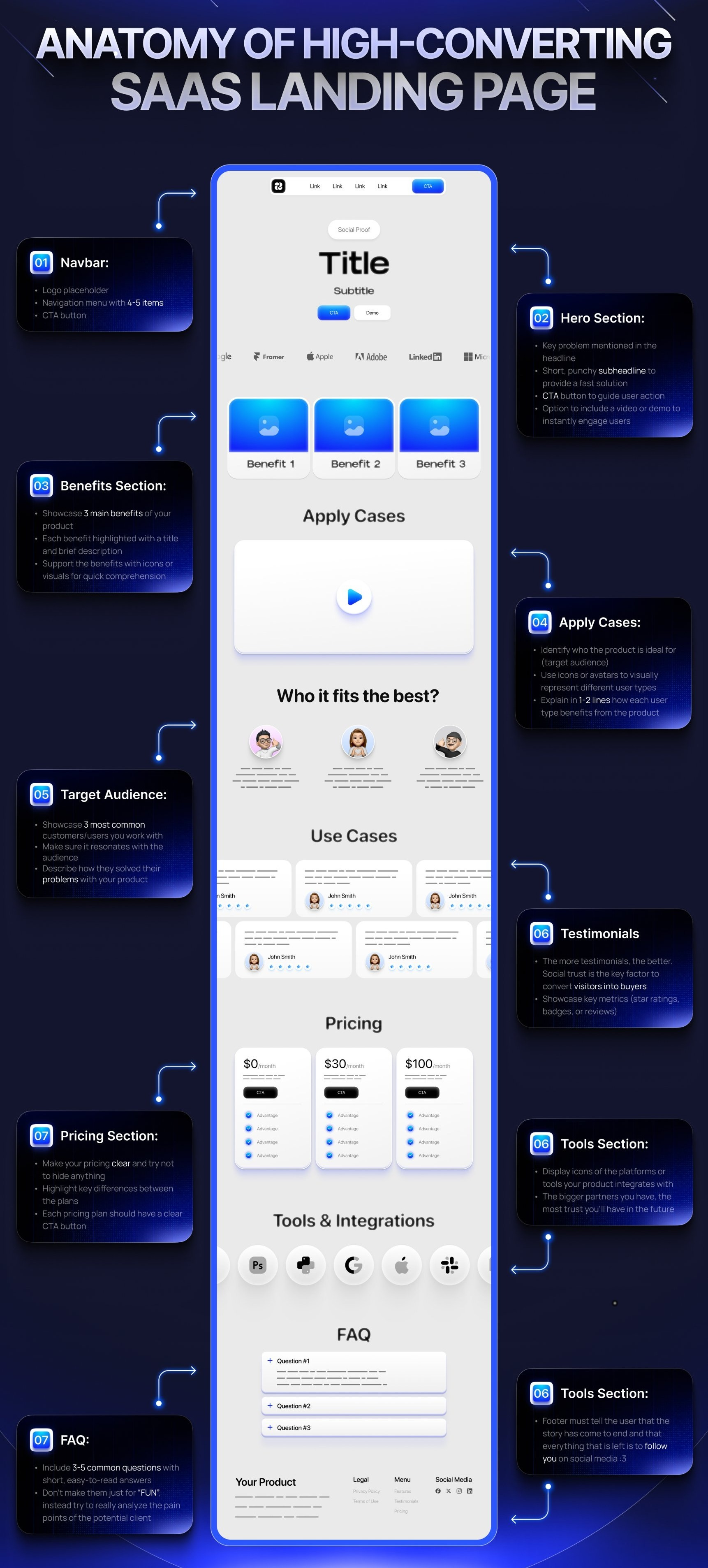
A good SaaS landing page is structured storytelling → problem, solution, proof, price, and trust.
A new framework for building on LLMs: CC/CD framework.
Apple’s App Store was the last big platform shift. LLMs are the next ones — and they require new principles for building. Lenny’s newsletter recently highlighted the Continuous Calibration / Continuous Development (CC/CD) framework, which replaces “production readiness” with an ongoing loop of agency vs control.
How it works:
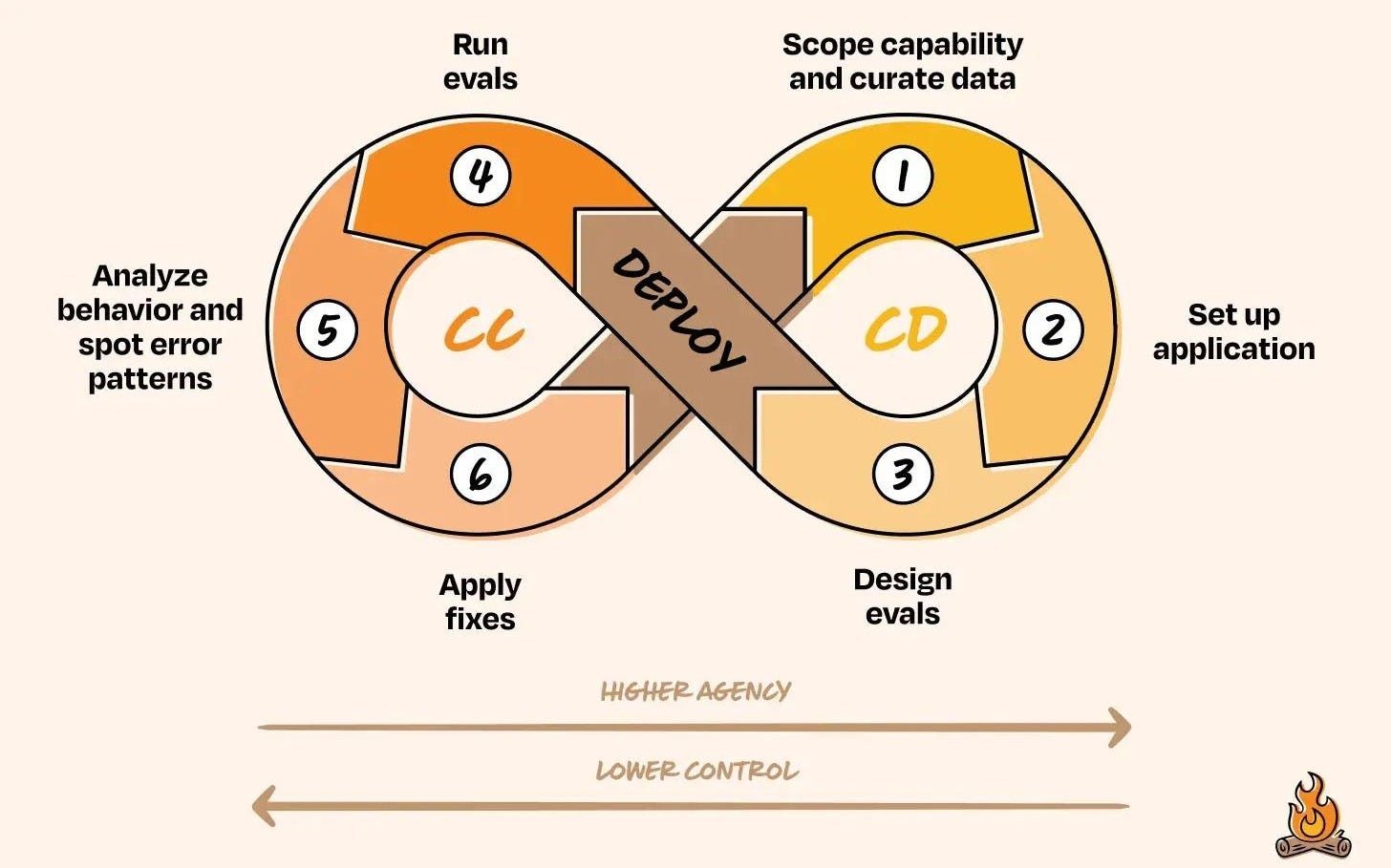
Development side
Scope capabilities by levels of agency (suggest → resolve).
Build a minimal app with logging, human overrides, and guardrails.
Design evals tied to your chosen metrics.
Calibration side
Launch to a small group of users.
Run evals, watch user behaviour, and identify errors.
Fix, then cycle back into development.
Instead of chasing a finished product, treat LLM apps as a continuous 6-stage loop of building → testing → fixing. That’s how you reduce unpredictability and build user trust.
What makes $1M micro-SaaS ideas win?
Micro-SaaS = a focused SaaS product with pointy features for a very specific customer. Pat studied dozens of case studies and found common patterns behind the winners:

Ride trends or shifts
Growing trend → e.g. waitlist software (ReferralHero, $18K MRR).
Missed opportunity → Amazon FBA tools (Gorilla ROI, $40K MRR).
Change in the world → rise of personal brands → Tweet Hunter ($220K MRR & acquired).
Build on large platforms
Shopify (2M merchants), Amazon FBA (1.5M sellers), Twitter (100M+ businesses).
Example: WideBundle, a Shopify plugin for product bundling, $55K MRR.
Pointy solutions
Do one thing extremely well → not an all-in-one.
Example: Testimonial → embed video testimonials, $83K MRR.
Serve a narrow customer base
CyberLeads: only digital agencies targeting VC-backed startups ($40K MRR).
Gorilla ROI: not all FBA sellers, only spreadsheet/data-heavy ones.
Solve painful business problems
Every winning SaaS ties back to either → “we’re not making enough money” or “we don’t have enough time.”
$1M micro-SaaS ideas aren’t random — they win because they’re simple, built on big platforms, serve specific customers, and solve money/time problems. Start small, ship fast, and let the pointy feature lead you to growth.
Startup legal document templates – legal docs for founders.
One of the first roadblocks every founder hits isn’t product or fundraising, it’s paperwork. Incorporation, equity splits, investor docs, contracts… all critical, all expensive, and all full of legal jargon that slows you down.
That’s why we built the Startup Legal Document Pack: everything you need to incorporate, raise capital, and protect your startup, without spending thousands on lawyers.
What’s Inside?
Formation & Incorporation Docs – C-Corp or LLC setup done right.
Founder & Equity Agreements – Vesting schedules, equity splits, and ownership protection.
Fundraising Docs (Pre-Seed to Series A) – SAFE notes, term sheets, cap tables, and more.
Employment & Contractor Agreements – Offer letters, IP protection, advisor agreements.
Intellectual Property (IP) Protection – NDAs, trademarks, and invention assignments.
Customer & Business Contracts – Terms of service, privacy policies, sales agreements.
Why founders choose this pack
Created with startup attorneys & VC teams
Standard, investor-approved templates
Easy-to-use, editable docs (no legal jargon)
Saves thousands in legal fees
You can access the legal document pack here.
EXPLORE MORE
💡 Reports, Articles and a few interesting stuffs
Want a SaaS idea that sells? Borrow it from 1-star reviews. (Link)
Microsoft: AI ‘business agents’ will kill SaaS by 2030. (Link)
3 myths about going public that should die (Link)
10 things this failed founder wishes they would’ve done differently (Link)
The playbook to grow consumer mobile apps (Link)
A literary history of fake texts in Apple's marketing materials. (Link)
Why your product idea sounds too complicated and how to simplify it (Link)
NEWS RECAP
🗞️ This week in startups & VC
New In VC
HLM Investment Partners, a Waltham, MA-based healthcare-focused venture capital firm, is raising its sixth fund. (Read)
Clean Growth Fund, a London, UK–based specialist climate tech venture capital firm, held the first close of its second fund, at £49m. (Read)
Shift Invest, an Amstelveen, The Netherlands-based impact venture capital firm, held the first close of SHIFT IV at €92M. (Read)
New Startup Deals
Attio, a London, UK-based AI-native CRM company, raised $52M in Series B funding.(Read)
Reframe Systems, a Boston, MA-based startup that uses physical AI to tackle the housing crisis, raised $20M in Series A funding.(Read)
Aurasell, a San Francisco, CA-based provider of an AI-native CRM platform, raised $30M in Seed funding.(Read)
InstaLILY, a NYC-based provider of AI Teammates for operationally intensive industries, raised $25M in Series A funding.(Read)
Central, a San Francisco, CA-based provider of an autonomous back-office platform built for startups, raised $8.6M in Seed funding.(Read)
Artificial Societies, a London, UK-based AI company that simulates human societies, raised $5.35M in funding.(Read)
TODAY’S JOB OPPORTUNITIES
💼 Venture capital & startup jobs
All-In-One VC Interview Preparation Guide: With a leading investor group, we have created an all-in-one VC interview preparation guide for aspiring VCs. Don’t miss this. (Access Here)
Investor Relations Analyst - Griffin Gaming Partner | USA - Apply Here
Associate - OMERSE Venture | USA - Apply Here
Investment Analyst - Caanan | USA - Apply Here
Investor, SF Launch - Entrepreneur First | USA - Apply Here
Events and Operations Intern - Plug and Play Tech Centre | UK - Apply Here
Partner 16 - a16z | USA - Apply Here
Portfolio Associate - W Health Venture | India - Apply Here
Investor Relations Analyst - Techstar | USA - Apply Here
Associate Telescope Partner | USA - Apply Here
Operations & Finance Analyst - Faraday Venture Partner | Spain - Apply Here
Healthcare Analyst - General Investment Management | UK - Apply Here
Investor (AI) - Samsung next | USA - Apply Here
Partner 20 - a16z | USA - Apply Here
VP - Marketing & Communications - Transition VC | India - Apply Here
Investment Analyst - Miras Investment | Dubai - Apply Here
Program Manager - Tenity | UK - Apply Here
PARTNERSHIP WITH US
Get your product in front of over 95,000+ audience - Our newsletter is read by thousands of tech professionals, founders, investors and managers worldwide. Get in touch today.
🔴 Share Venture Curator
You currently have 0 referrals, only 5 away from receiving a 🎁 gift that includes 20 different investors’ contact database lists - Venture Curator