

👋 Hey, Sahil here - welcome to this edition of Venture Curator, where we break down how great startups grow, how top investors think, and what’s shaping the future of tech.
P.S. Get access to 100+ startup & VC resources, investor databases, fundraising templates, 150+ premium archive posts and exclusive startup research - all in one place.
FROM OUR PARTNER - FLUIDDOCS
📈 Pitch (and sales) decks that get 2× more responses. We’ll build yours. First 10 founders.

Interactive AI pitch (and sales) decks that get 2× more responses.* Hand-built in 3 business days. Reviewed by ex-YC founders and active investors.
Your deck answers investor questions in your voice, even at 2 a.m., and generates IC-ready memos on demand.
You get:
A rebuilt deck
1 month of FluidDocs Pro
An embedded product demo
A feedback report from ex-YC founders + investors
Normally $1,000. $100 for the first 10 Venture Curator readers. No success fee, no equity.
*2× claim based on the first 50 FluidDocs decks vs the PDF baseline.
📜 DEEP DIVE
The end of cheap AI - Why AI startups may face their AWS moment sooner than expected.
For the last two years, the AI industry operated inside one very powerful assumption:
Inference costs - the cost of running AI models every time a user sends a prompt - would keep collapsing forever.
Models would become smarter every quarter. Open-source competition would commoditise intelligence. Hardware improvements would lower serving costs. And eventually, AI companies would inherit the same beautiful economics that made SaaS one of the greatest business models in history.
That belief shaped an entire generation of startups.
Founders launched “unlimited AI” plans before understanding long-term usage behaviour. Investors rewarded explosive adoption over contribution margins. Enterprises rolled out copilots across entire organisations, assuming economics would naturally improve with scale.
And honestly, during the early wave, that assumption looked correct.
The models improved dramatically. Costs per token kept falling. Every new release made the previous generation cheaper. AI adoption exploded faster than almost any software category in history.
(A token is simply a small unit of text that AI models process. Every prompt, response, workflow, memory layer, or agent action consumes tokens - which means more usage directly increases compute costs.)
But underneath all that excitement, another trend was quietly growing even faster: Usage.
That is the part most founders underestimate.
Because while inference costs were falling, token consumption was exploding. Autonomous workflows were becoming heavier. Context windows were becoming larger. Agents were chaining together increasingly expensive operations behind the scenes.
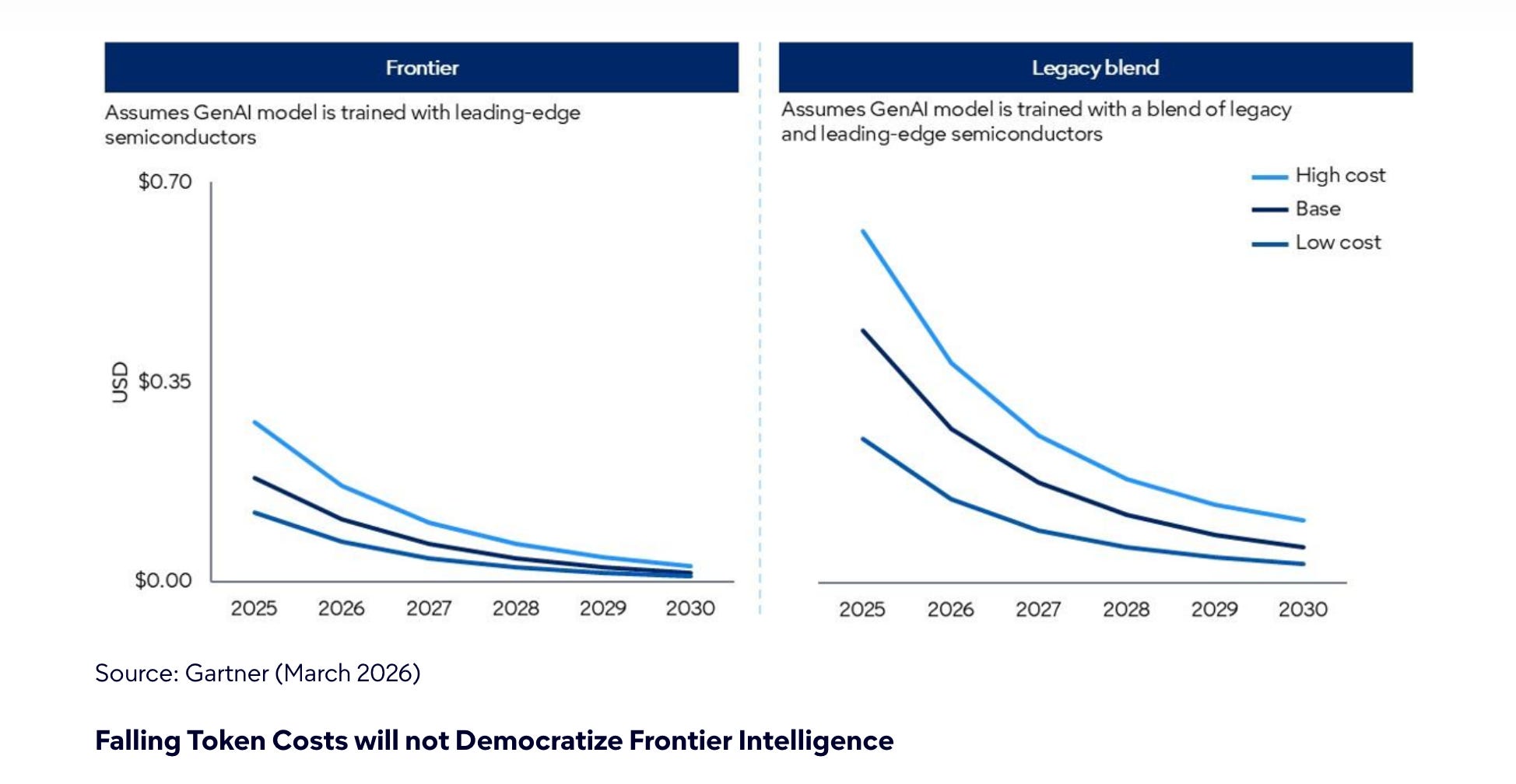
And now the industry is starting to discover something uncomfortable:
Many AI products were priced like software while being consumed like infrastructure.
That distinction matters enormously. Traditional SaaS businesses become more profitable as engagement increases.
Many AI businesses are becoming more expensive.
That is the real story beneath the recent signals from Microsoft, Uber, GitHub, OpenAI, Anthropic, Cursor, and Replit. Not that AI demand is collapsing. Demand remains incredibly strong. The problem is that AI is leaving its subsidy era and entering its cost-accounting era.
And once that transition begins, entire business models start getting exposed.
In this deep dive, we’ll break down:
Why Microsoft and Uber’s recent AI decisions matter more than people realise?
Why are token economies becoming more important than model intelligence?
The hidden pricing illusion behind AI agents and copilots.
Why flat-rate AI pricing is starting to collapse?
Why many AI startups may never reach traditional SaaS margins?
Which AI startups become vulnerable, and which become stronger?
The new AI founder playbook for pricing, infrastructure, and margins.
What investors will likely start looking for over the next 24 months?
The Microsoft + Uber signal
The Microsoft story matters because this was not some small startup reducing experimentation.
According to reports, Microsoft is removing most internal Claude Code licenses across major engineering groups and redirecting developers toward GitHub Copilot CLI instead.

Importantly, Microsoft still maintains deep ties with Anthropic. The Azure partnership remains intact. Anthropic models are still available in Azure AI Foundry. Microsoft still believes frontier AI models matter strategically.
Which is exactly why this decision is important.
Microsoft was not rejecting Claude’s quality.
It was rejecting - the economics of unlimited third-party AI usage running inside massive organisations where platform control, infrastructure optimisation, and procurement discipline increasingly matter.
Then came Uber.
And Uber’s situation made the economic problem impossible to ignore.

Reports suggested Uber burned through its entire 2026 AI coding tools budget in roughly four months after internal adoption exploded. Monthly AI tooling costs reportedly reached around $500-$2000 per engineer, while almost 95% of engineers were actively using AI tools every month.
That is not weak adoption. That is extraordinary adoption.
But the important part was not the adoption itself. It was the reaction afterwards.
Uber leadership reportedly started questioning - “whether increasing token spend was actually translating into proportional business outcomes.”
That single shift in thinking represents the next era of the AI market.
For the last two years, most AI products were evaluated through:
excitement
experimentation
speed gains
developer enthusiasm
productivity narratives
Now, enterprises are starting to evaluate AI the same way they evaluate:
payroll
cloud infrastructure
software procurement
operational efficiency
contribution margins
That changes the conversation entirely.
Even Nvidia’s vice president of applied deep learning reportedly admitted that, for some teams, compute costs are now exceeding employee costs.
That sentence alone explains where the market is heading.
(Subscribe to Venture Curator Premium and get 15% off forever.)