

👋 Hey, Sahil here — Welcome back to Venture Curator, where we explore how top investors think, how real founders build, and the strategies shaping tomorrow’s companies. Here’s today at a glance -
The growth model that outperforms freemium and free trials.
How to study a new market and build expertise: tactics from a Twitter PM turned healthcare founder.
a16z guide: How to hire a strong founding team?
FROM OUR PARTNER - AFINO
🤝 Your AI-Powered, Slack-Connected Finance Team

You raised the money. You’re building the thing. But now the spending’s piling up, and your “finance dept” is basically a spreadsheet and a prayer.
Afino is your AI-powered, Slack-connected finance team—offering bookkeeping, tax prep, R&D credits, and fractional CFO support, all tailored for startup speed.
If you’re a founder trying to actually get your finances in order, this one’s for you.
We've partnered with Afino to give one year of corporate taxes for FREE to the first 5 companies that claim this offer.
VENTURE CURATORS’ FINDING
📬 My Favourite Finds
Media Posts:
VCs aren’t built to fund good businesses. (Link)
Startups are staying leaner for longer per Carta data. (Link)
Yuxin Zhu, Replo founder’s hiring strategy. (Link)
Brad Gerstner is comparing OpenAI, Meta and Google’s climb to a $500B valuation. (Link)
Why some people are too smart to succeed. (Link)
Lisa Su: Find the toughest problems and volunteer to solve them. (Link)
Paul Graham: AI taking jobs is full of classic PG wisdom. (Link)
Reports/Articles:
Somebody leaked 50+ ranking factors Perplexity uses to evaluate and rank content. Baller move. (Link)
Balaji’s short piece “10 thoughts on AI” is pure signal and needs to be read. (Link)
Conrad Irwin (Superhuman)’s take on why LLMs can’t fully build software is really interesting. (Link)
The ultimate guide for founders to start a lean, AI-native startup in 2025. (Link)
Absolutely epic SEO guide called “The AI Search Manual” (Link)
Excel template: early-stage startup financial model for fundraising. (Link)
🤝 PARTNERSHIP WITH US
Get your product in front of over 95,000+ audience - Our newsletter is read by thousands of tech professionals, founders, investors and managers worldwide. Get in touch today.
📜 DEEP DIVE
The counterintuitive model: The growth model that outperforms freemium and free trials.
Many early-stage SaaS and product-led startups face a frustrating problem: users sign up and poke around, but most never become paying customers. In fact, only a small fraction of free users upgrade – typical freemium conversion is just 1-10%. Even with time-limited trials, about 75% of signups still drop off.
In practice, this means the majority of users never experience your product’s full value or form a lasting habit. They burn through free plans or trials without converting, inflating acquisition costs and growth metrics without boosting revenue.
This “trial free-for-all” often stems from users never reaching the aha moment: too many key features are hidden, or the free experience is too skimpy, so people churn or settle into the free tier.
A leading SaaS benchmark notes that freemium models (the “unlimited free trial” style) typically convert only around 2-5% of users to paid plans. Clearly, startups need a way to let users truly experience the product’s promise and retain them – otherwise, most trialers won’t stick around.
What is a Reverse Trial?
A reverse trial flips the usual model on its head. Instead of locking new users into a basic free version, every new signup is given full access to premium features for a limited time – say, 7–30 days – and then automatically dropped back to the free tier if they don’t upgrade.
This soft-landing means they’ve already seen the value of advanced features, and they continue using your product (albeit in a limited form) after the trial. For example, in a reverse trial, users start on the Pro plan, and when the trial ends, they simply downgrade to Free – in contrast to a normal trial where they’d lose all.
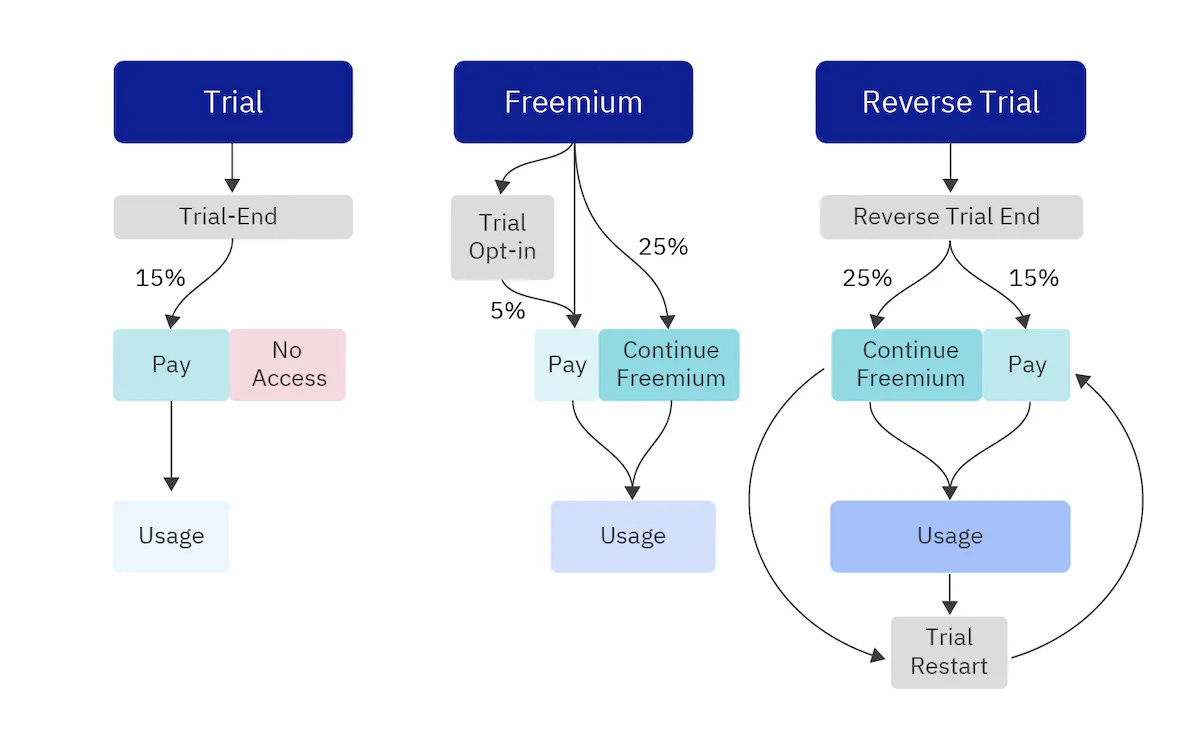
Reverse Trial vs. Freemium vs. Free Trial
Reverse trials strive to combine the best of both worlds.
With a traditional free trial, users get full access for, say, 14 or 30 days, then must pay or lose the product – this creates urgency but also a cliff where unconverted users churn out entirely.
Freemium (permanent free tier) maximises signups and word-of-mouth but often fails to motivate many upgrades (most users stay on the bare plan).
By contrast, a reverse trial gives users all premium features up front (like a trial) and a fallback free tier (like freemium). This means:
Better Value Upfront: Users fully experience what premium features can do, so they hit the aha moment more easily.
Soft Landing: If they don’t purchase right away, they’re not kicked out; they continue on a free plan, keeping them engaged with the product.
Loss Aversion: Experiencing premium benefits first makes giving them up feel like a loss, motivating upgrades (akin to how trying a product often increases one’s willingness to pay).
Dual Goals: It supports both acquisition (like freemium) and conversion (like free trial) because new users see the full value without an immediate paywall.
In short, instead of making a hard “buy-or-die” choice, reverse trials let users taste everything then gently step them back to the free tier.
When and Why to Use a Reverse Trial
Not every product needs a reverse trial.
This model works best when the core value requires premium features and initial activation is otherwise slow or gated. If your free tier is too limited or your onboarding is complex, users may never reach the magic moment on the bare plan.
Specifically, reverse trials shine under these conditions
Premium value lock: If your key value lives behind paid features (e.g. integrations, analytics), let users see it early.
Freemium too thin: If the free plan caps usage too hard, a premium-first taste converts better.
Growth focus: If you’re chasing rapid adoption, giving everyone the best experience upfront drives habits (Airtable’s playbook).
Wow factor: If you have standout features, showcase them immediately instead of hiding them.
Conversely, be cautious with reverse trials if:
Free plan already strong: If most users are happy with free, a reverse trial adds little.
High marginal costs: For AI/usage-heavy products, premium trials may be too expensive without limits.
Simple products: If the value is obvious within hours, a short standard trial works fine.
The key is whether letting people “play in the deep end” early on will pay dividends. As one growth strategist puts it, feature gating (locking key features) often “kills engagement”; reverse trials eliminate that gate temporarily.
In practice, top SaaS teams use reverse trials when they realise users need to experience premium features to really fall in love with the product. If instead the free plan already hooks 90% of newbies, there’s less upside.
Real-World Reverse Trial Examples
Several successful companies – both big names and scrappy startups – have adopted reverse trials with great results:
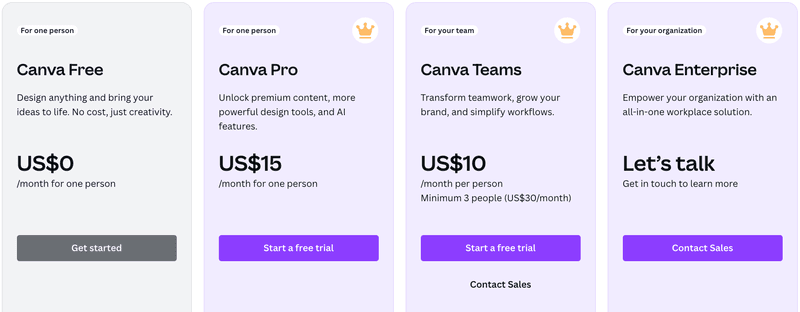
Canva: Gives all Pro features for 30 days, then downgrades to Free. Loss aversion kicks in—many pay to keep brand kits and premium assets.
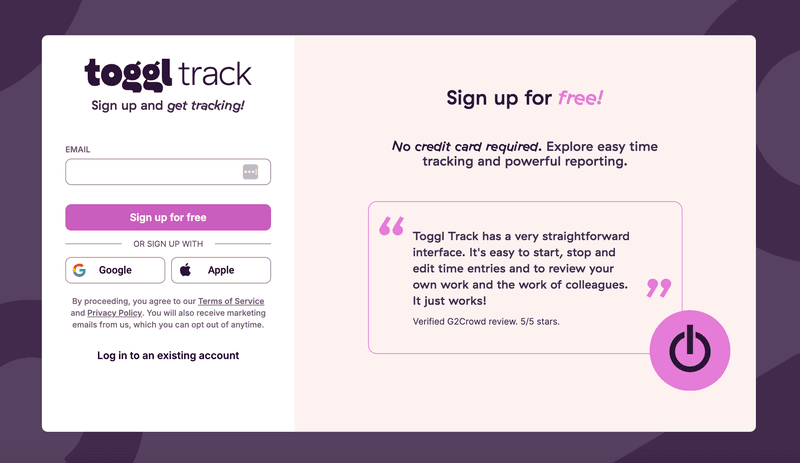
Toggl Track: Switched to a 30-day reverse trial, then auto-downgrade. Result: misuse dropped and premium revenue doubled.
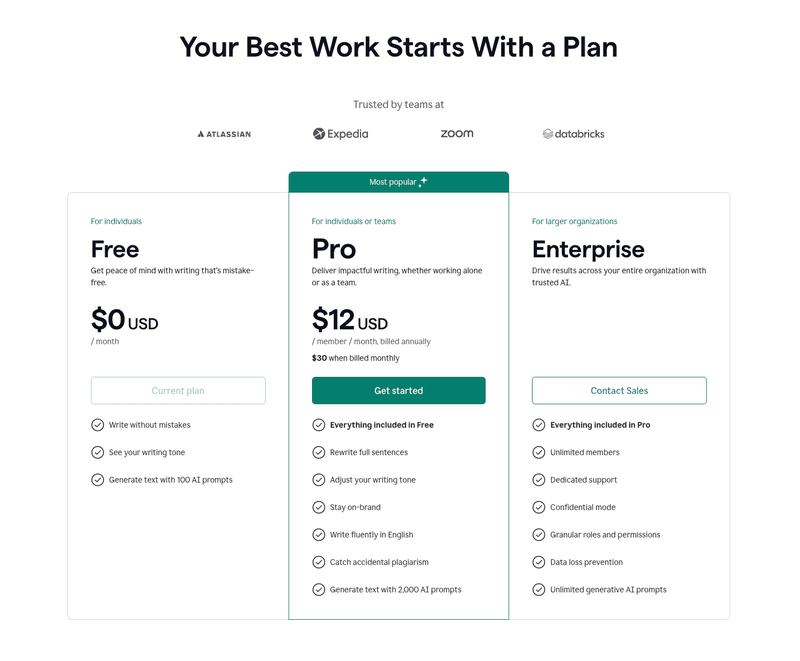
Grammarly: Offers 7 days of Premium, then reverts to Free. Users form habits with advanced checks, feel the loss, and upgrade.
These cases show reverse trials can benefit both well-known product-led companies and lean startups. In each, revealing premium functionality early increased engagement and conversion – just as the theory predicts.
Framework: Should You Try a Reverse Trial?
To decide if a reverse trial fits your product, consider the following framework:
Activation friction: If free users stall before hitting aha (key features gated), a reverse trial gives them more time to discover value and reduces early drop-offs.
Feature gating: If your stickiest features are locked, unlock them upfront so users see what they’d miss. If Free already delivers most value, a reverse trial won’t add much.
User intent: Low-intent signups (ads, casual traffic) need the full product taste to hook them. High-intent leads may convert fine with a simple trial.
Monetisation strategy: Reverse trials favour long-term upgrades and habit formation. If you need fast cash, a harder paywall or standard trial may work better.
Product Complexity and Sales Cycle: If users typically need more than 14 days to fully understand your product, a reverse trial gives them that time without dropping them out. Conversely, for super-simple tools, shorter tests could suffice.
In short, reverse trials work best when experiencing premium features early is key to realising value, and when you want to keep users engaged even if they don’t buy immediately.
Avoiding common pitfalls
Don’t starve the Free plan: After a downgrade, users should still have a useful free tier that solves a basic problem, even if limited. If the plan feels empty, many will simply leave.
Make downgrade smooth: The step down from premium should feel seamless. Features should disable gracefully, not vanish suddenly. Always communicate what changed.
Clear communication: Don’t surprise users. Use emails or in-app notifications to explain the downgrade, what features they’re losing, and how to get them back. Poor communication kills conversions.
Track everything: Log trial sign-ups, freemium retention, and free→paid conversions. Without data, you won’t know if the reverse trial works better than your old model.
With even simple tools—spreadsheets, feature flags, automated emails—you can pilot a reverse trial quickly and see if it accelerates growth.
So - The best approach is to experiment: try a reverse trial on a portion of your traffic, measure conversion lift, and refine. If it clicks, you’ll have given your users a full experience up front and turned more of them into paying customers.
📄 QUICK WIN
How to study a new market and build expertise — tactics from a Twitter PM turned healthcare founder.
Most founders try to “study” a new industry with research reports, Statista charts, or high-level TAM decks. Othman Laraki (ex-Google/Twitter PM, now co-founder/CEO of Colour, a billion-dollar healthcare company) took a different path: he learned healthcare by building into it.
Here’s a practical framework you can use if you’re breaking into a market you don’t know.
1. Map how money really flows (don’t stop at the buyer).
In healthcare, the patient isn’t the buyer. The insurer or employer often pays. Clinicians influence decisions, but administrators handle approvals. Laraki sat down with claims adjusters, procurement managers, and even lab operators to understand:
Who influences the decision?
Who signs the contract?
Who sets the price?
Who actually pays (and when)?
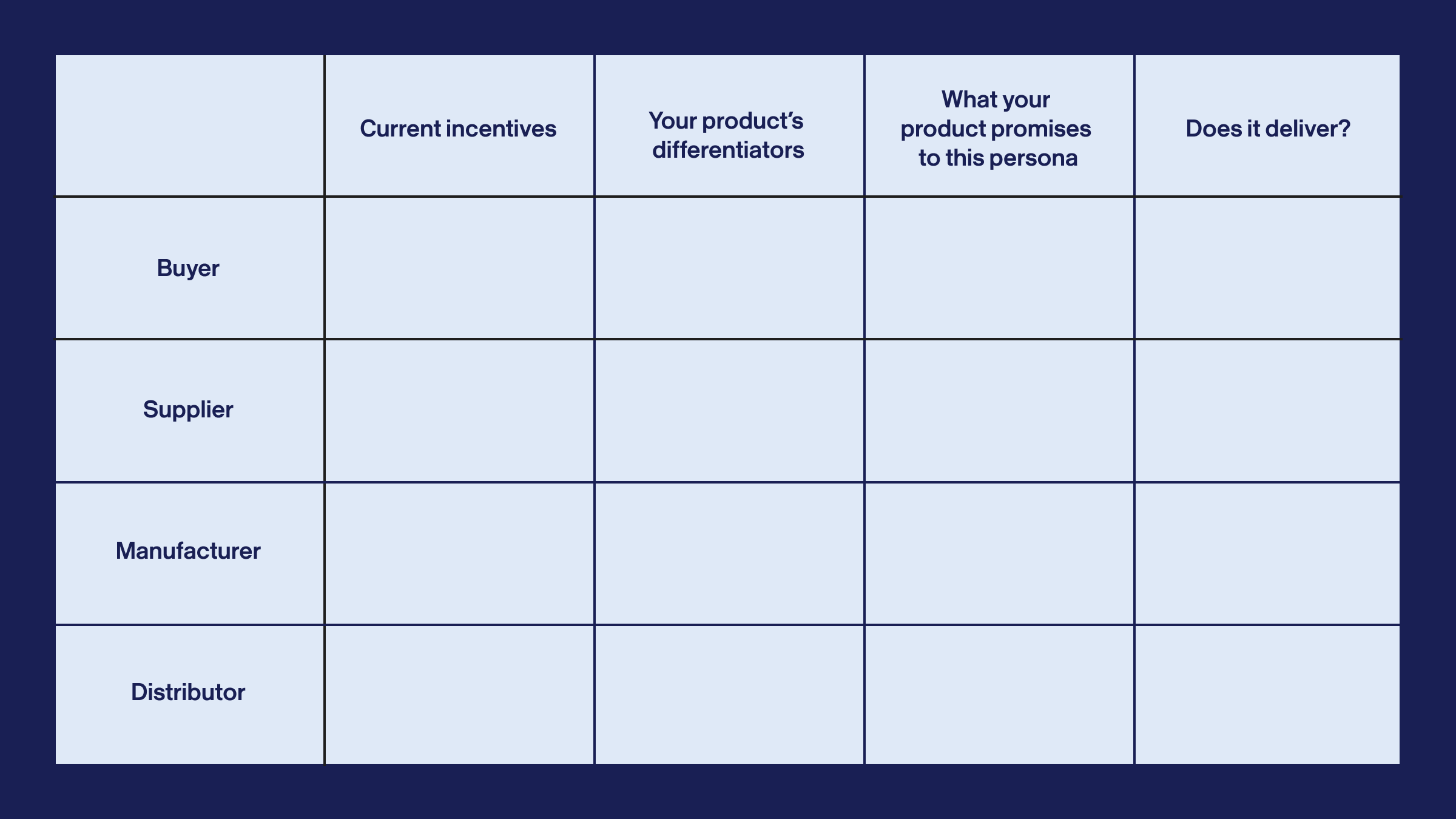
Do this for your own market. Draw a flowchart from first touch → payment collected. Until you see each actor and their incentive, you don’t understand the market.
2. Run a unit economics teardown.
Instead of guessing, Laraki decomposed the cost of delivering a genetic test, line by line. He set a target price ($250 vs. the $4,000 incumbents charged) and worked backwards:
Negotiate with suppliers (“ask for a discount” was a rule, not a hope).
Unbundle inputs (suppliers often add hidden buffers).
Spot timing incentives (end-of-quarter discounts, prepayment benefits).
Try the same: build a spreadsheet of every cost driver. Then ask, for each line item: “How can I bend this?”
3. Test whether your wedge is a feature or a solution.
Colour’s first wedge was low-cost testing. But insurers didn’t care; they priced by median cost across labs, not the cheapest option. A $250 test was just a feature. The solution buyers actually wanted? A vertically integrated cancer care clinic that reduced overall spend.
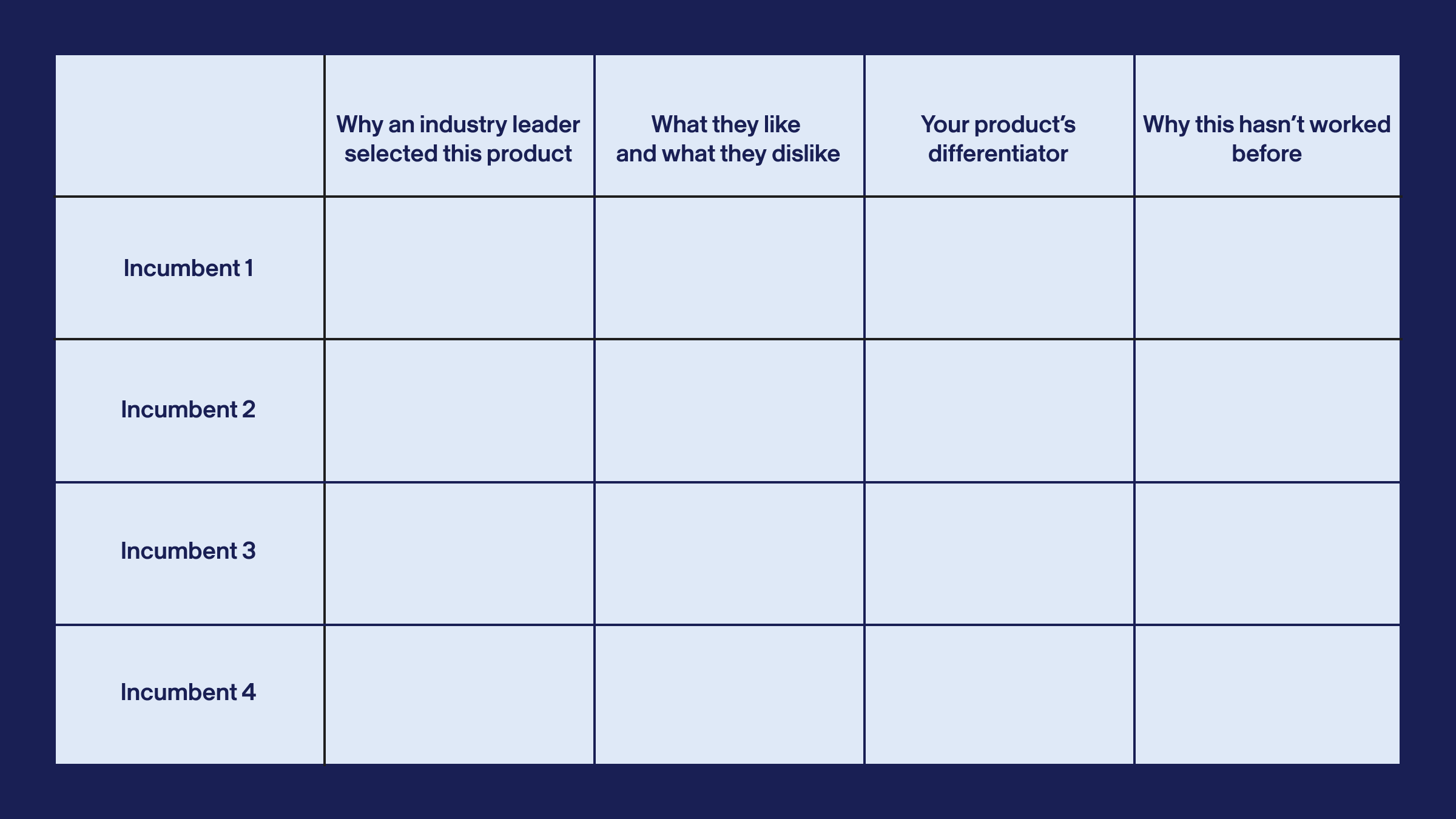
Apply this lens: if your product is a “better part,” ask who needs a “whole car.” Sometimes you need to bundle your tech into a broader solution to unlock budgets.
4. Talk to operators, not celebrities.
Instead of chasing famous doctors or regulators, Laraki reached out to genetic counsellors, lab managers, and non-famous scientists. These were the people actually running the processes Colour needed to integrate into.
Advisors were compensated simply (hourly rate, research sponsorship), not with vague equity promises.
Your move: make a list of the doers in your industry. Cold email them with a mission-driven story. They’ll tell you how transactions really happen.
5. Treat pivots as progress, not failure.
Laraki cycled through:
DTC tests (failed: CAC too high, LTV too low).
Selling via physicians (failed: billing friction too high).
Employer health plans (worked: aligned with budgets).
Expanded into a full clinic (big unlock).
Don’t cling to your first model. Every failed buyer segment is data that sharpens where the incentives align.
6. Don’t mistake false positives for traction.
Colour scored early deals because of influence (warm networks, Stripe founder referral). But those didn’t generalise. Laraki’s test: could a stranger buy this product on standard terms? If not, you don’t yet have PMF.
Run the same filter: strip away influence. Would the product still close deals?
Mini checklist founders can run this week
Map one real transaction in your target market from first touch to cash collected. Name each actor and their incentive.
Identify your product’s current status on the buyer’s ladder: feature, component, or solution. If it’s a feature, who can you bundle with to become a solution?
List the top three cost drivers and one concrete action to bend each (renegotiate, alternate supplier, process change).
Book five calls with non-celebrity operators who move money or approvals. Ask them to redline your transaction map.
Write your “no influence” test: how would a cold buyer discover, evaluate, purchase, and activate without your network?
You can read a detailed write-up here by Firstround.
a16z guide: How to hire a strong founding team?
Founders often underestimate recruiting. In reality, your early hires will define your culture, speed, and even whether your company feels inevitable to outsiders. Zabie Elmgren puts it best: recruiting isn’t a support function; it is the company.
Here are some practical tactics founders can use when building their founding team:
Go beyond your first-degree network
Start with ex-colleagues and trusted peers, but don’t stop there.
Use warm intros from investors, tap niche online communities, alumni of “strong-but-struggling” companies, GitHub contributors, or university clubs.
Run a fast, rigorous process
Top candidates want momentum. Move quickly through interviews and follow up fast.
Your interview process should be challenging enough to signal a high bar, but thoughtful enough to feel serious, not adversarial.
Treat references as onboarding, not just screening
Go beyond red flags—ask open-ended questions like “What environment brings out their best work?”
Look for patterns across references. Use the insights to set hires up for success once they join.
Understand what motivates candidates
Early hires take founder-level risk without founder-level equity. To close them, learn what they value most: mission, technology, career growth, team, or compensation.
Tailor your pitch accordingly—don’t assume everyone joins for the same reason you did.
Set clear expectations early: Be upfront about role scope and growth trajectory. Many early hires expect to grow into leadership, but future scaling often requires bringing in senior leaders. Misaligned expectations are one of the most common reasons early hires leave.
Think a year ahead: Work backwards from 12–24 month milestones. Identify which roles will matter later (e.g., niche technical hires) and start building relationships now. Recruiting should be a weekly habit, not a last-minute scramble.
Great founders are great recruiters. Your early hires won’t just help you build the product — they’ll define whether you attract other top talent and whether your company feels inevitable. Recruiting isn’t something you do after you’ve figured things out; it’s how you figure things out.
TODAY’S JOB OPPORTUNITIES
💼 Venture Capital & Startup Jobs
Associate - Temasek | USA - Apply Here
Associate/manager - Redalpine | UK - Apply Here
Head of Investor Relations - Team 8 | USA - Apply Here
Analyst - Lightbox | India - Apply Here
Venture Investment Analyst - Laplace Partner | South Korea - Apply Here
Investment Analyst - Beas Capital | India - Apply Here
Associate - Cerity Partner | USA - Apply Here
Program Manager - generator | USA - Apply Here
Investor Relations Analyst - Techstars | USA - Apply Here
Program Manager - generator | USA - Apply Here
Venture Partner - XDC Venture | USA - Apply Here
Manager - Finance - Yournest Venture | India - Apply Here
Investor Relations Manager - Beco Capital | UK - Apply Here
Investment Associate - Beco Capital | UAE - Apply Here
Head of Platform - Pledge Venture | UK - Apply Here
ESG Intern - ESG Enterprise | UK - Apply Here
AI Venture Analyst Intern - Untaped Venture | USA - Apply Here
Executive Assistant - AN Venture Partner | USA - Apply Here
🤝 Partnership With Us
Get your product in front of over 95,000+ audience - Our newsletter is read by thousands of tech professionals, founders, investors and managers worldwide. Get in touch today.
🔴 Share Venture Curator
You currently have 0 referrals, only 5 away from receiving a 🎁 gift that includes 20 different investors’ contact database lists - Venture Curator
Great writeup, really like the framework to study the new market.