

👋 Hey, Sahil here — Welcome back to Venture Curator, where we explore how top investors think, how real founders build, and the strategies shaping tomorrow’s companies.
Big idea + report of the week :
The productivity paradox of AI coding assistants.
The new reality of AI funding: massive checks, fewer winners, and tougher competition.
The US VC ecosystem still finds plenty of room for growth.
Frameworks & insightful posts :
How to actually name your Startup.
The overlooked metric-CAIR, that predicts AI product success.
Framework: How to get warm intros to VCs without a network?
AI tools used by a16z partner Olivia Moore.
FROM OUR PARTNER - 1PASSWORD
🤝 Outsmart cybercriminals without breaking your budget

No business is too small to be a target for cybercrime. In fact, small businesses are a growing target for attacks.
Watch 1Password’s on-demand webinar to learn about achievable methods to guard against the growing threats of ransomware and credential-based attacks.
🤝 PARTNERSHIP WITH US
Get your product in front of over 103,000+ audience - Our newsletter is read by thousands of tech professionals, founders, investors and managers worldwide. Get in touch today.
START WITH
🧠 Big idea + report of the week
The productivity paradox of AI coding assistants.
Many founders assume adding AI coding assistants (like Cursor, Copilot, Claude Code) will 10x developer output. The reality is more complicated.
Here’s what research and real teams are finding:
Speed vs. perception
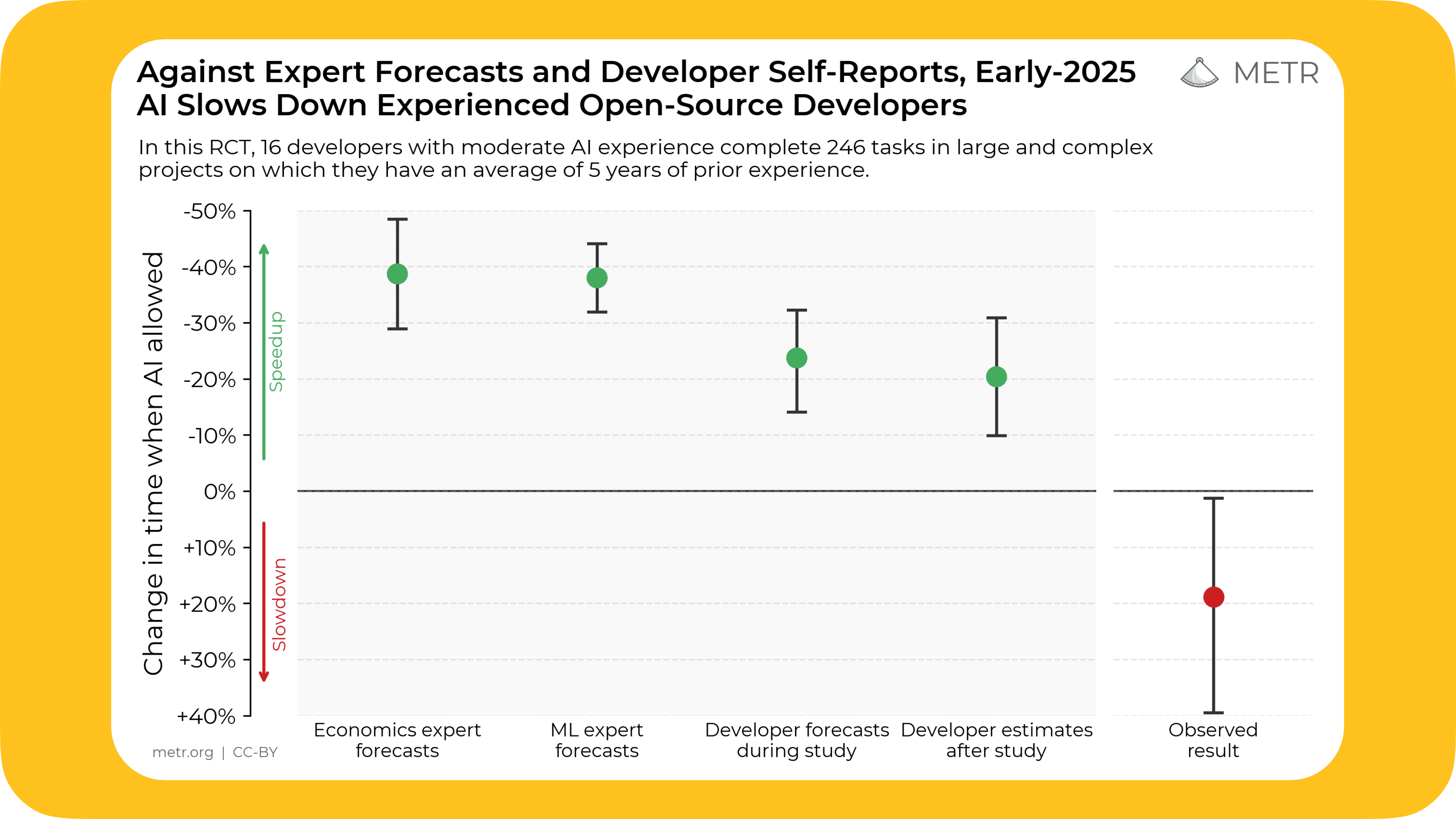
METR’s July 2025 trial: developers with AI were actually 19% slower on OSS tasks, but they felt 20% faster.
The dopamine loop of instant code makes it feel productive, even when review/debug cycles erase the gains.
The quality trap
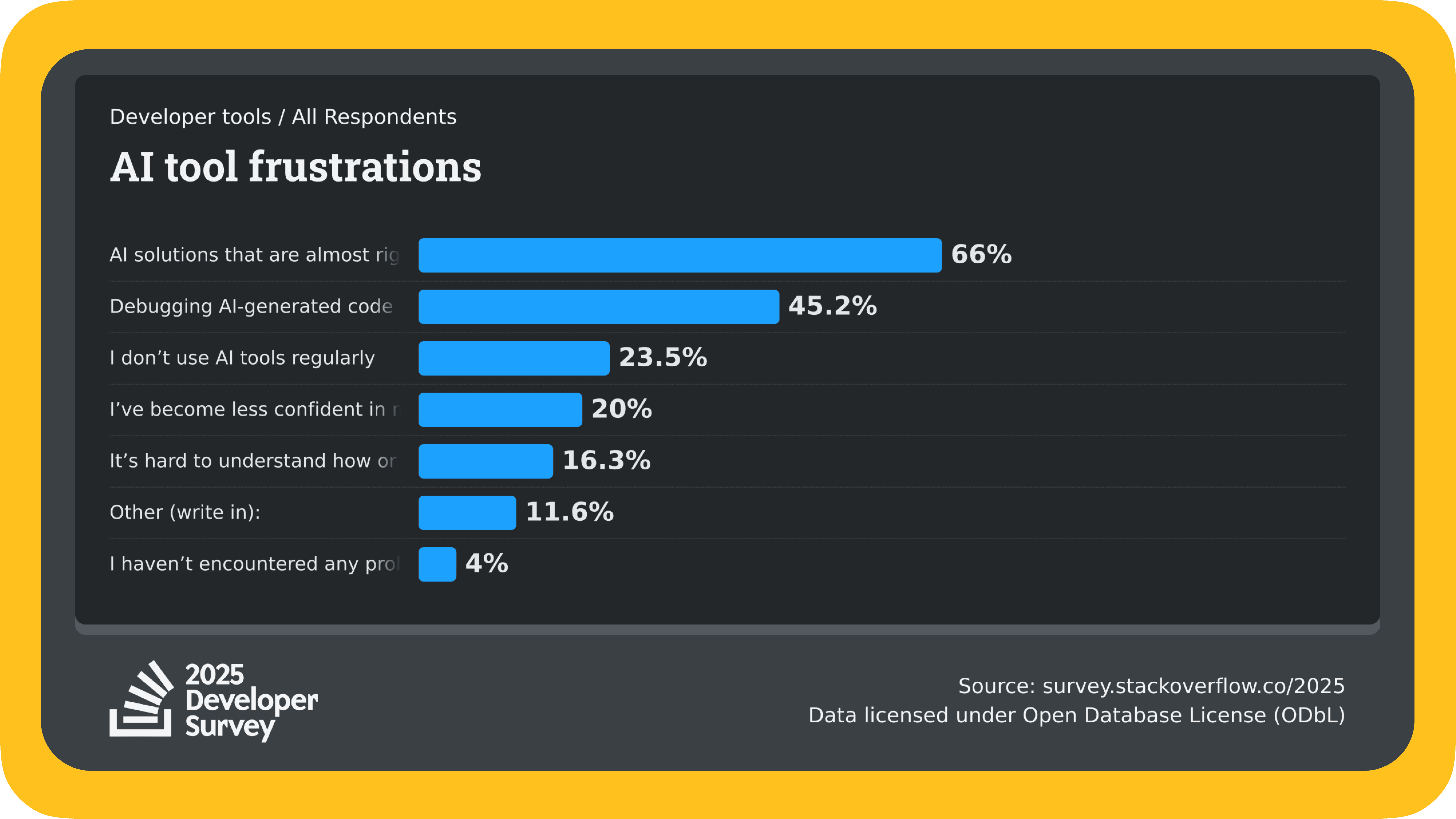
66% of devs in the 2025 Stack Overflow survey said AI outputs are “almost right but not quite.”
More context = more irrelevant noise. Senior engineers often spend more time fixing AI code than writing it from scratch.
Security & compliance risks
Apiiro’s 2024 study: AI-generated code had 322% more privilege escalation paths and 153% more design flaws.
Secrets exposure rose 40%, often due to hard-coded credentials. For SOC2/GDPR/HIPAA companies, this is a real compliance red flag.
The 70% problem
AI gets you to a demo fast (70%), but the last 30%—edge cases, tests, production readiness—is still human-intensive.
For juniors, AI scaffolding feels magical. For seniors, it often slows them down.
Business vs. dev reality
Leaders love the “10x” pitch, but real bottlenecks are design reviews, QA, system dependencies—not typing speed.
Expect incremental wins in boilerplate and onboarding, not exponential leaps.
Why this matters for founders
Don’t over-index on AI as a productivity silver bullet.
Use AI assistants for prototypes, docs lookup, or junior onboarding.
For core product and security-sensitive code, invest in solid engineering practices first.
AI coding assistants are accelerators for demos and MVPs, but not replacements for senior engineering or rigorous review. Treat them as scaffolding, not shortcuts.
The new reality of AI funding: massive checks, fewer winners, and tougher competition.
PitchBook’s latest Emerging Tech Research shows how concentrated AI venture funding has become. Out of 1,086 AI VC deals in Q3, just four rounds xAI, Anthropic, Nscale, and Mistral, accounted for nearly half of all capital deployed.
The money is still flowing. But it’s flowing to fewer companies, in bigger and riskier checks.

Here’s what’s happening under the hood:
Foundational models are capturing the lion’s share of capital
Investors see the LLM layer as the infrastructure on which every application will be built, so they’re willing to deploy massive rounds into a handful of contenders. That’s why Anthropic ($13B), xAI ($10B), and Mistral (€1.7B) dominate quarter after quarter.
Meanwhile, the “picks & shovels” layer is gaining momentum
Nscale’s $1.1B raise shows investors are betting heavily on GPU clouds, data-centre capacity, and compute infrastructure — not just the LLMs themselves. This is where many believe the more consistent, less winner-take-all returns will come from.
Semiconductor funding doubled the historical average
AI-specific chip startups pulled in $3.8B in Q3, vs. the usual ~$1.9B. The scarcity of Nvidia GPUs, the rise of model-specific accelerators, and the push for sovereign compute are driving this surge.
VCs don’t want concentration risk, but the market is forcing it
At the application layer, it’s still unclear who wins. At the LLM + infra layer, the frontrunners are obvious, so capital consolidates around them. This creates a paradox:
Hedge your bets by backing multiple model providers
But the infra + compute layer, where the value is more broadly distributed
What this means for founders: If you’re building an LLM or infra-layer startup, investor appetite is still wide open, but competition is brutal, and capital intensity is unprecedented.
If you’re building an application-layer startup, differentiation and distribution matter more than ever, because funding gravity has shifted upstream.
Q3 didn’t just show strong AI funding; it showed the shape of AI funding. And that shape is a pyramid with a very narrow top. The winners at the foundation model and compute layers are pulling away, while everyone else fights for what’s left.
US VC ecosystem still finds plenty of room for growth.
PitchBook’s latest global VC ecosystem rankings show an unmistakable reality: the US still dominates venture capital, even as new regions push upward and geopolitical forces reshape where innovation happens.
Here’s what’s happening across the global map:

The US remains the global centre of VC gravity
Across both development (size, maturity, depth of capital) and growth (speed of expansion), the US leads by a wide margin. No other region comes close to the combination of deal volume, valuation strength, and startup density.
San Francisco is still #1, but new US cities are accelerating
SF sits far above every other city in development scores, reaffirming its global lead.
But on growth, Nashville tops the world, and 14 of the top 20 fastest-growing ecosystems are in North America. The US is expanding from the top and the bottom at the same time.
A surprising winner: Saudi Arabia
Despite ranking 19th overall, Saudi Arabia is now #1 in growth, ahead of Switzerland, the UAE, and the other fast-advancing markets.
Eleven new countries entered the top-20 growth list this year, showing that global participation is widening even though the US still dominates.
AI continues to define the cycle
US AI funding in this period exceeded the next 20 countries combined. In Europe, the UK, Germany, and France lead AI development—but their totals remain far below the US.
Fintech and healthcare reveal different power centres
India ranks #3 globally in fintech after the US and UK.
Europe dominates healthcare, with 11 of the top 20 national hubs.
Boston cements its status as the world’s strongest healthcare ecosystem outside SF.
What this means for founders & investors: The US is still the best-positioned ecosystem for capital availability, valuations, and AI talent density. But new growth pockets from the Gulf to emerging US cities are creating fresh opportunities, especially for founders willing to build where competition is lower and incentives are rising.
CURATED RESOURCE FOR YOU
The roadmap every aspiring investor wishes they had
Breaking into venture capital is hard; this guide makes it clear, practical, and possible.
The Break Into VC Resource Pack gives you everything top investors recommend for getting started:

How VC funds work, from deal flow to exits
Valuation, SAFEs, notes & term sheets explained
Resume, interview & networking prep
2,700+ verified US VC emails for outreach
Lifetime updates + curated jobs, fellowships & podcasts
VC educational videos from leading VCs
Built with insights from leading VCs and fund managers.
SOMETHING MORE
🧩 Frameworks & insightful posts
How to Actually Name Your Startup: A Simple Framework.
Most founders think naming is a quick brainstorm or a “let’s run it through ChatGPT” exercise. Arielle Jackson (From First Round) has helped hundreds of startups name companies and products, and her view is simple: naming is emotional, subjective and slow and still one of the most important early brand decisions you make.
The biggest mistake founders make? They want the perfect name on day one, even though the best names often become great over time (Disney, Nike, Square). Your job is to pick a name that fits the strategy today and doesn’t limit you tomorrow.
Here’s the practical way to approach it.
Start with a placeholder
Your incorporation name is not your final name. Most good companies don’t start with the name they end up with. Some founders even intentionally pick ridiculous incorporation names just to avoid attachment. It’s better to incorporate as something unusable and rename once you’re clear about your product.
When should you pick the real name?
When you’ve hit clarity on positioning
When you’re about to launch and need a public-facing brand
When your old name stops fitting your product
When legal risk forces a change
Founders who rush naming end up boxed in. Founders who delay it slightly make far better choices.
Start with positioning, not creativity
Arielle’s process always begins with a simple question: Who is this for? What space do we occupy? What makes us different?
A clear positioning statement makes naming dramatically easier because you know what your name should signal: sophistication, speed, trust, creativity, community, or something else entirely.
Build a naming brief
Before brainstorming, outline the constraints:
Who is the target user?
What tone and personality should the name convey?
Do you prefer descriptive, suggestive or abstract names?
Any languages, meanings or connotations to avoid?
Any domain or trademark constraints?
Five names you love, five you hate — and why
This reduces randomness and helps others understand your taste.
How to namestorm
This is where founders usually go wrong. They brainstorm alone. Arielle suggests the opposite — widen the surface area. Bring in employees, friends, even linguists. And use AI not to “name your startup” but to explore:
synonyms
technical words
metaphors
foreign-language variations
historical references
Keep the prompts specific. AI is better at generating raw material than finished names.
What themes to explore
Use both direct and indirect angles:
Your core value (expertise → Maven)
Your product’s motion (gather, connect, accelerate)
Patterns, metaphors, symbols
Names from mythology or history
Simple phrases (PayPal, First Round)
A good brainstorm should produce hundreds of words, not ten.

Narrow the list with structured criteria - Evaluate your list against:
Distinctiveness, Memorability, Trademark risk, Domain feasibility, How it sounds when spoken, How it looks visually, & Whether it will age well.
Then shrink to a shortlist of 10–25, then a top 3.
Signs you’ve found a good name

It’s polarising — some people love it, some hate it
It grows on you over a few days
It works on two levels (simple now, deeper meaning later)
It avoids the obvious, generic and forgettable
Signs it’s a bad name
Too many companies already use it
It’s easy to parody
Locks you into a narrow future use case
Sounds like a competitor
User feedback helps, but lightly
Ask small groups of users what each name communicates, not which one they “like.” People tend to choose descriptive names because they’re familiar. You want clarity, not consensus.
A simple memorability test works well: share three names today and see which one people recall tomorrow.
Legal + domain basics
Arielle’s rule: Get the name right first. Then solve the domain. You can use:
prefixes (usemaven.com, tryfigma.com)
suffixes (squareup.com, awaytravel.com)
alternative TLDs (.ai, .co, .io)
lease-to-own domain deals
Trademark clearance should be done before spending money on identity work. A quick USPTO search rules out obvious conflicts. A trademark lawyer helps determine if you can register the name.
Product naming vs company naming
If you have one product, keep the same name as the company. Once you have multiple products, use a simple structure like: Company + Descriptor
Example: Google Maps, Google Drive, Square Reader.
Use unique product names only when they help establish a separate identity (Cash App, Android).
Naming is messy. It’s emotional. And it takes time. But with the right framework, it becomes structured enough to produce a name that supports your positioning, doesn’t box you in, is easy to remember and ages well.
The overlooked metric-CAIR, that predicts AI product success.
If your AI product isn’t seeing adoption, the issue might not be the tech; it might be how confident users feel using it.
Most teams building AI products obsess over model accuracy. They test precision, tune parameters, and improve performance. But after watching dozens of launches and failures, product leaders like Assaf Elovic (Head of AI at Monday) realised something strange:
Some AI products with mediocre models gain traction fast. Others with great accuracy completely flop.
So what’s going on?
The answer lies in a concept called CAIR - Confidence in AI Results. It’s a simple but powerful idea: People don’t adopt what they don’t trust.
And trust isn’t just emotional, it’s designable, measurable, and improvable. CAIR gives teams a framework for doing exactly that.
What is CAIR?
At its core, CAIR is a score that reflects how confident a user feels in the AI’s output.
The formula is: CAIR = Value ÷ (Risk × Correction Effort)

Here’s what each variable means:
Value: How helpful the AI is when it works.
Risk: What goes wrong if it makes a mistake?
Correction: How much effort does it take to fix a bad result?
If an AI tool saves you time and is easy to undo if it fails, CAIR is high.
If a mistake has big consequences and is hard to fix, CAIR drops fast.
This metric explains why even good AI gets ignored and how to fix that.
Example: Why Cursor’s AI coding tool took off
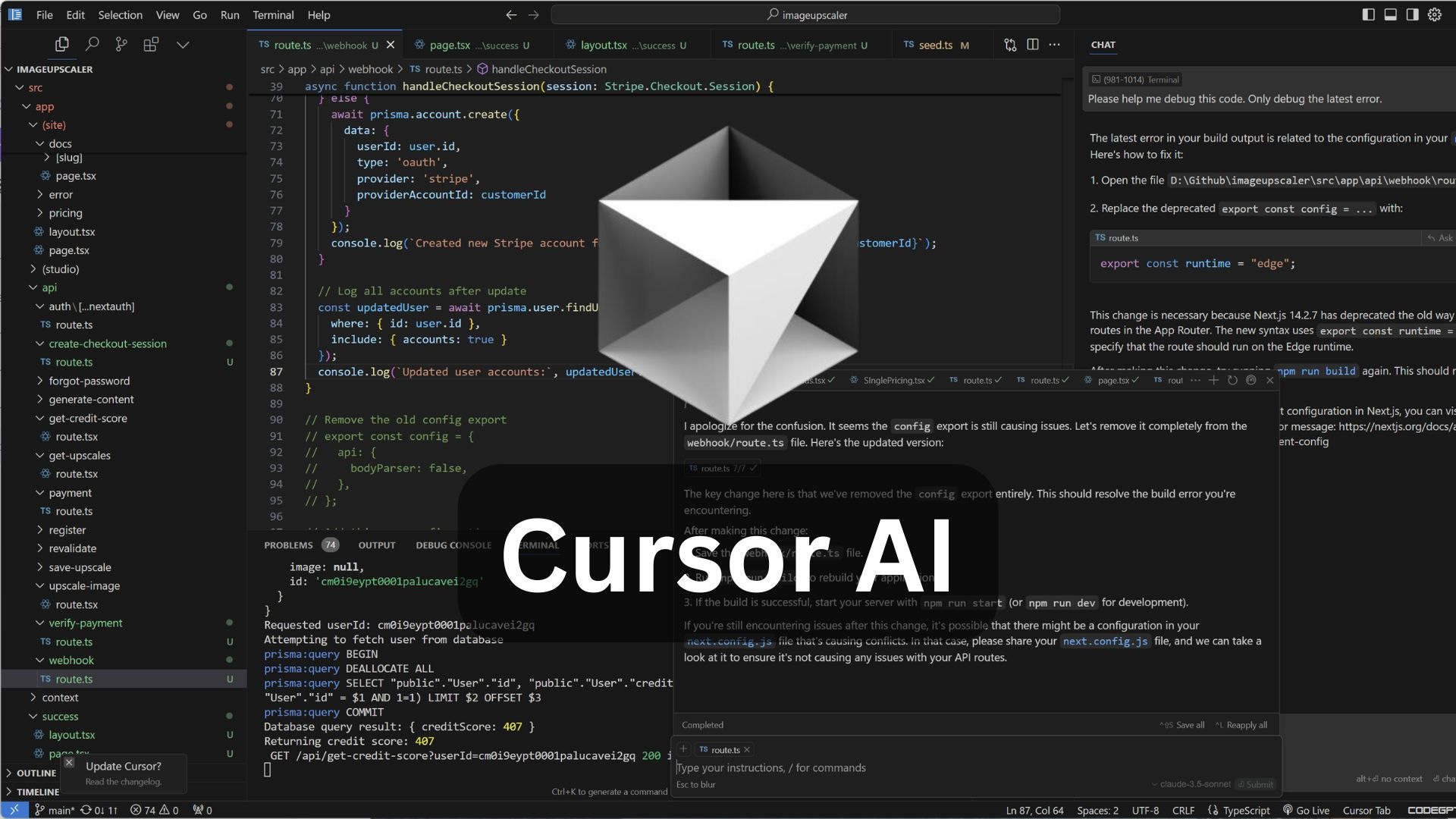
Cursor, the AI-powered code editor, became a favourite among developers. But coding is risky; what if the AI writes buggy code?
Let’s break it down:
Risk: Low — the AI runs in a local editor, far from production.
Correction: Low — devs can delete or overwrite code instantly.
Value: High — saves hours on repetitive coding tasks.
Result: High CAIR - Developers trust it. They feel in control. They adopt it.
Now, imagine Cursor’s auto-deployed code to production servers. The Risk jumps to High, even if the Correction stays manageable.
New CAIR = Much lower - Adoption would likely suffer, even with the same model accuracy.
What about AI tools like Monday.com?
Monday AI can automate workflows instantly. That’s powerful, but also risky. What if it triggers the wrong action across a business-critical board?
Risk: Medium — real data, real impact.
Correction: Medium — complex to undo across systems.
Value: High — major time savings.
CAIR: Moderate.
Here’s the insight: Adding a preview screen could change everything. If users see what the AI will do before it’s deployed, the Risk drops from Medium to Low.
Result: Higher CAIR → More adoption.
This shows how product design, not just model tuning, can dramatically increase AI success.
Some fields, like finance and healthcare, have built-in limitations:
Mistakes are expensive
LLMs aren’t great at math or precision
Regulations demand high reliability
Take tax software, for example.
An AI that auto-files returns without human checks? CAIR = Very Low
(High Value ÷ High Risk × High Correction)
But TurboTax uses a human-in-the-loop system. The AI suggests optimisations. A human approves. Confidence rises.
Same with Wealthfront and healthcare diagnostics: AI does pattern recognition, humans stay in charge of math and decisions.

Designing around limitations beats waiting for perfect models. So, how to improve CAIT ( Confidence in AI Results)
Here are 5 quick ways to boost your AI product’s CAIR, without changing the model:
Strategic human-in-the-loop: Add human checks only at key decision points to prevent major errors without slowing things down.
Reversibility: Make every AI action easy to undo to reduce anxiety and build trust.
Consequence isolation: Let users test AI safely with drafts, previews, or sandboxes before going live.
Transparency: Explain why the AI decided so that users can trust, verify, and fix when needed.
Control gradients: Start with low-risk features and gradually offer more power as user confidence grows.
Why this matters for product builders
Here’s the mindset shift:
Instead of asking, “Is the AI good enough?”, start asking, “Do users feel confident enough to use it?”
Because a well-designed, medium-accuracy AI can outperform a high-accuracy system with poor UX.
Your product’s success doesn’t hinge on a 99% model. It hinges on:
How mistakes are handled
How are risks communicated
How much control the user retains
And most importantly: How confident the user feels hitting that first button.
Framework: How to get warm intros to VCs without a network?
Toby Egbuna shared one of the best no-network fundraising tactics and ways to get intros

Instead of cold emailing 300 VCs, he recommends this step-by-step process:
Shortlist 30 top funds you actually want
Use Crunchbase to find their 3 most recent portfolio founders
Connect with those founders on LinkedIn
Email and ask for a quick chat about their experience with the fund
If the call goes well, ask for a warm intro
Why it works:
Founders usually say yes
VCs value intros from their own portfolio more than cold emails
You often get bonus intros to other funds too
“You don’t need a huge network. You just need a system.”
Here’s the 14-step process Toby recommends:
Build a list of 300+ VCs
Prioritize the top 10% (30 funds) based on thesis, connections, brand, and fit
Filter for just those 30
Go to Crunchbase
Search each fund
Find the 3 most recent investments
Note founder names, sites, and companies
Repeat for all 30 funds
Go to LinkedIn
Send a connection request to every founder
Open your email
Email each founder asking about their experience (include a short, warm note)
Do the calls, be genuinely curious
If it goes well, ask for the intro
AI tools used by a16z partner Olivia Moore.
Many people wonder what top investors actually use AI tools for in their day-to-day life, not just for making better investment decisions, but also for staying productive.
Olivia Moore, an AI Partner at Andreessen Horowitz, tests dozens of products every week, but only a handful make it into her daily AI stack.
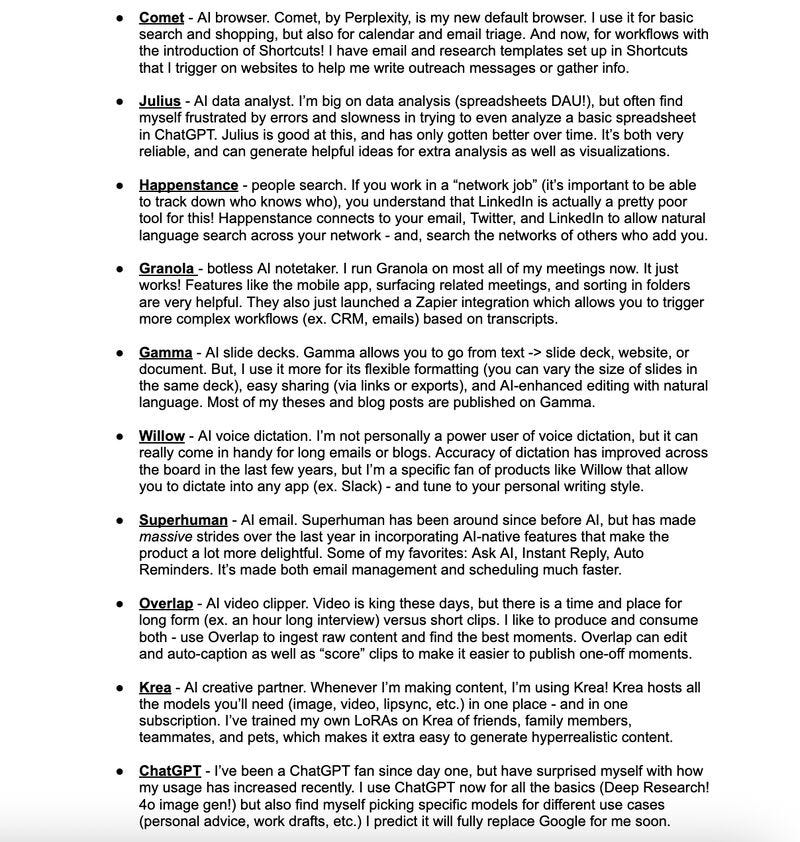
Here’s what she relies on:
Comet (Perplexity): Default AI browser for research, calendar/email triage, and automated outreach workflows.
Julius AI: A quick, accurate AI data analyst for spreadsheet insights and visualizations.
Happenstance: AI-powered people search across email, LinkedIn, and Twitter to map networks.
Granola: AI meeting notes with smart triggers for post-meeting workflows.
Gamma: AI slide decks, docs, and websites, with flexible formatting and sharing.
Willow: AI voice dictation tuned to personal writing style.
Superhuman: AI-enhanced email with Ask AI, Instant Reply, and Auto Reminders.
Overlap: AI video clipping and auto-captioning for long-form content.
Krea: AI creative partner for generating hyperrealistic visuals.
ChatGPT: For deep research, personal advice, and drafting.
She’s also experimenting with Serif (AI email assistant), Tako (trusted data + graphics), and SnapCalorie (AI nutrition tracker).
Even at the center of AI investing, the tools that stick are the ones that fit seamlessly into existing workflows and deliver daily value, not just novelty.
EXPLORE MORE
💡 Reports, Articles and a few interesting stuffs
Tech predictions for 2026 and beyond. (Link)
NVIDIA backs nearly every major AI player except Anthropic. (Link)
AI trends in Q3 2025. (Link)
Gen Z is facing record challenges in today’s labour market in the AI economy. (Link)
AI landing page analyser. (Link)
Boom, bubble, bust, boom. Why should AI be different? (Link)
NEWS RECAP
🗞️ This week in startups & VC
New In VC
Baobab Ventures, a London-based deep tech VC founded by Carles Reina (ex-ElevenLabs, Uber), has raised a $15M solo GP fund. (Link)
Google and Accel will jointly invest up to $2M per startup through Accel’s Atoms program, targeting India-based and Indian-origin founders building AI-first products. (Link)
Variant, a New York-based crypto venture firm led by a16z alum Jesse Walden, is targeting $250 million for its fourth flagship fund. (Link)
New Startup Deals
Global Work AI, a Wilmington, DE-based provider of an AI-native job-search platform focused on job seekers, raised $2.4M in funding. (Link)
CoPlane, a San Francisco, CA-based company building AI-native software to streamline the back office, raised $14M in Seed funding. (Link)
Social Links, a Netherlands-based technology company delivering solutions against AI-driven risks, raised $3M in funding. (Link)
Maritime Fusion, a San Francisco, CA-based fusion energy company developing reactors for maritime and off-grid applications, raised $5.5M in Seed funding. (Link)
CookUnity, a NYC-based provider of a chef-to-consumer meal delivery platform, received $250M from General Catalyst. (Link)
Pibit.AI, a San Francisco, CA-based SF–based insurtech company, raised $7M in Series A funding. (Link)
HelloTrade, a NYC-based blockchain-powered trading platform provider, closed a $4.6M seed funding round. (Link)
TODAY’S JOB OPPORTUNITIES
💼 Venture capital & startup jobs
All-In-One VC Interview Preparation Guide: With a leading investor group, we have created an all-in-one VC interview preparation guide for aspiring VCs. Don’t miss this. (Access Here)
Venture Fellowship - Entrepreneur First | UK - Apply Here
Program Associate - Plug and Play tech Center | USA - Apply Here
Executive Assistant - AN Venture Partner | USA - Apply Here
Associate - Entrepreneur First | USA - Apply Here
Communications Analyst - Oui Capital | Hybrid - Apply Here
Visiting Investment Analyst - Join Capital | USA - Apply Here
AI Tech Lead - Core Innovation Capital | USA - Apply Here
Investment Analyst - Caanan | USA - Apply Here
Senior Legal Associate - Turbostart | India - Apply Here
Venture capital Fellowship for PhDs - Contrarian Venture | USA - Apply Here
VC Associate UK - Breega | UK - Apply Here
Investor Relations & BD - Founders Future - Paris - Apply Here
Analyst - Investments - Blackhill Fund | India - Apply Here
Partner 16, Deal Operations - a16z | USA - Apply Here
Senior Analyst / Junior Associate - Carao Venture | USA - Apply Here
PARTNERSHIP WITH US
Get your product in front of over 95,000+ audience - Our newsletter is read by thousands of tech professionals, founders, investors and managers worldwide. Get in touch today.
🔴 Share Venture Curator
You currently have 0 referrals, only 5 away from receiving a 🎁 gift that includes 20 different investors’ contact database lists - Venture Curator
The CAIR framework is a game-changer. Adoption isn’t just about AI accuracy, it’s about user confidence, reversibility, and perceived risk, which often outweigh raw model performance.
I talk about latest AI trends and insights. Do check out my Substack, I am sure you’ll find it very relevant and relatable.