
👋 Hey, Sahil here — Welcome back to Venture Curator, where we explore how top investors think, how real founders build, and the strategies shaping tomorrow’s companies. Today’s edition features even more carefully curated content.
Big idea + report of the week :
996 is here in SF — how founders should adapt.
McKinsey’s research: How smart companies can thrive amid uncertainty.
CB Insights report: Companies delay IPOs longer than ever, 16-year average.
Frameworks & insightful posts :
How to launch your startup out of stealth?
How many emails does it take for someone to buy a product?
How to use Reddit and AI to find winning startup ideas?
From stealth to $11M: 8 GTM lessons by Nico Ferrero.
The unit economics Excel sheet template every founder should use.
FROM OUR PARTNER - SEMRUSH
🤝 See How AI Features Your Brand
AI search is changing how customers discover businesses.
With Semrush’s AI SEO Toolkit, you can track exactly how your brand shows up in ChatGPT, Google AI, Gemini, and more.

Benchmark against competitors, monitor share of voice, and uncover the real questions people ask about your products or services. Instead of guessing, get clear insights into your brand’s visibility and sentiment across the platforms shaping the future of search.
Get Semrush’s AI SEO Toolkit →
🤝 PARTNERSHIP WITH US
Get your product in front of over 95,000+ audience - Our newsletter is read by thousands of tech professionals, founders, investors and managers worldwide. Get in touch today.
START WITH
🧠 Big idea + report of the week
996 is here in SF — how founders should adapt.
Ramp’s data confirms it: 996 culture (9 a.m.–9 p.m., 6 days a week) is now a measurable reality in San Francisco.

400% surge in Saturday corporate food spend vs 2024.
Activity runs from noon through midnight, proving teams are working weekends.
This didn’t exist in 2023/2024 — it’s brand new in 2025.
The pattern is SF-concentrated but spans sectors beyond just tech.
What this means for you as a founder
Velocity gap is real → A 6-day team ships 20% faster. If you don’t match hours, you must compete on productivity per hour.
Customer expectations reset → Weekend Slack messages, faster feature requests, and 24/7 support will start to feel normal for Bay Area customers.
Talent splits in two → Ambitious hires may seek 996; others will avoid it. You need to pick a clear stance, either intensity or sustainability.
4 Playbooks founders can run
Embrace 996: Be upfront in hiring, pay for intensity, and build systems to prevent burnout.
Compete on efficiency: Eliminate waste (meetings, context switching), invest in automation, and hire A-players who can deliver more in fewer hours.
Differentiate on sustainability: Market work-life balance, target enterprise or non-SF customers, and make stability your brand.
Hybrid model: Design sprint cycles with recovery weeks, rotate “surge teams,” or adopt seasonal intensity aligned with launches.
996 is no longer a debate—it’s a structural shift in how SF companies operate. You don’t need to follow it blindly, but you do need to decide your playbook now: match the intensity, out-optimise it, or stand apart by offering balance.
McKinsey’s research: How smart companies can thrive amid uncertainty.
Uncertainty is no longer an occasional disruption; it’s the operating system of business today. Regulations, politics, and tech waves (AI, cloud, mobile, social) now move faster than most companies can adapt.
But some companies do turn this chaos into an advantage. McKinsey’s research shows five practical levers that separate winners from the pack:

1. Reassess where to play
Don’t assume today’s market will stay your best bet. Winners regularly re-map where momentum is shifting (e.g., from hardware to AI-driven software).
Audit your portfolio: Which markets are growing fastest? Which are slowing down?
Run scenarios: What happens if regulation makes your current market less attractive?
Example: Microsoft’s pivot from PCs to cloud (Azure) was a “where to play” move years ahead of rivals.
Action: Once a quarter, review your market map. Mark one segment to double down on, and one to wind down.
2. Innovate your business model
Products don’t just compete; models compete. Subscription vs. one-time, usage-based vs. outcome-based, bundled vs. unbundled.
Ask: Is our current pricing aligned with how customers prefer to pay?
Explore production/delivery changes (e.g., open-source with paid support, or platform strategy vs. point solution).
Example: Adobe’s shift from selling boxed software to subscriptions unlocked a 10x market cap increase.
Action: Pick one business model experiment this year (pricing test, new delivery channel, or partner-driven revenue).
3. Link talent to value
Most companies misallocate their best people. Winners put their A-players in the 15–20 roles that actually drive disproportionate value.
Identify the critical roles (not titles) that directly impact revenue growth, customer success, or product velocity.
Assign top performers to those, even if it means moving them out of “important-looking” jobs.
Example: HubSpot’s CEO stressed redeploying talent quickly into growth-critical roles as they scaled.
Action: List your top 10% talent and the top 10% most value-driving roles. Do they overlap? If not, realign.
4. Dynamically allocate capital
Most companies plan budgets like last year +/– 5%. Winners move capital like portfolio managers, aggressively.
Divide investments into three buckets: core, growth, and disruptor bets.
Reallocate quarterly based on traction instead of waiting for annual cycles.
Example: Dell reallocated aggressively into storage, then AI, instead of sticking with PCs.
Action: Next quarter, shift at least 5–10% of spend from underperforming areas into high-growth bets.
5. Programmatic M&A
One-off “big bang” deals are risky. The best companies do smaller, regular acquisitions/divestitures that strengthen their position.
Focus on 3–5 targeted deals per year, not one mega-deal.
Use M&A to acquire missing capabilities, talent, or niche customer bases.
Example: SaaS companies that expand into adjacent platforms via small acquisitions consistently earn higher multiples.
Action: Identify 2–3 small acquisition targets or partnership opportunities aligned with your roadmap.
CB Insights report: Companies delay IPOs longer than ever, 16-year average.
Tech companies are staying private longer than ever — averaging 16 years to IPO today, up from 12 in 2015. With $2T+ in private capital raised in the past decade, founders have little incentive to rush public.

What this means for builders:
Secondaries replace IPOs for liquidity: Tender offers and structured sales let employees and early investors cash out years before a listing. OpenAI and Canva are already running multi-billion-dollar secondaries.
VCs and PE capture more upside: Most value creation happens privately, so expect late-stage investors to dominate growth rounds and push IPOs further out.
New exit models emerge: Minority stakes, reverse acqui-hires, and hybrid deals allow acquirers to secure AI talent and tech without triggering antitrust.
Public markets act as clearinghouses: When IPOs do happen, they’re less about raising capital and more about providing liquidity at fair value.
Takeaway: If you’re building now, plan for a long private journey. Structure your fundraising, employee equity, and liquidity options with the assumption that you’ll be private for 15–20 years. (Read full report here)
FROM OUR PARTNER - MECO
🤝 The best new app for newsletter reading.

Tired of messy inboxes? Meco moves your newsletters to a clean, scrollable app built for distraction-free reading.
Join 30K+ readers decluttering their inbox—connect Gmail/Outlook.
SOMETHING MORE
🧩 Frameworks & insightful posts
How to launch your startup out of stealth?
Most founders overthink launches. They keep tinkering, waiting for “perfect,” and end up stuck in stealth. Claire Butler, Figma’s first marketer, says the opposite is true: momentum beats perfection.
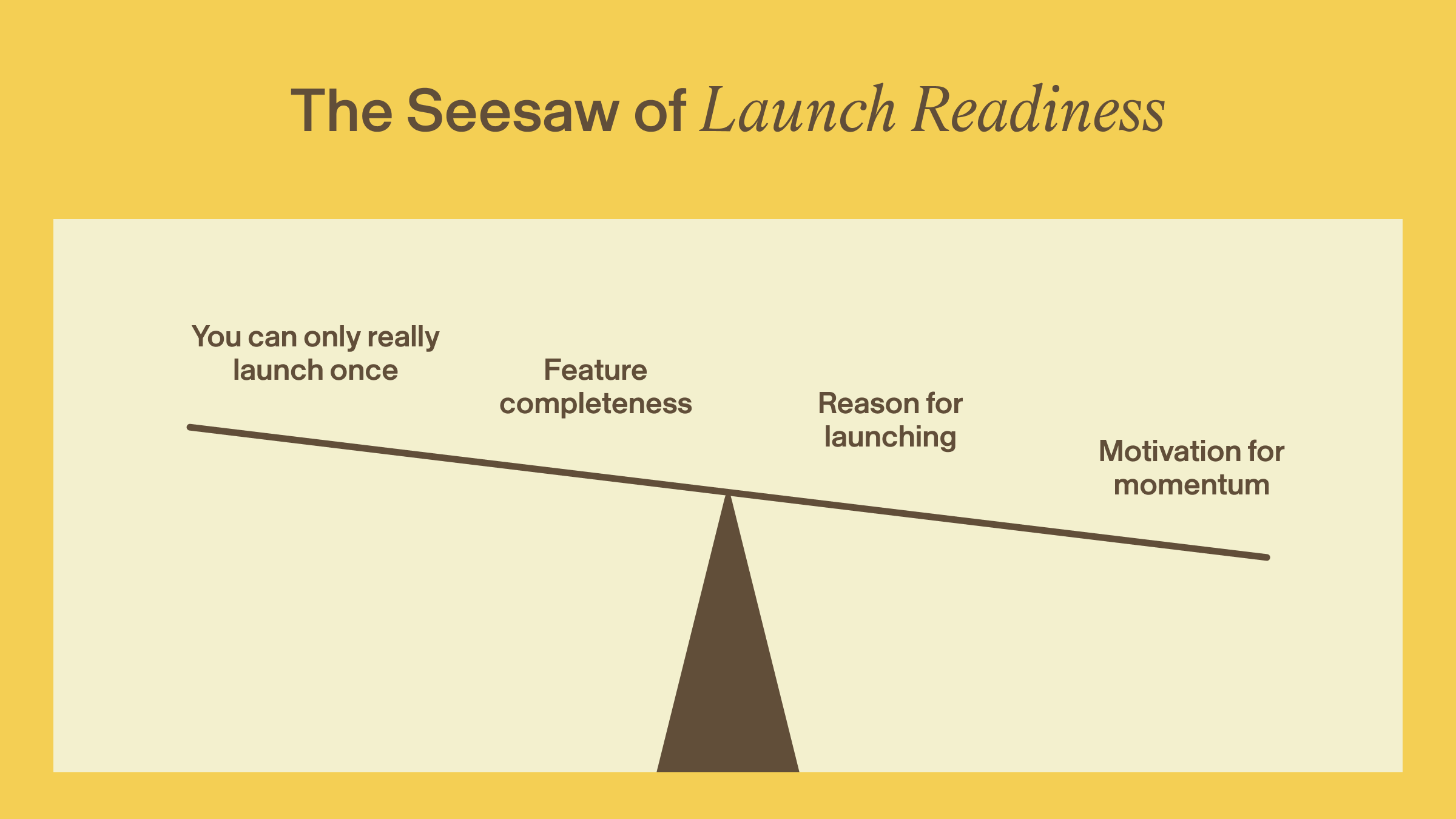
Here’s her framework for stepping out of stealth without stalling:
1. Set a date, even if it feels early
Don’t wait for every feature to be done—just reach “critical mass.”
Figma launched without multiplayer (its core feature) to avoid stagnation.
Rule of thumb: if you’re not slightly embarrassed, you’ve waited too long.
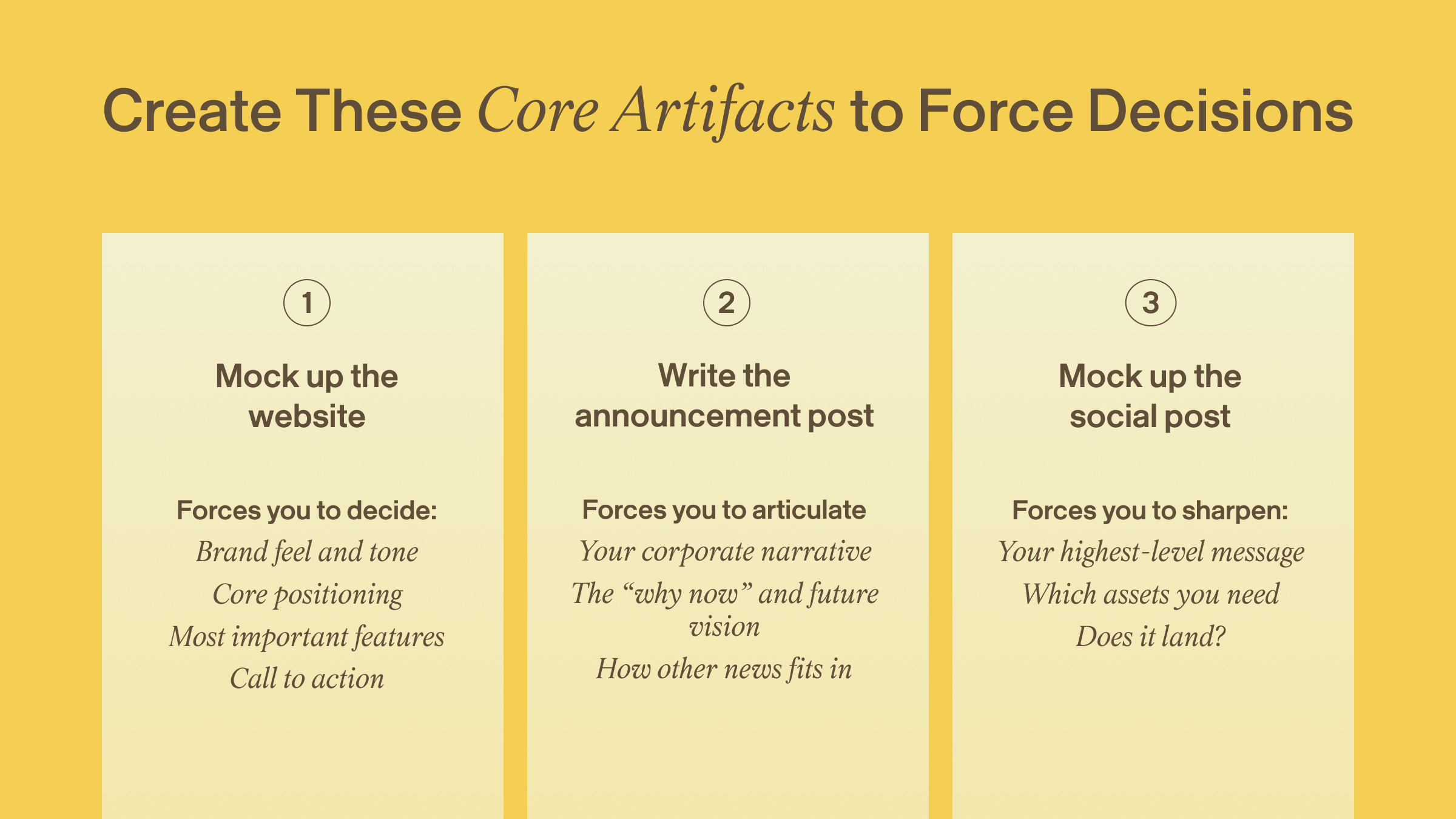
2. Create three forcing-function artifacts
Website: One homepage + about/careers. Define tone, positioning, CTA. (Waitlist vs sign-up vs talk to sales?)
Announcement post: Founder-written narrative → why you built it, why now, where it’s headed.
Social post: Distill it all into a single screenshot, video, or punchy tagline. If it feels fluffy, rewrite until it’s authentic.
3. Pick launch channels wisely
Focus where your ICP already hangs out (Reddit, Discord, LinkedIn, Twitter/X).
Use founder accounts to amplify first—brand handles start from zero.
Press is optional. Unless tied to funding, don’t waste time chasing exclusives.
4. Seed amplification before launch
Build a list: friends, beta users, influencers, your network.
Tell them when launch is, what you’ll need, and share links day-of.
Momentum spreads outward from your circle—plan it, don’t wing it.
5. Remember: launch ≠ finish line
Monitor replies, engage, and bookmark supporters for ongoing community building.
Don’t obsess over metrics too soon—track impressions, traffic, sign-ups, but focus on vibes + momentum.
A flashy launch ≠ product-market fit. The real game starts after.
A launch is a forcing function, not a final exam. Prep your date, artefacts, channels, and amplification. Then get out there; momentum matters more than perfection.
How many emails does it take for someone to buy a product?
Most creators think 3–5 emails are enough to sell their product. But the truth? That barely scratches the surface.
Nicolas Cole (co-founder of Ship 30 for 30) shared data from 20+ cohorts, 10,000+ students, and millions in sales, and the answer shocked a lot of people:
On average, it takes nearly 20 emails before someone finally buys. Sometimes more. (Founder can easily create a simple email newsletter to sell their products)

At first, Cole and his team made the same mistake most of us do: worrying that sending “too many emails” would annoy people. But the data proved the opposite. As long as you keep giving away free education and insights, more emails = more sales.
The key: split your launch sequence into two clear halves.
Part 1: 100% education (emails 1–10)
Goal: build authority and remind them your product exists. Each email is 99% free value, 1% soft CTA.
#1 Plain pitch: what you sell, the problem it solves, how to buy.
#2 Who it’s for: 3 archetypes you serve best.
#3 10 biggest problems: why common fixes fail and why your approach is different.
#4 Desired outcomes: top 3 results your audience wants (and how you help).
#5 Your story: past struggles, transformation, credibility.
#6 Stop/Start: what to quit doing, what to do instead.
#7 Myths: common false beliefs + reframes.
#8 Quick tips: actionable advice they can use today.
#9 Mistakes: traps people fall into, how to avoid them.
#10 Templates: share one, hint at more inside your product.
Part 2: 100% sales (emails 11–20)
Goal: force a decision—buy or unsubscribe.
#11 Everything included: break down your product clearly.
#12 Bonuses: extra perks they get.
#13 Testimonials roundup: social proof at scale.
#14 Future pacing: where will they be in 1 year (with vs. without your product)?
#15 Testimonial deep dive: one student’s full journey.
#16 Tale of 2 archetypes: buyer vs. non-buyer outcomes.
#17 On-the-fence survey: ask why they haven’t bought (time, readiness, cost).
#18 Behind the scenes: peek into modules/resources.
#19 Disappearing bonus: add urgency with a 48-hour perk.
#20 Disappearing discount: final 48-hour price incentive.
Why it works
Buyers need repetition: the average person doesn’t convert after a few nudges; they need to be reminded, educated, and reassured.
The first half builds trust and authority; the second half applies pressure and urgency.
If you’re not willing to craft 20 emails, don’t be surprised if sales stay flat.
If you’re launching a product, map your next sequence using this exact 20-email framework. Write the first 10 as pure education, then switch gears into direct selling. More emails = more sales.
How to use Reddit and AI to find winning startup ideas?
Finding the right startup idea shouldn’t feel like swimming upstream. If you start where people already share their problems, the ideas come to you. Nicolas Cole shared a playbook that combines Reddit with AI tools to surface winning ideas in just a few steps.
Step 1: Spot the right subreddits
Use Gummy Search to track trending subreddits.
Focus on communities with 10k–100k members (engaged, but less competitive).
Check growth trends (daily/weekly/monthly).
Ask: “Why now?” to ensure timing is right.
Layer in your unfair advantage (skills, network, expertise) to build a moat.
Step 2: Extract real problems
Add the subreddit to your Gummy Search audience.
Scan “pain and anger” posts for frustrations.
Review advice/solution requests to see where people need help.
Write down recurring themes—patterns are your signal.
Step 3: Learn from creators
Use Perplexity AI to identify top influencers in the niche.
Search YouTube for popular videos + read the comments.
Analyse 20–25 videos for repeated audience needs.
With vidIQ (Chrome extension), sort popular videos by “contains a question” → instant insight into what people ask.
Step 4: Wireframe the idea
Draft a quick product/service sketch based on insights.
Use Framer (or similar tools) to prototype.
Pick a catchy, relevant name.
Example: DesignScientist for conversion-focused design.
Bonus: Build your niche audience
Use Gummy Search “top content” to see what performs.
Ask AI: “Does this audience love memes, long posts, or quick tips?”
Treat AI tools as your entrepreneurial assistant.
Keep a running “ideas” note in iOS (or Notion).
Set a weekly ritual (e.g., Friday mornings) to refine content ideas.
The best startup ideas live where people complain, ask for help, and share solutions—Reddit, YouTube, TikTok. Use AI to filter the noise, spot trends early, and translate them into prototypes fast.
From stealth to $11M: 8 GTM lessons by Nico Ferrero.
After 2 years in stealth, Default launched 10 months ago, raised $11M, and built multiple products for revenue teams.
Nico Ferrero shared the GTM lessons that mattered most:

Warm intros can kill you
Don’t rely on investor intros. Early GTM = losing deals, building your own pipeline, iterating until customers say yes.Prove yourself wrong, often
Early GTM is trial + error. Keep invalidating your assumptions until product, market, and messaging click.Sell to learn before you sell to earn
Don’t chase revenue or hires too soon. Use early sales to get feedback, not to scale.Invest in RevOps early
Weak systems = broken growth. Get a consultant/agency to set up processes before scaling.To win enterprise logos, be different
Procurement knows the landscape. “Better alternative” won’t cut it. Pull real economic or social levers.Founders are the best sales reps
Why? Because you actually care. That obsession doesn’t scale, which is why early sales hires churn.Hire an AE before a BDR
Nico closed 40 deals himself before hiring. An AE helps close; a BDR adds overhead if you can’t convert.Founder-led marketing wins
Startups are spectator sports. Share your story, wins, and progress—people cheer and back you with their budget.
Early GTM isn’t about hacks. It’s about obsession with the customer, proving yourself wrong, and building systems that don’t break when you finally start to scale.
The unit economics Excel sheet template every founder should use.
Most founders talk about growth. Few can clearly show how each new customer makes or loses them money. That’s why running a unit economics model early matters; it tells you if your business will compound or collapse.

Here’s how to use the sheet I’ve shared:
1. Map your revenues
Enter your average revenue per unit (subscription, fee, or transaction).
Decide if it’s recurring (monthly/annual) or one-time.
Pro tip: if you don’t know exact numbers yet, start with estimates and refine over time.
2. Add cost of sales (COGS)
Enter costs as a % of revenue (hosting, delivery, support).
The sheet calculates your gross margin per unit automatically.
3. Plug in churn + growth assumptions
Set billing cycle (monthly = 1, annual = 12).
Add churn % (customers who drop each cycle).
Add expected annual margin growth (e.g., 5%).
The model uses these to estimate the average customer lifetime.
4. Add acquisition + retention costs
Enter your CAC (cost to acquire one customer).
Add optional retention/expansion costs if relevant.
5. Review key outputs
LTV (Lifetime Value): how much a customer is worth over their lifecycle.
LTV/CAC ratio: >3 is usually healthy.
CAC payback period: months it takes to earn back the acquisition spend.
Cumulative cash flows: show when you turn profitable per customer.
6. Stress-test scenarios
Increase churn by 30%.
Drop your AOV (average order value) by 20%.
Raise CAC by 50%.
See how fast LTV/CAC breaks. This is where most founders get surprised.
Why this matters
Investors use this as a quick sanity check.
It forces you to confront pricing, churn, and acquisition head-on.
A business with shaky unit economics will break no matter how good the growth story sounds.
Download the sheet, plug in your numbers, and run 3 scenarios: best case, expected case, worst case. You’ll instantly see whether your idea scales or needs fixing.
EXPLORE MORE
💡 Reports, Articles and a few interesting stuffs
Borrow these startup idea validation tactics from the Founders of Linear and Mercury. (Link)
Andrew Chen on the anti-pitch (Link)
AJ Chan’s CX playbook to grow to $1M ARR in first 6 months (Link)
Peter Walker on returned vested employee options (Link)
Lessons this founder learned getting to $6M ARR in 19 months (Link)
Why is retention hard for new tech products? (Link)
The first 30 seconds: how to show value in AI product onboarding. (Link)
Excel Template: Early Stage Startup Financial Projections. (Link)
NEWS RECAP
🗞️ This week in startups & VC
New In VC
Boost VC, a San Mateo-based venture firm co-founded by Adam Draper, has closed its Deep Tech Fund 4 at $84.5 million, surpassing its $75 million target. (Read)
Variant, a New York-based early-stage crypto VC firm founded by ex-a16z partner Jesse Walden, is targeting $250 million for its fourth flagship fund. (Read)
Accion, a Washington, DC-based global nonprofit organization focused on financial inclusion, closed its second action Venture Lab fund, at $61.6M. (Read)
New Startup Deals
Replit, a San Francisco, CA-based agentic AI software creation platform provider, raised $250M in funding at $3 billion valuation. (Read)
Perplexity, a San Francisco–based AI-powered search startup challenging Google, has reportedly raised $200 million at a $20 billion valuation. (Read)
PixVerse, a Singapore-based provider of an AI video platform, raised $60M in Series B funding. (Read)
Cognition AI, a San Francisco–based AI startup behind the coding agent Devin, has raised $400 million at a $10.2 billion valuation. (Read)
DataCrunch, a Helsinki, Finland-based provider of high-performance AI infrastructure, raised a total of €55m in Series A funding. (Read)
Rainforest, an Atlanta, GA-based embedded payment provider purpose-built for software platforms, raised $29M. (Read)
Unrivalled, a Miami, FL-based women’s basketball league developing a model centred on investing in its athletes, at a $340M valuation. (Read)
TODAY’S JOB OPPORTUNITIES
💼 Venture capital & startup jobs
All-In-One VC Interview Preparation Guide: With a leading investor group, we have created an all-in-one VC interview preparation guide for aspiring VCs. Don’t miss this. (Access Here)
Investor, SF Launch - Entrepreneur First | USA - Apply Here
Senior Analyst - Iconiq Capital | USA - Apply Here
VP - Marketing & Communications - Transition VC | India - Apply Here
Investment Analyst - Miras Investment | Dubai - Apply Here
Associate - Iconiq Capital | USA - Apply Here
Program Manager - Tenity | UK - Apply Here
Investor Relations Analyst - Griffin Gaming Partner | USA - Apply Here
Associate - OMERSE Venture | USA - Apply Here
Investment Analyst - Caanan | USA - Apply Here
Investor (AI) - Samsung Next | USA - Apply Here
Events and Operations Intern - Plug and Play Tech Centre | UK - Apply Here
Partner 16 - a16z | USA - Apply Here
VC Associate UK - Breega | UK - Apply Here
Investment Team - Noba Capital | UK - Apply Here
Venture Capital Analyst Intern - DRW Venture Capital | USA - Apply Here
PARTNERSHIP WITH US
Get your product in front of over 95,000+ audience - Our newsletter is read by thousands of tech professionals, founders, investors and managers worldwide. Get in touch today.
🔴 Share Venture Curator
You currently have 0 referrals, only 5 away from receiving a 🎁 gift that includes 20 different investors’ contact database lists - Venture Curator