

👋 Hey, Sahil here — Welcome back to Venture Curator, where we explore how top investors think, how real founders build, and the strategies shaping tomorrow’s companies.
Where to post your startup and get first users.
How to study a new market and build expertise — tactics from a Twitter PM turned healthcare founder.
The 3 AI product categories that actually work (and why everything else keeps failing).
FROM OUR PARTNER - FRAMER
🤝 Launch fast. Design beautifully. Build your startup on Framer — free for your first year.

First impressions matter. With Framer, early-stage founders can launch a beautiful, production-ready site in hours. No dev team, no hassle. Join hundreds of YC-backed startups that launched here and never looked back.
Pre-seed and seed-stage startups new to Framer can enjoy:
One year free: Save $360 with a full year of Framer Pro, free for early-stage startups.
No code, no delays: Launch a polished site in hours, not weeks, without hiring developers.
Built to grow: Scale your site from MVP to full product with CMS, analytics, and AI localisation.
Join YC-backed founders: Hundreds of top startups are already building on Framer.
Apply to claim your free year →
VENTURE CURATORS’ FINDING
📬 My Favourite Finds
Media Posts:
Startup legal document pack – essential legal Docs for founders. (Link)
The VC scorecard that early-stage investors use to evaluate startups. (Link)
Vinod Khosla’s brutally honest quote about investors (Link)
How should a founder tell their story (Link)
The 3 rules that every good app idea follows (Link)
Writing a memo for investors after your first meeting (Link)
Hunter Isaacson on the importance of onboarding (Link)
Reports/Articles:
Marketplaces in the Age of AI, Take Two: Graveyard to Greenfield. (Link)
What Early Stage Founders Should Know About Comp: The Rules To Break (And A Few You Should Actually Follow). (Link)
Five practices to strengthen your cofounder relationship. (Link)
What investors ask and how to answer: A practical Q&A prep kit for founders. (Link)
🤝 PARTNERSHIP WITH US
Get your product in front of over 95,000+ audience - Our newsletter is read by thousands of tech professionals, founders, investors and managers worldwide. Get in touch today.
📜 DEEP DIVE
Where to post your startup and get first users.
If you’re building something new, one of the hardest (and most underestimated) parts is getting your first users.
You’ve spent days, maybe weeks, writing code, designing the UI, and pushing features live. But when it’s time to share it with the world, you’re stuck wondering:
Where do I even post this? Who’s going to care?
The truth is: distribution matters as much as the product, especially in the early days. And you don’t need a growth team to get started. What you do need is a list of places where early adopters, builders, and curious users hang out and where sharing your startup can actually move the needle.
Here’s a practical breakdown of where to post your startup from launch platforms to niche communities to software directories that can help you go from invisible to discovered.
Launch platforms:
Great for buzz, validation, and early adopters who love trying new tools.
ProductHunt - use this guide to plan your launch
Software directories:
Think of these as long-term SEO and trust-building channels. Great for credibility.
Lifetime deals platforms & groups:
Useful if you want early cash, rapid feedback, and distribution all at once.
Subreddits (always check the rules before posting anything):
Not for everyone, but if you post with context and care, it’s a goldmine. You can even check out our guide on how to use Reddit to onabrod customers for your startup.

You can find more startup listing ideas here. Also, if you’re running an AI startup, you can check out this list.
📃 QUICK DIVES
How to study a new market and build expertise — tactics from a Twitter PM turned healthcare founder.
Most founders try to “study” a new industry with research reports, Statista charts, or high-level TAM decks. Othman Laraki (ex-Google/Twitter PM, now co-founder/CEO of Colour, a billion-dollar healthcare company) took a different path: he learned healthcare by building into it.
Here’s a practical framework you can use if you’re breaking into a market you don’t know.
1. Map how money really flows (don’t stop at the buyer).
In healthcare, the patient isn’t the buyer. The insurer or employer often pays. Clinicians influence decisions, but administrators handle approvals. Laraki sat down with claims adjusters, procurement managers, and even lab operators to understand:
Who influences the decision?
Who signs the contract?
Who sets the price?
Who actually pays (and when)?
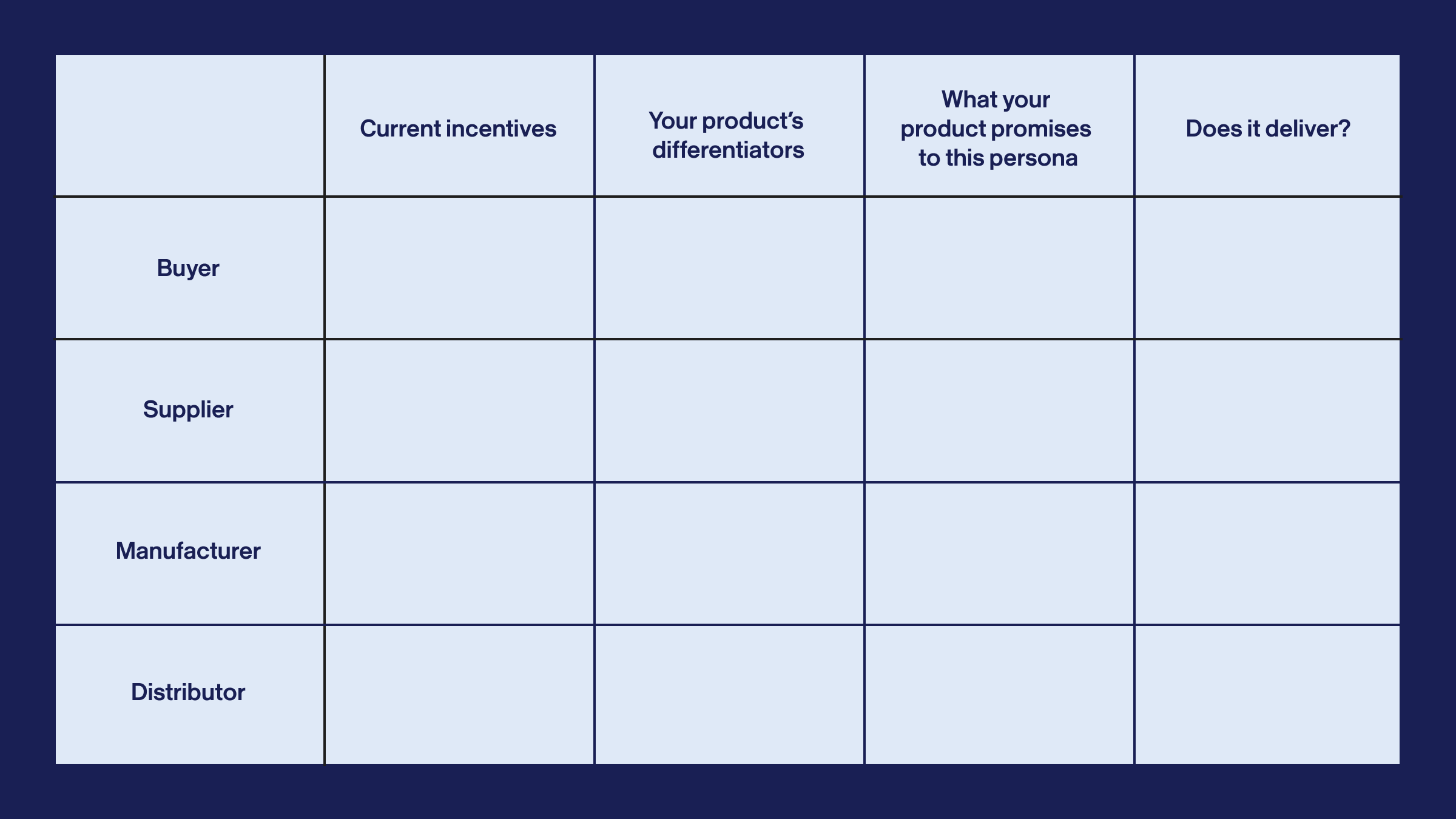
Do this for your own market. Draw a flowchart from first touch → payment collected. Until you see each actor and their incentive, you don’t understand the market.
2. Run a unit economics teardown.
Instead of guessing, Laraki decomposed the cost of delivering a genetic test, line by line. He set a target price ($250 vs. the $4,000 incumbents charged) and worked backwards:
Negotiate with suppliers (“ask for a discount” was a rule, not a hope).
Unbundle inputs (suppliers often add hidden buffers).
Spot timing incentives (end-of-quarter discounts, prepayment benefits).
Try the same: build a spreadsheet of every cost driver. Then ask, for each line item: “How can I bend this?”
3. Test whether your wedge is a feature or a solution.
Colour’s first wedge was low-cost testing. But insurers didn’t care; they priced by median cost across labs, not the cheapest option. A $250 test was just a feature. The solution buyers actually wanted? A vertically integrated cancer care clinic that reduced overall spend.
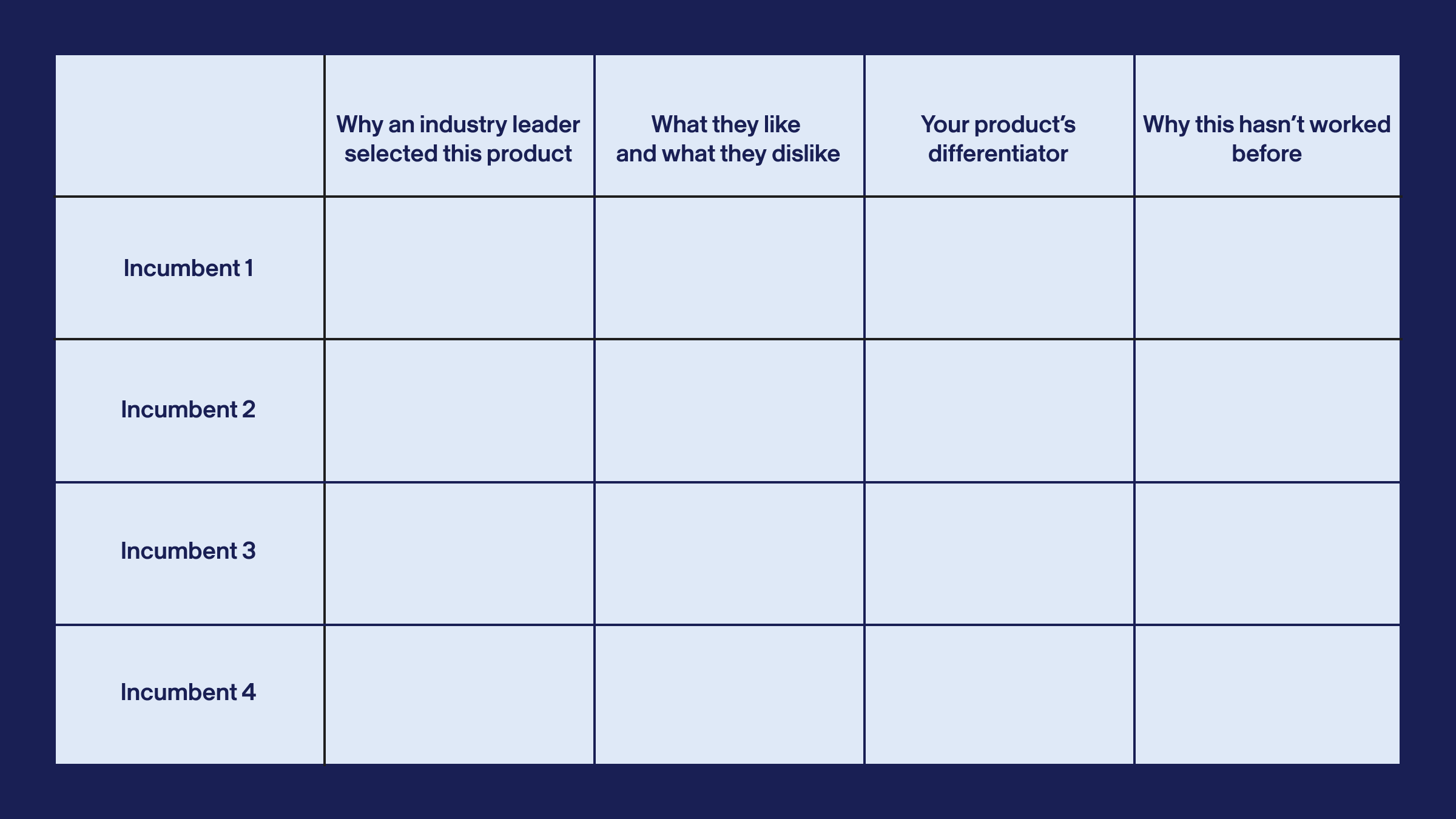
Apply this lens: if your product is a “better part,” ask who needs a “whole car.” Sometimes you need to bundle your tech into a broader solution to unlock budgets.
4. Talk to operators, not celebrities.
Instead of chasing famous doctors or regulators, Laraki reached out to genetic counsellors, lab managers, and non-famous scientists. These were the people actually running the processes Colour needed to integrate into.
Advisors were compensated simply (hourly rate, research sponsorship), not with vague equity promises.
Your move: make a list of the doers in your industry. Cold email them with a mission-driven story. They’ll tell you how transactions really happen.
5. Treat pivots as progress, not failure.
Laraki cycled through:
DTC tests (failed: CAC too high, LTV too low).
Selling via physicians (failed: billing friction too high).
Employer health plans (worked: aligned with budgets).
Expanded into a full clinic (big unlock).
Don’t cling to your first model. Every failed buyer segment is data that sharpens where the incentives align.
6. Don’t mistake false positives for traction.
Colour scored early deals because of influence (warm networks, Stripe founder referral). But those didn’t generalise. Laraki’s test: could a stranger buy this product on standard terms? If not, you don’t yet have PMF.
Run the same filter: strip away influence. Would the product still close deals?
Mini checklist founders can run this week
Map one real transaction in your target market from first touch to cash collected. Name each actor and their incentive.
Identify your product’s current status on the buyer’s ladder: feature, component, or solution. If it’s a feature, who can you bundle with to become a solution?
List the top three cost drivers and one concrete action to bend each (renegotiate, alternate supplier, process change).
Book five calls with non-celebrity operators who move money or approvals. Ask them to redline your transaction map.
Write your “no influence” test: how would a cold buyer discover, evaluate, purchase, and activate without your network?
You can read a detailed write-up here by Firstround.
The 3 AI product categories that actually work (and why everything else keeps failing).
Most founders think they’re building an AI product, but in reality, they’re just shipping another chatbot with a wrapper. Sean Goedecke’s piece cuts through the noise: despite billions poured into AI, only a few product types consistently produce value.
Everything else struggles because it either competes with ChatGPT or forces users into a chat interface they don’t actually want.’

1. Pure Chatbots (only win in very narrow niches)
ChatGPT already dominates general-purpose chat. If your product is “ChatGPT but for X,” users will simply go back to ChatGPT. The only chatbot category that survives is explicit roleplay—AI companions, emotional support, NSFW interactions—basically things big labs won’t allow.
Why these niches work:
Users want content OpenAI/Claude won’t generate
Less capable models are fine if they’re more permissive
Strong emotional attachment creates retention
But the defensibility is weak. As labs relax content rules, these products will be eaten alive.
2. Completions (the most underrated, highest-ROI category)
This is the GitHub Copilot → Cursor → Replit “autocomplete on steroids” model. It works because users never talk to the AI. They type, and the system instantly predicts and completes what they need.
This category wins because:
No behavior change
No prompting
No jailbreaking risk
AI becomes invisible inside the workflow
This is why coding assistants exploded. The opportunity is wide open in areas like documents, spreadsheets, CRM updates, legal drafting, product workflows, sales proposals—anywhere autocomplete can replace chat.
A simple rule: AI that users don’t interact with directly is the AI that scales fastest.
3. Agentic Products (the next wave, actually working in the wild)
Agents aren’t chatbots with tools. They’re systems that take one instruction and execute entire workflows by themselves—write code, fix bugs, rerun tests, and repeat.
Coding is the first domain where this works because:
Output can be verified (tests, compile)
Labs fine-tune heavily for coding
Tasks are structured and sequential
The big question now is whether agents can work beyond coding. Early signals are pointing to research-heavy fields like law, finance, ops, and compliance—places where the agent can search, extract, compare, verify, and package findings without waiting for user input.
What might be next
Two categories aren’t fully working yet but are being heavily invested in.
AI-generated feeds: OpenAI, Meta, xAI—all are trying infinite recommendation + infinite generation. If quality hits TikTok-level addictiveness, this becomes a huge consumer shift.
AI-native games : Game cycles are long, gamers distrust AI, and generated dialogue is still uncanny. But once someone cracks AI-driven worlds or NPCs with memory, this becomes a new genre.
What founders should actually do with this
Most ideas fail because they fall into the “chat UX trap.” Chat is convenient for demos, bad for real workflows. The winning pattern across every successful AI product is the same:
Make AI silent where possible
Let AI do full workflows, not single steps
Build around proprietary data, not general knowledge
Avoid competing with the base model
Use chat only where emotion, roleplay, or creativity matter
The best AI products make users forget they’re using AI at all. If you want, I can turn this into:
a shorter Quick Win summary
a “Steal This Idea” opportunity list
a polished LinkedIn version
or a founder checklist for building the right AI product
TODAY’S JOB OPPORTUNITIES
💼 Venture Capital & Startup Jobs
All-In-One VC Interview Preparation Guide: With a leading investor group, we have created an all-in-one VC interview preparation guide for aspiring VCs. Don’t miss this. (Access Here)
Associate, Corporate Venturing - NRG Venture Fund | USA - Apply Here
VC Analyst Intern Wind | France - Apply Here
Investment Associate - Opmistic Venture | USA - Apply Here
Summer Fellowship 2026 - Coastanova Venture | USA - Apply Here
Portfolio Management Intern - LVL1 Accelerator | India - Apply Here
Associate, Growth Equity - Adam Street Partner | USA - Apply Here
Venture Relations Associate - Angellist | USA - Apply Here
Due Diligence Fellow - Velocity Digital | USA - Apply Here
Finance Manager - NLC | USA - Apply Here
VC Associate - Toyota Research | USA - Apply Here
MBA Intern - Greycroft Opportunities Fund | USA - Apply Here
Venture Capital Associate - Pacific Channel | USA - Apply Here
Accounting Manager VC Firm - Rembrandt Venture Partners | USA - Apply Here
🤝 Partnership With Us
Get your product in front of over 95,000+ audience - Our newsletter is read by thousands of tech professionals, founders, investors and managers worldwide. Get in touch today.
🔴 Share Venture Curator
You currently have 0 referrals, only 5 away from receiving a 🎁 gift that includes 20 different investors’ contact database lists - Venture Curator