
👋 Hey, Sahil here — Welcome back to Venture Curator, where we explore how top investors think, how real founders build, and the strategies shaping tomorrow’s companies. Here’s today at a glance -
Y-Combinator tips: avoid these startup ideas.
Antler’s framework to create a successful ESOP plan for your early-stage startup.
VC fund deck formats & 13 VC fund decks that raised over $500M from LPs.
FROM OUR PARTNER - EQUIDAM
🚀 Startup Valuation, Built for Outliers.

Startups don’t just need capital, they need investors who share their view of the future. Equidam helps founders translate novel ideas and technologies into valuations that allow both sides to understand the underlying assumptions.
By grounding the fundraising conversation in fundamentals, Equidam helps founders and investors align expectations, build conviction in the company’s trajectory, and address the most important challenges in bits or atoms.
Successful startups are outliers that can’t be priced strictly by comparison.
Get started on your valuation today, with 10% off →
VENTURE CURATORS’ FINDING
📬 My Favourite Finds
Media Posts:
Why do some founders raise easily while others struggle, even with great ideas? (Link)
The most useful framework for thinking about customers for your MVP. (Link)
A program for individuals early in their company-building journey by OpenAI. (Link)
Khosla Ventures’ Guide: Pitch the way VCs think. (Link)
The slide every investor wants to see. (Link)
SEO cheat codes every founder should know. (Link)
The VC scorecard that early-stage investors use. (Link)
Michel Lieben on how he’d find B2B clients if he had to start from 0. (Link)
Marty Kausas on how much founders get paid. (Link)
Reports/Articles:
Startup legal document pack – essential legal docs for founders. (Link)
The startup valuation guide for founders. (Link)
Women now hold nearly 20% of top VC roles. (Link)
Are Secondaries Coming to VC Fund Rules? (Link)
Inside Dylan Field’s Big IPO—and His Even Bigger Plans for Figma. (Link)
SaaS Startup Financial Model: All-in-One Excel Template (Link)
🤝 PARTNERSHIP WITH US
Get your product in front of over 95,000+ audience - Our newsletter is read by thousands of tech professionals, founders, investors and managers worldwide. Get in touch today.
📜 DEEP DIVE
Y-Combinator tips: avoid these startup ideas.
In the search for startup ideas, it often happens that founders come across some seemingly obvious and simple ideas. These are ideas that seem great at first, but end up being a major drain on your time and resources. You might be thinking, What’s the difference between a bad idea and a Tarpit idea?
The only difference between a bad idea and a Tarpish idea is that you would know when to stop pursuing a bad idea. A Tarpit Idea is identified a little bit too late - when money is already spent on developing it. Looks scary, right?
Most founders fall under the Tarpish Ideas trap - assuming it to be a good idea. In this write-up, we'll be discussing the common "tar pit" ideas that founders often pivot into and away from, and provide some tips on how to avoid them.
What’s the ‘Tarpit Idea’?
A tarp, in nature, is where petroleum seeps through the Earth. It's a hotbed for finding fossilised remains like dinosaurs. Because animals mistake the tar pits for freshwater ponds. They step in, get stuck due to the sticky tar, and unfortunately perish. The interesting thing is - “Scent attracts more animals, creating a domino effect.”
Interestingly, this mirrors a phenomenon in the startup world
where some ideas lure entrepreneurs in, but the challenges and failures cascade, trapping them in a cycle much like the unsuspecting animals in a tar pit.
How is this related to the startup world?
Tarpits in the startup world lure founders with seemingly brilliant and unexplored ideas.
The absence of famous companies tackling these issues makes them more attractive. It's like discovering a pristine freshwater pool that appears wide open for success. However, beneath the surface lies a hidden danger.
Many startup founders unknowingly fall into the tarpit trap, where the graveyard of failed attempts is not immediately apparent. Recognizing this trap is crucial because awareness significantly increases the probability of your startup's success. In essence, avoiding the allure of deceptive ideas can be the key to steering your entrepreneurial journey toward triumph rather than failure.
Interesting fact - most tarpit ideas are consumer ideas!
Why Consumer Ideas Are Tarpit Ideas?
People often lean towards consumer ideas because we're all consumers! From the products marketed to us throughout our lives, our problems and interests naturally revolve around things we use or think our friends would.
“Most startup stories we hear are about consumer successes like Steve Jobs or Mark Zuckerberg, creating a default association between startups and consumer-focused ventures.”
Unlike the consumer realm, it's rare to find someone head over heels for enterprise solutions like Cisco or Oracle. Essentially, our familiarity and exposure make consumer ideas the default go-to when diving into the startup world.
The most interesting thing is that - most consumer-based idea seems to be so simple but it’s really difficult to build a good startup. There is a reason why there is no solution for a simple idea…..
Why it difficult to build a consumer startup?
It’s tough for two reasons -
First, many underestimate the high bar set by successful consumer products. They often don't realize how good those products are and how many others have tried and failed.
Second, timing is crucial in the consumer space. Sometimes, founders do understand when the timing is in their favour or working against them. Additionally, existing big players have an edge, creating an almost unfair advantage.
For instance, imagine someone with an idea for an un-launched consumer social network. They might believe it's groundbreaking without knowing the real standards.
Let's take Google as an example to understand the high bar – it wasn't just about launching; it was about creating something so exceptional that users couldn't resist.
Google:
In its early days, there was no advertising or growth hacking – just a website. They relied on incredible word of mouth. Users had to manually discover it, often through internet forums like Slashdot.

Without spending on user acquisition, branding, or marketing, Google attracted millions of users daily. The product's quality was so high that people not only wanted it but evangelized it.
The founders initially weren't keen on running a startup; they even tried to sell the technology. However, the demand was so intense that they got pulled into the startup world.
This highlights a key aspect of successful consumer ideas – creating something people are obsessed with and of exceptional quality, so much so that users pull the founders into the journey.
The same case with the facebook…
Facebook
Facebook's journey mirrors Google's success. Within 48 hours of its Harvard release, 75% of the campus was using it.

Investors like Peter Thiel and Reed Hoffman witnessed users spending an average of two hours daily on the site.
The striking part? No money was spent on marketing or growth hacking.
The truth about these iconic consumer companies is often overlooked. They started with excited users who pulled the product themselves. Users were passionate, even demanding the product at their universities.
The lesson here is clear: successful consumer companies have in common genuinely enthusiastic users. They didn't rely on aggressive marketing tactics but rather created products that people became obsessed with early on. This sets a high bar for what defines a compelling consumer idea.
Why is timing so important?
If you look closely into the data…
Making a consumer or mobile company in the mid-2000s and early 2010s was easier due to specific circumstances. During the 2000s, many people had broadband and computers, and the lack of competition for attention made launching something cool quite successful.
For instance, Facebook gained traction without battling numerous social networks. In the smartphone era, having an app store and the novelty of mobile apps meant even basic creations could attract users.
Back in college, everyone had a computer screen, and with limited TVs, people were more engaged with computers. The absence of major web incumbents and the dominance of TV in entertainment created a sweet spot for web-based startups. Similarly, the early smartphone era allowed for simpler apps to thrive, unlike today's highly competitive app landscape.
“The key takeaway is - Success often depends on being in the right place at the right time.”
So - How to identify Tarpit ideas?
Ideas that have survivor bias:
user problems that may look solvable from a posterior, results-oriented perspective. For example, discovery problems help people find new restaurants to try and new places to go.
Ideas that are second-order on widely adopted innovations.
Innovations that have step function improvements bring many low-hanging second-order opportunities. For example, in today's environment, a "social network for X" might be a Tarpit Idea.Ideas that are more difficult for startups to scale.
For example, hardware start-ups require a lot of funding before seeing the first results, and although they can scale eventually, they require the right approach.
Some tarpit ideas might not be so with the right founders and business model. At the same time, good ideas that were launched years ago might be a tarpit idea now.
Based on the above factors, if you find that you are targeting Tarpits (unproductive or overcomplicated ideas), then as a founder, how can you make a great pivot?
Before understanding - how can someone make a great pivot? Let’s understand a concept called - Supply-Demand in Founders & Ideas.
Some ideas attract a large pool of founders (more supply) due to their appeal—think partying with celebrities. On the flip side, ideas like building open-source developer orchestration tools have a lower supply because of the specific skills required.
The demand side is crucial too. Unlaunched, undifferentiated social apps face minimal demand in a saturated market. On the other hand, there's a high demand for high-quality software that solves significant business problems, making companies more efficient.
In essence, tarpit ideas refer to those with an oversupply of founders relative to market demand.
It's akin to the job market – having unique, differentiating skills sets you apart. The plea here is for experienced individuals who might not see themselves as startup material; if you've solved a niche problem or have industry insights, you could be a startup person. The startup world isn't limited to consumer apps or social networks; it embraces diverse perspectives to solve real-world problems.
So if you find that you are solving the Tarpit Problem and You want to pivot your business then follow this “Supply & Demand Rule”. How?
The best pivots occur when a founding team recognizes the supply and demand dynamics. It involves moving from an idea with an oversupply of founders and low customer demand to an idea with a lower founder supply and higher customer demand.
Examples include Brex and Retool. Instead of heading to the easy freshwater pond, which is a trap, successful pivots lead toward less explored areas like the mountains or desert. It's about moving away from the common tar pit ideas and embracing challenges.
For aspiring founders, it's crucial to do thorough research, understand the bar for success, and consider the supply and demand aspects. Creating luck involves recognizing these dynamics and making strategic moves to increase the odds of success.
RESOURCES FOR FOUNDERS
📃 Access Expertly Curated Resources
Most resources online are generic. We’ve built and curated the ones that actually matter — with input from leading VC firms and founders who’ve raised millions (and some who bootstrapped).
Here’s what’s new (and improved) in our resources:
🌍 Investor Databases (Email + LinkedIn)
💰 Fundraising Tools
📊 Strategic Templates
📩 Communication Tools
📄 Legal & Operational
📄 QUICK WIN
Antler’s framework to create a successful ESOP plan for your early-stage startup.
Early-stage startups struggle to attract talent when competing with bigger companies' high salaries. The key? Smart use of ESOP (employee stock options).
The trick is balancing equity with cash compensation. Antler shared a few decision-making frameworks that can help you design a successful ESOP plan:
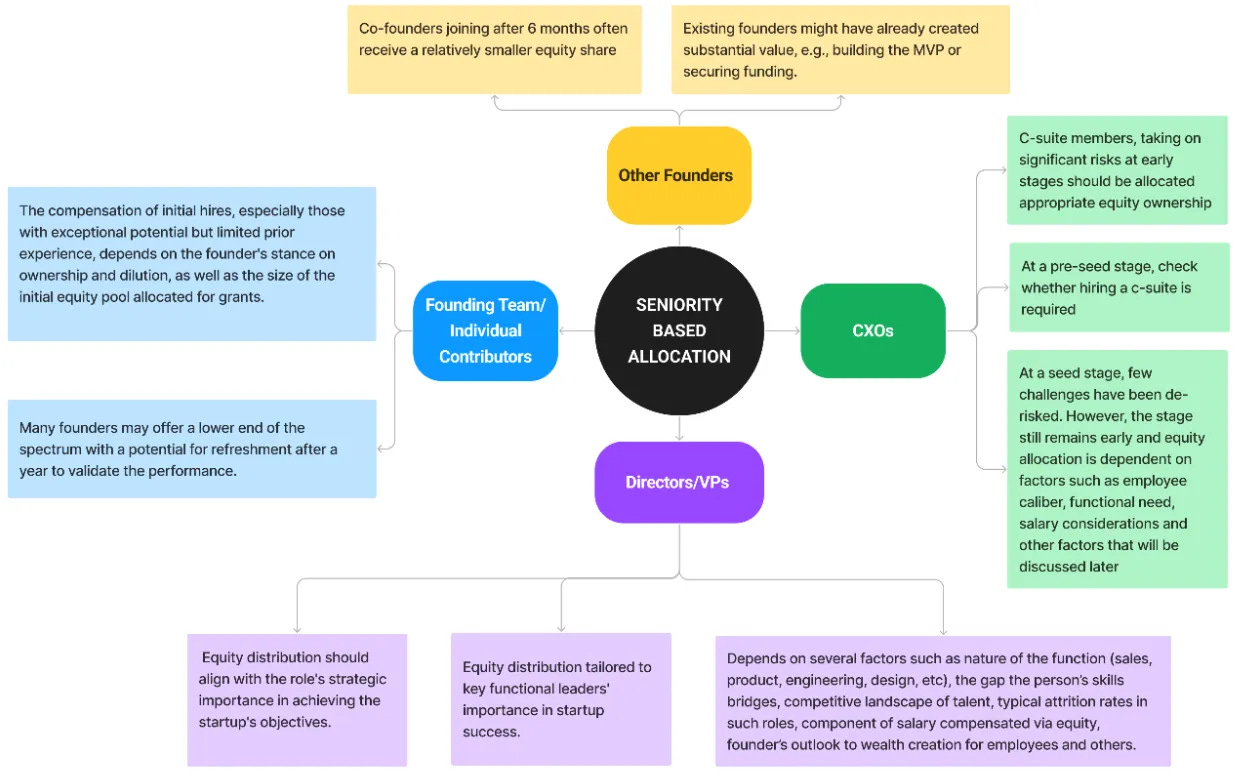
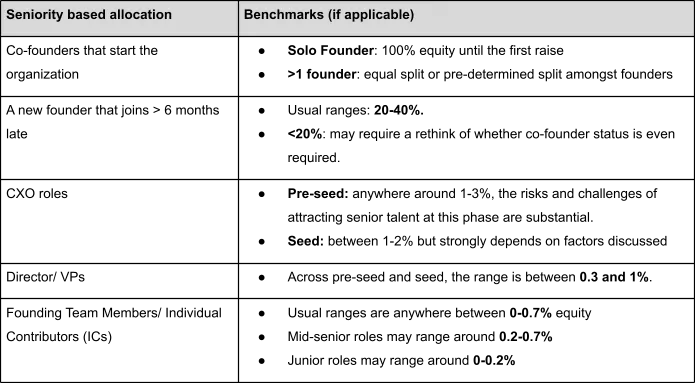
It's important to note that there is no one-size-fits-all approach and there are several factors beyond the seniority levels of employees that need to be considered before rolling out employee equity.
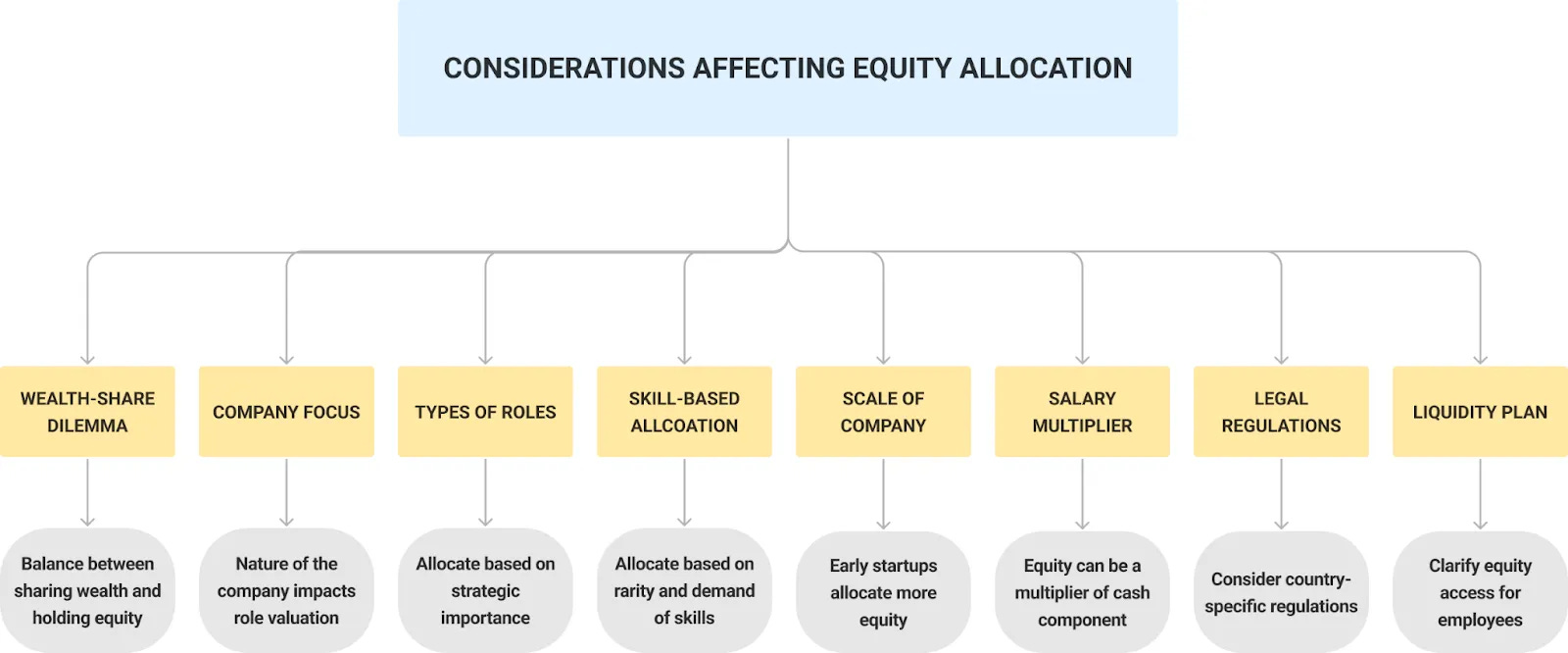



Equity allocation is a complex yet critical aspect of building a startup's team. Antler has interviewed several portfolio founders and early-stage people success leaders to learn about what are some of the best practices in arriving at the right quantum of ESOPs for a critical hire.
You can check the detailed write-up on Antler’s website.