

👋 Hey, Sahil here — Welcome back to Venture Curator, where we explore how top investors think, how real founders build, and the strategies shaping tomorrow’s companies. Here’s today at a glance -
Y-Combinator's Framework for Building a Successful MVP.
Use this 30-minute GPT prompt stack to validate your startup idea.
Reddit marketing for B2B saas founders: a step-by-step guide.
FROM OUR PARTNER - 1PASSWORD
🤝 1Password webinar: smart, simple security for SMBs

No company is too small to be a target for cybercriminals. Thankfully, there’s a simple step that small businesses can take to guard against the growing threats of ransomware and credential-based attacks.
Join 1Password for a discussion on how teams can keep security and credential management affordable and achievable. Register to learn about:
The biggest security risks facing SMBs
Security tools that reduce friction for growing businesses
How your team can secure authentication in mere hours
Register to join the live discussion →
VENTURE CURATORS’ FINDING
📬 My Favourite Finds
Media Posts:
Ultimate guide for building a startup with ChatGPT prompts, from scratch (free, no ads/sign-ups). (Link)
The VC Scorecard Early-Stage Investors Use. (Link)
Y-Combinator Advice: How to split equity among Co-Founders. (Link)
THE ANTI-PITCH: One-liner rebuttals that kill startup ideas. (Link)
Jeff Bezos on how to handle stress in life. (Link)
Reports/Articles:
When you’re really ready to launch: a founder’s framework. (Link)
How smart companies can thrive amid uncertainty. (Link)
Why big ideas are built in temperate climates. (Link)
The Startup valuation guide for founders: only guide you need. (Link)
How to show value in AI product onboarding. (Link)
What investors ask and how to answer: A practical Q&A prep kit for founders. (Link)
🤝 PARTNERSHIP WITH US
Get your product in front of over 95,000+ audience - Our newsletter is read by thousands of tech professionals, founders, investors and managers worldwide. Get in touch today.
📜 DEEP DIVE
Y-Combinator's Framework for Building a Successful MVP.
When it comes to building a startup, one of the things that comes to a founder’s mind is creating a Minimum Viable Product (MVP) to test whether their solution to a particular problem is valid or not. However, one of the common mistakes I observe founders making is forgetting about the "Viable" part and just focusing on the product.
This common mistake is observed in 90% of startup founders and the rest 10% of founders who know how to build MVP become startups like Airbnb, twich & stripe etc.
Also, most of the founders mistaken the meaning of MVP - that it’s about considering one feature and building a product. Actually - It’s more than that!
So - In this, we will deep dive into -
Real Meaning of Building Minimal Viable Product (MVP)
How did Airbnb, Twitch, and Stripe build their MVPs?
How did these startups use the Y-Combinator MVP building strategy?
How can you build the MVP for your startup?
So grab your coffee and let’s deep dive into it!

What is an MVP (Minimum Viable Product)?
A minimum viable product (MVP) is a version of a product with just enough features to be usable by early customers …— Wikipedia
What should be your MVP mindset In the Pre-Launch Stage?

Let’s start with the meme above. It’s called the midwit meme.
Many first-time founders (the guy to the left of the bell curve) launch quickly and iterate (continue launching quickly). This is the same for the expert founder (the guy to the right of the bell curve).
But the guy in the middle is the “smart founder”. Let’s call him Benny. Benny wants to do surveys, raise money, build a team, etc. He wants to do it all. Benny learns after a while he should have been like the “dumb guys”.
As a founder, you want to build an MVP, get it to customers, and learn if it helps them or not. Then iterate.
You only really start learning about your users when you put a product in front of them. Not by doing 1000 surveys, gathering a mailing list, or fundraising for half a year.
The amazing thing, your MVP might not even work how you want it to.
Your goal as an early-stage founder:
Launch quickly. (MVP)
Get your first customers.
Talk To Customers & Get Feedback
Iterate (Improve the product)
These goals need to be your guiding principle.
Expect that after 3–5 iterations, your MVP would have changed so much. But that’s a good thing. It means you’ve been listening to your customers.
Try and remember that you are not the hero of your customer’s story. You’re not Harry Potter, you’re Dumbledore who gives him the tools to be the hero of his own story. You serve at the pleasure of the customer.
Is an MVP really the way to go?
Many founders want to build a product (like the iPhone) that blows people out of the water at once. That’s a very steep hill to climb though.
The MVP approach is best. You might have a question that -
But What If My MVP Is Rubbish and they Never Want To Talk To Me Again?
Even the biggest startups had this same fear. YC deals with it every time. It’s okay that you feel this fear. But never act on it.
FEAR- False Expectations Appearing Real
Think about it. If one customer doesn’t like your product, does that kill your startup? No. You can reach out to another customer. You can reach out to the same customer after you’ve made the product better.
The more amazing thing is that most people who speak with startups at an early stage are early adopters. They try out products that are in their rubbish phase. They are used to products not working quite as well as they should.
Early users usually have a problem. They are the only ones brave enough to try untested products that could solve the problem. They are usually there for the long haul to give you feedback on how to make the product better.
Fake Steve Jobs -
These types of founders think they know exactly what the customer needs. Let’s call them fake Steves.
In their minds, Steve Jobs built the iPhone and iPod, such amazing products in one go. The mistake they're making is that’s not true. Many of them remember the 3rd or 4th iteration of these products. The first iPhone had 2G internet, no app store, etc.
You don’t know what the customer needs. The customer alone knows what they need. If you ask them, they will tell you. How you ask them is by showing them your MVP.
Examples of Successful MVPs
1. Airbnb:

This is the first version of AirBnB. They didn’t have a lot of features. If you were an early adopter, here was what you enjoyed.
No payment system.
No map view. You couldn’t see where the house was in the city.
You had to sleep on an airbed. The whole house could not be rented to you.
It was only for conferences.
2. Twitch:
Twitch was the world's leading video platform and community for gamers.

They began as Justin TV with one page.
Only 1 streamer, Justin.
Their video was low res.
But they’re now one of the most popular streaming websites in the world.
Do you know what thing they focused on at the pre-launch stage?
Software MVP
Very fast to build (weeks not months)
Very limited functionality
Appeal to a small set of users
They built a product that people loved, not one that everyone loved. It didn’t solve all the problems. Solve problems step by step.
Who Are These Early Adopters? Why Do They Want To Go Through So Much Pain?
“You want to build your product for customers who have their hair on fire.” What product would you want to buy from me?
Maybe a hose, bucket of water, or something that can bring water. Well, all I have is a brick (my MVP). Walking away won’t even cross your mind. You’re desperate, you’ll buy the brick and hit yourself on the head to kill the fire.
The early adopters are the desperate ones. Forget the ones that are not desperate.
Why surveys don’t work.
You might have had a formal business school education. Now you’re thinking let’s do a survey and learn everything the user needs. Then we build it.
That won’t work either. The customer doesn’t know everything about the answer to their problem. They don’t even know everything about the problem itself. If they did, don’t you think they would build the solution on their own or hire people to do it for them?
It’s your job to know. Surveys help you find out your users' pain but not how to solve it. Only a product can do that.
You give them a product and ask, does this solve your problem? Yes or no and
you go down the scientific method flow chart from there.
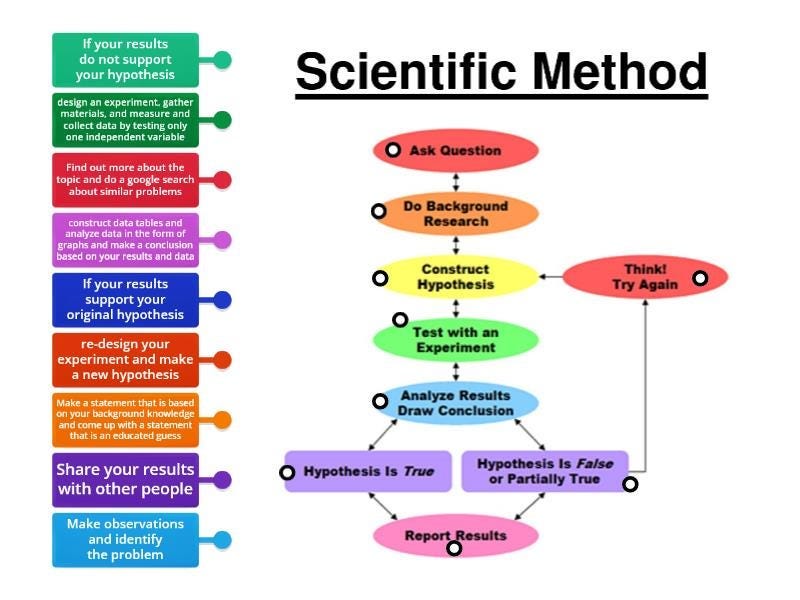
How To Build An MVP Quickly!
Set a specific deadline for completion.
Give yourself a timeframe. It’s easier to move on if you do. If you allow endless time to build, you’ll never stop building the MVP.
Write down the MVP features.
Don’t keep doing a double take while building. Write everything you want to build down now. Then you won’t have to rethink everything later.
Cut unnecessary features.
At this point, you will cut many features. Think how important is this to solve the user’s problem.
A startup to solve overseas payments doesn't need a chat feature in the MVP. Neither does it need APIs connected to every bank in the world. Both are important but can be skipped for the MVP.
Don’t fall in love with your MVP.
Have you heard married couples say something like: this is not the person I married or fell in love with?
Please please please don’t fall in love with your MVP.
It will change so much as you’re iterating.
If you’re in love with it, you won't want it to change. You’re building an emotional barrier to your growth.
Final Thoughts
“It’s better to have 100 customers that really love your product than 100k that are just ok with it.” — Michael Seibel, Y-Combinator
Those 100 will give you rich feedback that you need to grow. Build for them and the others will come when you have a shiny product.
All these concepts are covered in the Video by Michael Seibel!
📄 QUICK WIN
Use this 30-minute GPT prompt stack to validate your startup idea.
Too many founders spend weeks polishing ideas the market doesn’t want. You don’t need perfect data to spot a weak bet; you need a fast, honest pass that forces clarity on market reality, customer truth, positioning, and go-to-market.
Below is a tight, copy-paste stack you can run in ChatGPT to pressure-test any idea in under 30 minutes.
How to run the 30-minute sprint:
Set the mode (3 minutes)
Market reality check (8 minutes)
Define the customer (6 minutes)
Write value props (4 minutes)
Find the wedge vs competitors (6 minutes)
Pick GTM mode (3 minutes)
Outcome: a cold recommendation (Go / No-Go) with enough evidence to kill weak ideas quickly or move strong ones to deeper work.
Prompt 1 — set the operating mode, Copy-paste:
You are my marketing strategist, growth specialist, creative director, and positioning expert. For every response:

• Think critically.
• Challenge assumptions.
• Speak like a seasoned operator. When you use an acronym, include the full form in brackets (e.g., CPL (cost per lead)).
• Offer structured feedback, not just answers.
• After each output, add a short “Teach me” paragraph explaining the why.

Commit this business to long-term memory:
“My business is called [INSERT BRAND NAME]. I help [AUDIENCE] solve [CORE PROBLEM] by offering [PRODUCT/SERVICE]. You will build on each new detail as we go.”

My marketing skill level is [BEGINNER/INTERMEDIATE/ADVANCED]. Adapt technical depth to my level but keep the strategist’s viewpoint. If I’m beginner or intermediate, define acronyms briefly in-line.

Do not suggest next prompts unless asked. Always revert to this role for all future replies in this chat.
Prompt 2 — market reality evaluator
Purpose: remove optimism bias, ground the idea in public knowledge and business logic. Copy-paste:
Enter Market Reality Evaluator mode. Do not soften bad news or over-validate weak markets. Use credible public knowledge (2023+), trained inference, and structured business logic.

Evaluate my market and tell me if it’s worth entering.

What I sell:
[One-line product summary — e.g., “A digital course that helps freelancers write faster with GPT.”]

Who I sell to:
[Target audience in plain terms]

What I know (optional edge data):
[Competitor prices, COGS (cost of goods sold), ad costs, performance signals, user data, internal benchmarks]

My estimated pricing:
[If you have it]

Return the following, with concise evidence under each:
• Estimated Total Addressable Market (TAM)
• Category maturity (Emerging / Growth / Plateau / Decline)
• Market saturation level (Low / Medium / High)
• Dominant players (Top 5) with market share/gross revenue/costs/margins (best available estimates)
• Market growth rate (% or trendline)
• Buyer sophistication (Impulse / Solution-aware / Skeptical)
• Purchase frequency (One-off / Repeat / Recurring)
• Pricing ceiling (based on value and competition)
• Viable acquisition channels (SEO, Paid, Organic, Influencer, Partnerships, etc.)
• Estimated CAC ranges per viable channel
• Suggested CLV target for sustainable CAC
• Strategic opportunity mode (Steal / Expand / Defend / Stimulate)
• Overall difficulty score (1–10)
• Clear recommendation: Go or No-Go, with brief, cold reasoning

Bonus (if I provide margin data like “COGS = $22”):
• Profit per sale
• Breakeven CAC
• Minimum conversion rate needed from ads

End with a brief “Teach me” note explaining how you arrived at each call.
Prompt 3 — define the customer (use only the frameworks that fit)
Purpose: capture reality, not fantasy; choose frameworks by model. Copy-paste:
Based on the product above, define the ideal customer using only the most relevant frameworks. Choose from:
• SaaS/service: Jobs to Be Done (JTBD), Awareness Levels (Schwartz), Hormozi first principles
• DTC/brand-led: Brand Archetypes, Psychographics, Empathy Map
• High-ticket B2B: First Principles, Awareness Levels, Moat Thinking
• Content/influencer: Psychographics, Brand Archetypes, Traffic Temperature

Return the sections below. Label a section with the framework used if helpful (e.g., “(JTBD)” or “(Awareness: Problem-aware)”). Be clear, concise, and non-customer-facing.

• Demographics (only if decision-relevant): age/role/income/industry/location
• Psychographics: beliefs, values, aspirations, fears, identity drivers (who they want to become)
• Core frustrations: what they want to stop feeling/doing/struggling with
• Primary goals: outcomes, progress, or emotional relief they actively seek
• Current alternatives: what they use today (including workarounds or “do nothing”)
• Resonant messaging: tone/promises/insights that land; the beliefs or objections we must shift

Avoid repeating product features. Focus entirely on the customer. Close with a short “Teach me” note on why these choices matter.
Prompt 4 — three value propositions under 20 words
Purpose: make the promise crisp and believable. Copy-paste:
Write 3 value propositions under 20 words each:

We help [AUDIENCE] go from [BEFORE STATE] to [AFTER STATE] using [PRODUCT].

Use the modular logic that fits:
• SaaS or B2B services: Hormozi’s value equation (dream outcome vs. friction), April Dunford positioning (Alternative → Unique → Value), Awareness Levels (Problem/Solution-aware)
• DTC/brand-led: Brand Archetypes, Empathy Map + Emotional Ladder, Blair Warren persuasion triggers
• High-ticket B2B/consulting: First Principles (pain → path → belief shift), Andy Raskin narrative (enemy → promised land), Hormozi objections
• Creator/influencer: Tribal logic (“people like us…”), identity shift, StoryBrand clarity (hero meets guide)

Ensure emotional clarity, outcome specificity, and believability. End with a brief “Teach me” note.
Prompt 5 — pick a defensible wedge vs competitors
Purpose: find a clear, ownable position with proof. Copy-paste:
Operate as a Competitive Strategy Analyst.

Competitors (add if you have them):
[Competitor 1], [Competitor 2], [Competitor 3]
Websites:
[URL 1], [URL 2], [URL 3]

Analyse each competitor’s homepage and core product messaging. Summarise:
• Primary value prop (headline + implied promise)
• Likely axis of competition (e.g., speed, price, power, simplicity, brand)
• Who they’re really speaking to (persona insight)

Then propose 3 positioning axes that are unclaimed or under-leveraged. Return a table:

| Axis | Emotional benefit | Who it’s for | How to prove |
| --- | --- | --- | --- |
| [e.g., Simplicity at scale] | [Control, calm, clarity] | [Teams with tool fatigue] | [One dashboard; one prompt; full funnel] |
| [ ] | [ ] | [ ] | [ ] |
| [ ] | [ ] | [ ] | [ ] |

Close with: “Of these 3, lead with [X] because [strategic rationale].”
Bonus: include a sharp one-liner to communicate this wedge. End with a “Teach me” note.
Prompt 6 — choose the GTM mode
Purpose: align go-to-market with structure, not vibes. Copy-paste:
Enter GTM Mode Selector. Use prior outputs (market, pricing, positioning, TAM, growth, CAC, wedge).

My product:
[Insert if single product]

Answer:
1) Most viable GTM mode: Steal, Expand, Defend, or Stimulate
2) Strategic rationale (structural, not tactical): why this mode fits margins, market shape, and model
3) Optimise for:
   • Speed vs margin?
   • Awareness vs conversion?
   • Breadth vs depth of messaging?
4) Modes I should not pursue—and why
5) GTM difficulty (1–10) with blind spots

Do not recommend specific tactics yet. End with a “Teach me” note.
Decision rules (kill or keep)
Kill if growth is flat/declining, saturation is high, or the wedge is trivial.
Kill if CLV (customer lifetime value) can’t support CAC (customer acquisition cost) at 3:1 within 6–12 months.
Kill if pricing ceiling leaves unsustainably low margins after COGS (cost of goods sold) + discounts.
Proceed if there’s a provable wedge, at least one efficient channel with viable CAC, and a path to repeatable revenue.
Good output looks like
Crisp numbers with sources or reasoned estimates
Competitor reads that reveal the true audience
Value props sceptics would believe
A wedge provable in product/experience
A defendable Go / No-Go call
Pro tips
Bring one edge metric (COGS, CPC, or baseline conversion) to anchor the math
Ask for ranges/sensitivity if early (e.g., “show outcomes if CPC is +30%”)
Save the chat—compounds as you add more data
Reddit marketing for B2B saas founders: a step-by-step guide.
If you’re a B2B SaaS founder and not leveraging Reddit, you’re leaving leads on the table.
I recently came across the Reddit Marketing Guide by Adam Shaw, so I thought to share with you some key points and my opinion with you. He shared, “Reddit is the #2 source of leads, right after LinkedIn. It’s where people are actively asking for help and exploring new solutions—unlike LinkedIn, which is more about storytelling and sharing success.
And here’s the kicker: 50% of my leads come from just answering questions on Reddit for less than an hour a day.”
Here’s how you can do it
Step 1: Turn Your Profile into a Landing Page
Your Reddit profile is like a mini landing page. It’s the first place curious users will go after reading your comments or posts. Make sure it’s optimized to convert.

How to set it up:
Choose a username that’s tied to your brand or product.
Write an actionable profile name (e.g., “Helping SaaS Founders Scale”).
Add a CTA to your profile banner (e.g., “Download our Free SaaS Marketing Guide”).
Include your one-line product pitch and CTA in the bio (e.g., “We help SaaS founders grow faster. Subscribe to our newsletter below!”).
Add links to key resources like:
Lead magnets
Newsletter sign-ups
Product demo
Step 2: Find Subreddits Where Your Audience Hangs Out
Reddit is vast, but your audience is likely concentrated in a handful of niche subreddits.

How to find them:
Use Reddit’s search bar to look for your product keywords (e.g., “SaaS,” “startup growth,” etc.).
Use Google to search for “your keywords + Reddit” (pro tip: Google is better at finding Reddit threads than Reddit itself).
Pick subreddits with active, engaged members in your niche.
Pro tip: Use tools like Gummy Search to automate finding relevant subreddits and posts.
Step 3: Prepare a Lead Magnet
Redditors hate being sold to. They love value first approaches.
That’s where a lead magnet comes in. It’s a way to engage your audience without coming across as too salesy.'
Examples of great lead magnets:
In-depth guides tailored to specific problems.
Free trials of your product.
Newsletters with actionable advice (my favorite).
Make it easy for people to commit. For example, I use a newsletter landing page to capture leads. By the time they get there, I’ve already built trust through helpful comments.
Step 4: Start by Commenting, Not Posting
Engage first, post later.
Why? Comments are more personal and allow you to directly connect with people asking for help. You’ll also learn what your audience really needs.
How to comment like a pro:
Answer recent posts (24-48 hours old) for better visibility.
Avoid crowded posts (0-10 comments is the sweet spot).
Add value. Most comments are generic—stand out by being actionable, specific, and helpful.
Step 5: Be the Best Commenter
The secret to success on Reddit? Write better comments than everyone else.
Here’s how:
Be highly relevant—answer only what’s asked.
Be specific—don’t just say “try this.” Explain how to try it.
Go in-depth—assume the person has zero knowledge.
Stay friendly—ignore trolls.
Make your comment stand out visually too:
Use white space for readability.
Add bullet points to organize your thoughts.
Be longer than most comments (Reddit loves thoughtful responses).
Step 6: Post to Curate Conversations
Once you’ve spent a few weeks commenting, you’ll notice patterns in what your audience talks about. That’s when you start posting.
But don’t make the mistake of being self-serving. Redditors can smell that a mile away.
Here’s what works:
Don’t post a blog or self-promo content. Instead, ask questions that spark engagement.
Let the audience share their thoughts and experiences in the comments.
Use their responses to build conversations and authority naturally.
Reddit can be a goldmine for B2B SaaS founders if used the right way. Focus on engagement first, provide value, and let the leads come to you.
TODAY’S JOB OPPORTUNITIES
💼 Venture Capital & Startup Jobs
Program Manager - generator | USA - Apply Here
PR Manager - Web3 Gaikka Capital | India - Apply Here
Investor Relations Analyst - Techstars | USA - Apply Here
Program Manager - generator | USA - Apply Here
Investor - First Round Capital | USA - Apply Here
Venture Partner - XDC Venture | USA - Apply Here
Manager - Finance - Yournest Venture | India - Apply Here
Executive Assistant - Transition VC | India - Apply Here
Investor Relations Manager - Beco Capital | UK - Apply Here
Investment Associate - Beco Capital | UAE - Apply Here
Head of Platform - Pledge Venture | UK - Apply Here
Partner 22 - a16z | USA - Apply Here
ESG Intern - ESG Enterprise | UK - Apply Here
VP of Fundraising - Scale Asia Venture | Japan - Apply Here
Research Analyst - Positive Sum | USA - Apply Here
AI Venture Analyst Intern - Untaped Venture | USA - Apply Here
Associate - Venture Capital - Artha Venture Fund | India - Apply Here
Executive Assistant - AN Venture Partner | USA - Apply Here
🤝 Partnership With Us
Get your product in front of over 95,000+ audience - Our newsletter is read by thousands of tech professionals, founders, investors and managers worldwide. Get in touch today.
🔴 Share Venture Curator
You currently have 0 referrals, only 5 away from receiving a 🎁 gift that includes 20 different investors’ contact database lists - Venture Curator