
👋 Hey, Sahil here - welcome to today’s edition of Venture Curator, where we break down how great startups grow, how top investors think, and what’s shaping the future of tech.
P.S. Get access to 100+ startup & VC resources, investor databases, fundraising templates, 150+ premium archive posts and exclusive startup research - all in one place.
FROM OUR PARTNER - SEMRUSH
Your buyers don’t just search Google anymore.
I’ve been looking at how search is changing, and this is probably the biggest shift marketers need to pay attention to.

People still use Google, but they’re also discovering products through ChatGPT, AI Overviews, and other AI tools. Semrush now lets you track both from one place.
You can see where your brand ranks in search, how often it appears in AI answers, where competitors are gaining visibility, and what may be holding your site back.
Partnership With Us
Get your product in front of an audience of 125,000+ - Our newsletter is read by thousands of tech professionals, founders, investors and managers worldwide. Get in touch today.
📜 DEEP DIVE
Which startups die after a model release? An analysis of every AI launch since ChatGPT
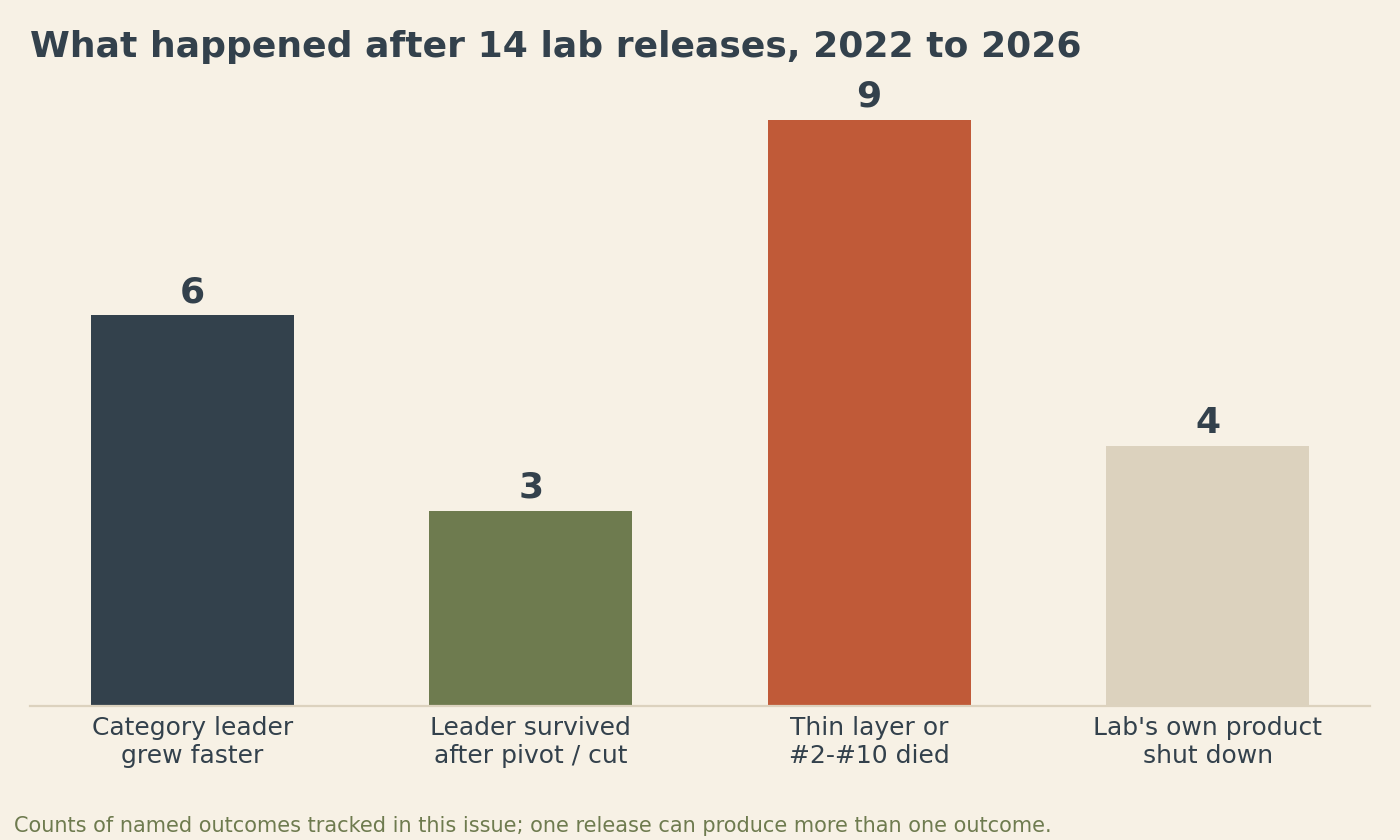
I mapped every major lab release since ChatGPT against what happened to the startups standing in front of it. Fourteen releases, thirty-odd named outcomes. The kill rate is real, the pattern is not what founders assume, and three positions came through every single one. Inside: the full blast map, the four ways a release actually kills you, a scored 90-day test, and a Claude watchlist that runs it for you.
When the VC’s screener issue went out, I expected the replies to be about the rubric or the prompts. A few were. But the one I kept seeing, in slightly different words each time, came through clearest from a founder building a research tool:
“How do I know if OpenAI is just going to build my product?”
And honestly, I never had a good answer. Everyone has a view. “Wrappers die.” “Distribution wins.” “Never build a feature.” None of it is checkable, and none of it tells you what to do.
So I did the boring thing. I took every major release from OpenAI, Anthropic and Google since November 2022 that had a startup category in front of it, and I tracked what happened to the named companies in that category over the following 90 days and the following year. Layoffs, valuation cuts, acquihires, shutdowns, and the ones that grew anyway. Dates from company announcements and press, not from memory. It took a couple of days.
Here’s what we’re covering:
The one chart: how fast a release turns into damage (one day to ten months)
What actually happened after fourteen releases, with names and dates
The pattern, and why “wrappers die” is the wrong lesson
The four mechanisms that do the killing, and which one is the deadliest (it isn’t the model)
The 90-day blast radius test, eight questions, scored
The three positions that survived every release since 2022
A Claude watchlist that reads lab signals and scores you monthly
First, the speed
Before the pattern, the timing. Because the thing that surprised me most wasn’t who died. It was how unevenly fast it happened.
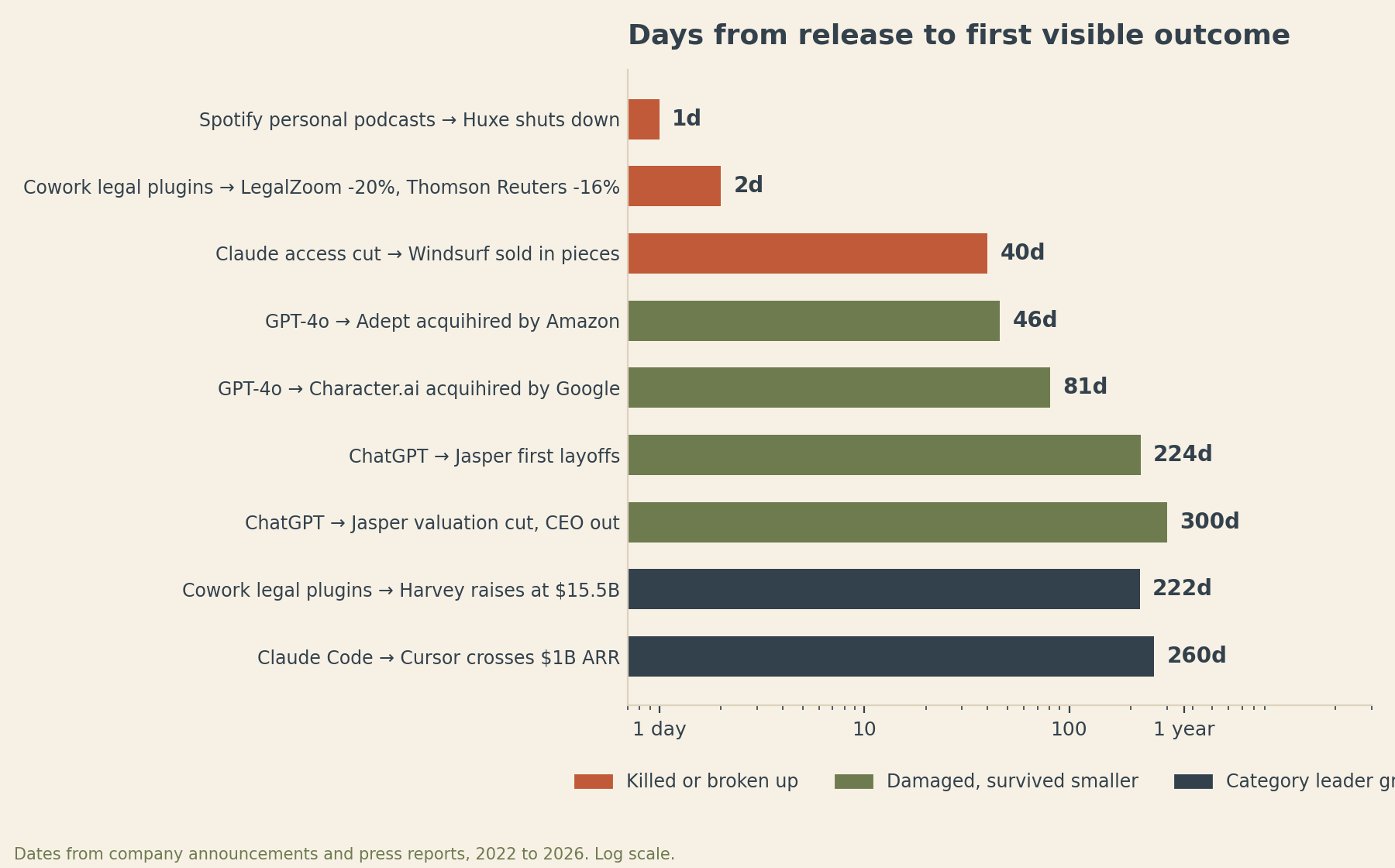
Read the two ends of that chart.
At the bottom: Huxe, an AI audio app built by three former NotebookLM engineers, backed by Conviction and Jeff Dean. It announced it was shutting down on May 21, 2026, one day after Spotify shipped a personal podcast feature that did roughly the same thing. Eight months after raising. One day after the platform moved.
At the other end: Jasper, the first AI writing unicorn, raised $125M at $1.5B in October 2022. ChatGPT launched a month later.
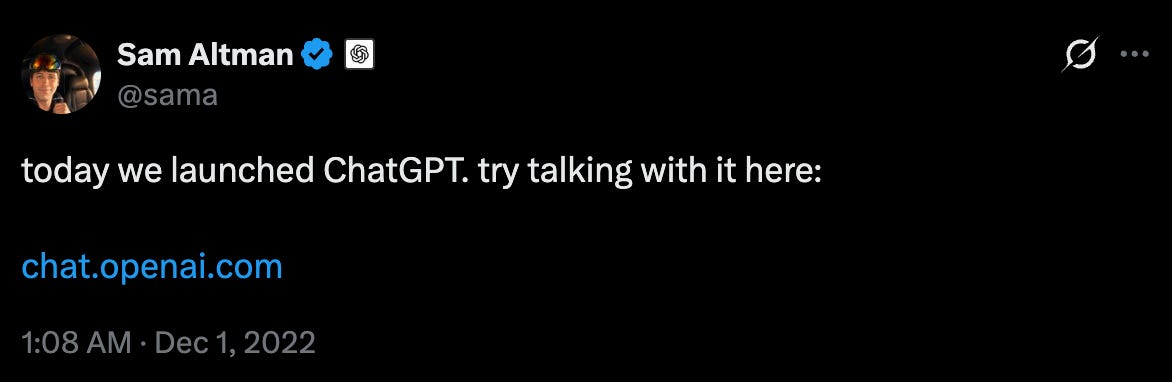
Nothing visible happened for seven months. Then came the first layoffs in July 2023, the CEO out in September 2023, an internal valuation cut, and revenue falling from around $120M to $55M.
Same cause, ten-month difference in when the bill arrived. That matters for you because most founders are watching for the fast version and missing the slow one. The slow one is the one that looks fine on a dashboard for two quarters.
What actually happened, in one table
Here’s the short version of the blast map. The full one, with the 90-day and 12-month columns for every release, is behind the wall.
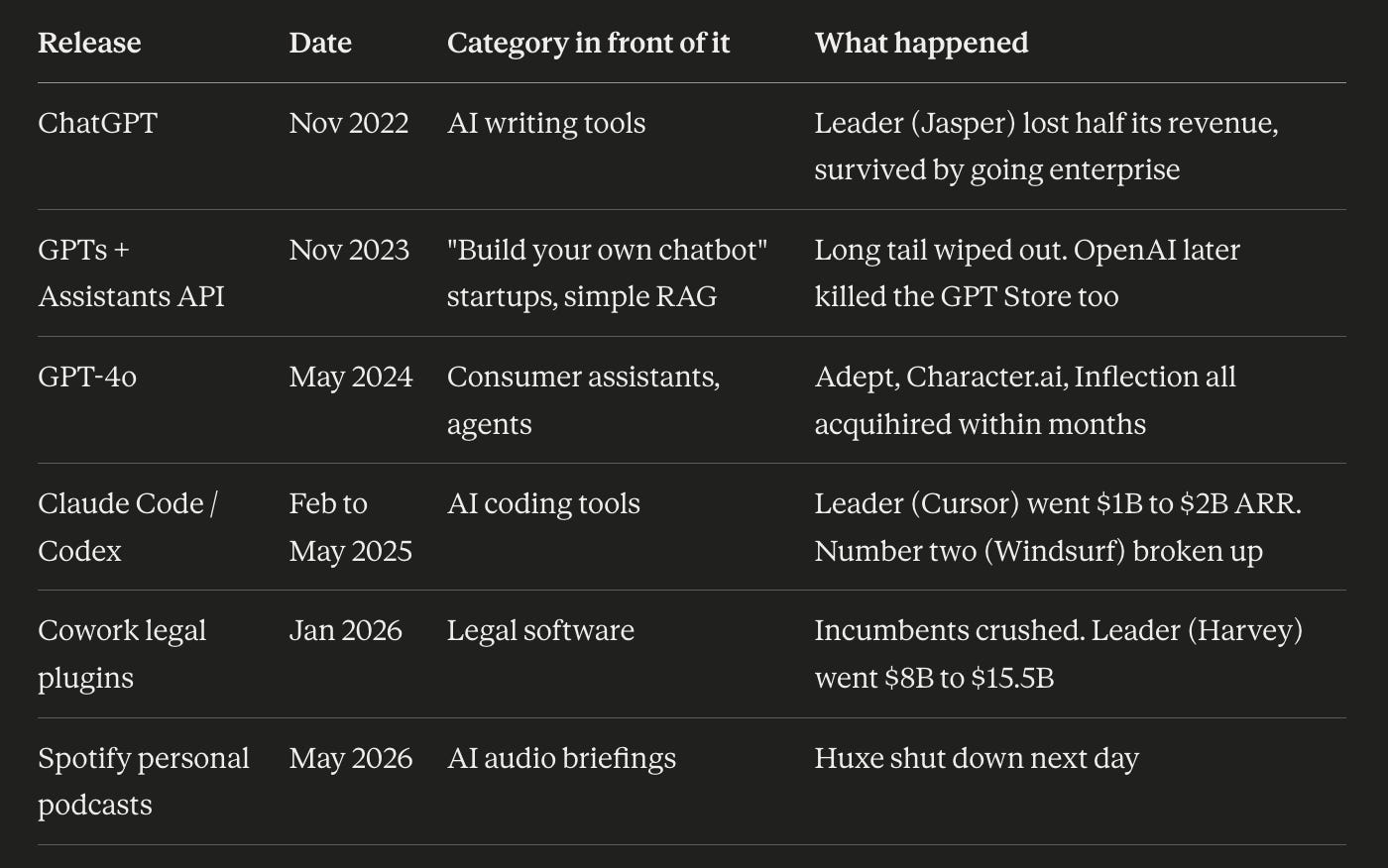
And one row that doesn’t fit the story everyone tells: the labs’ own products die in the blast too. OpenAI’s Sora app shut down in April 2026, Atlas lasted under a year, Operator got folded back into ChatGPT. The lab shipping into your category doesn’t mean the lab wins your category. It means the category gets reset.
The pattern, and why “wrappers die”, is wrong
Here’s the thing: the data says that the vibe doesn’t.
The release rarely killed the category leader. In most of the fourteen, the leader came out bigger.
Cursor crossed a billion in ARR nine months after Claude Code shipped and surpassed $2B by February 2026.
Harvey raised at $11B two months after Anthropic’s legal plugins caused a $285B software selloff, then raised $550M at $15.5B in September on $400M of ARR.
The release killed everything below the leader. The number twos with no distribution. The thin layer that was a prompt plus a UI. The consumer apps built on one modality. And, in the newest pattern, the incumbents: LegalZoom fell 20% and Thomson Reuters 16% within 48 hours of a GitHub repo of Markdown files.
So “wrappers die” is the wrong lesson. Jasper was a wrapper, and it’s still here, projecting $180M for 2026. Harvey is a wrapper, by any honest definition, and it’s the most valuable legal software company on earth.
The lesson is narrower and more useful: the release removes the reason to buy from whoever isn’t the default.
If you’re the default in your category, you get a bigger market. If you’re not, you get 90 days.
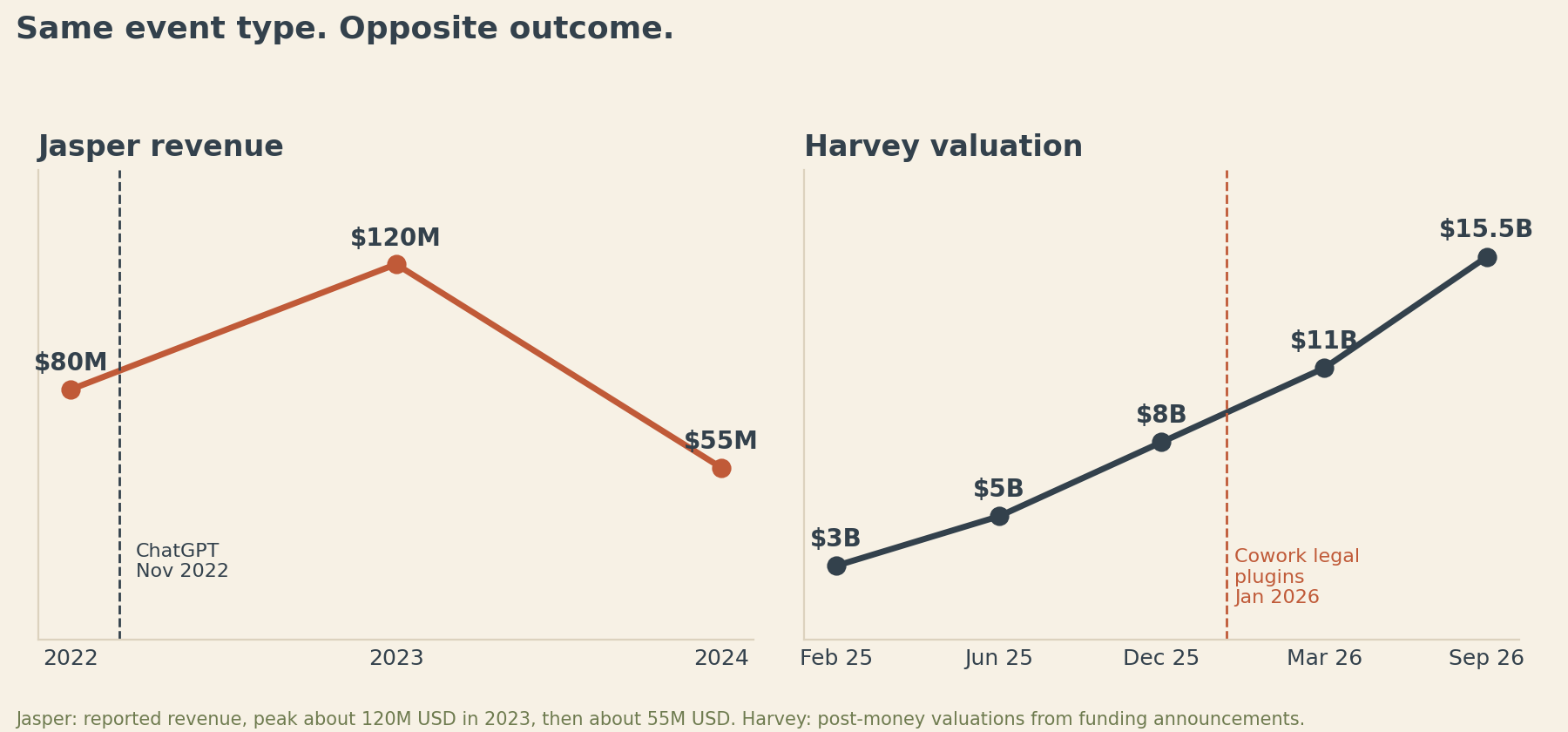
Which raises the only question that matters: what made Harvey the default and Jasper not? And what about the one case where the leader did get destroyed, in 40 days, without a single model release?
That’s the paid half. The full map with dates, the four mechanisms (the deadliest one isn’t a model at all), the scored test you run on your own company, the three positions that survived every release, and the watchlist that keeps scoring you every month. If you’re building anything on a lab’s API, you should know your score before the next launch, not after.